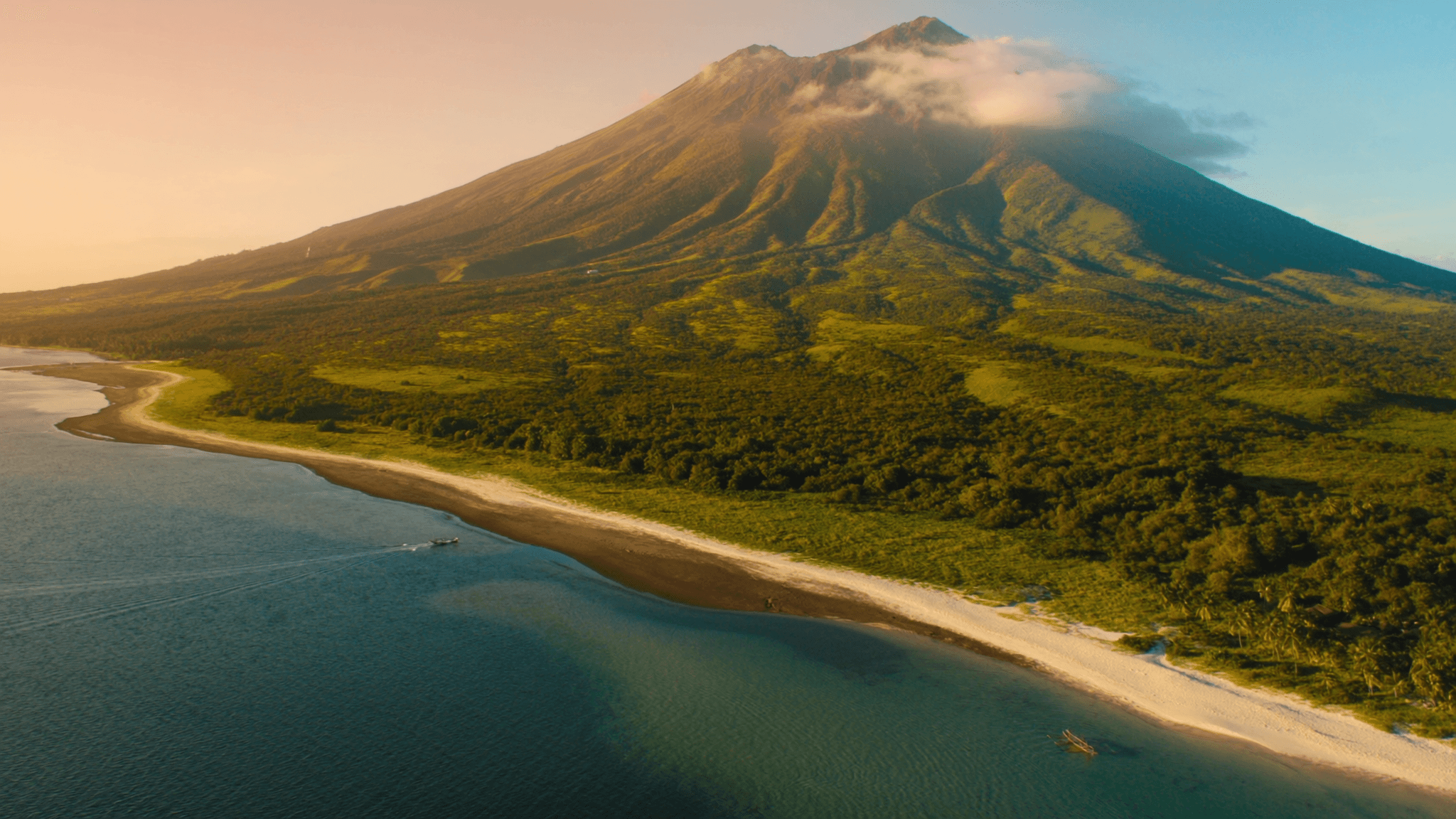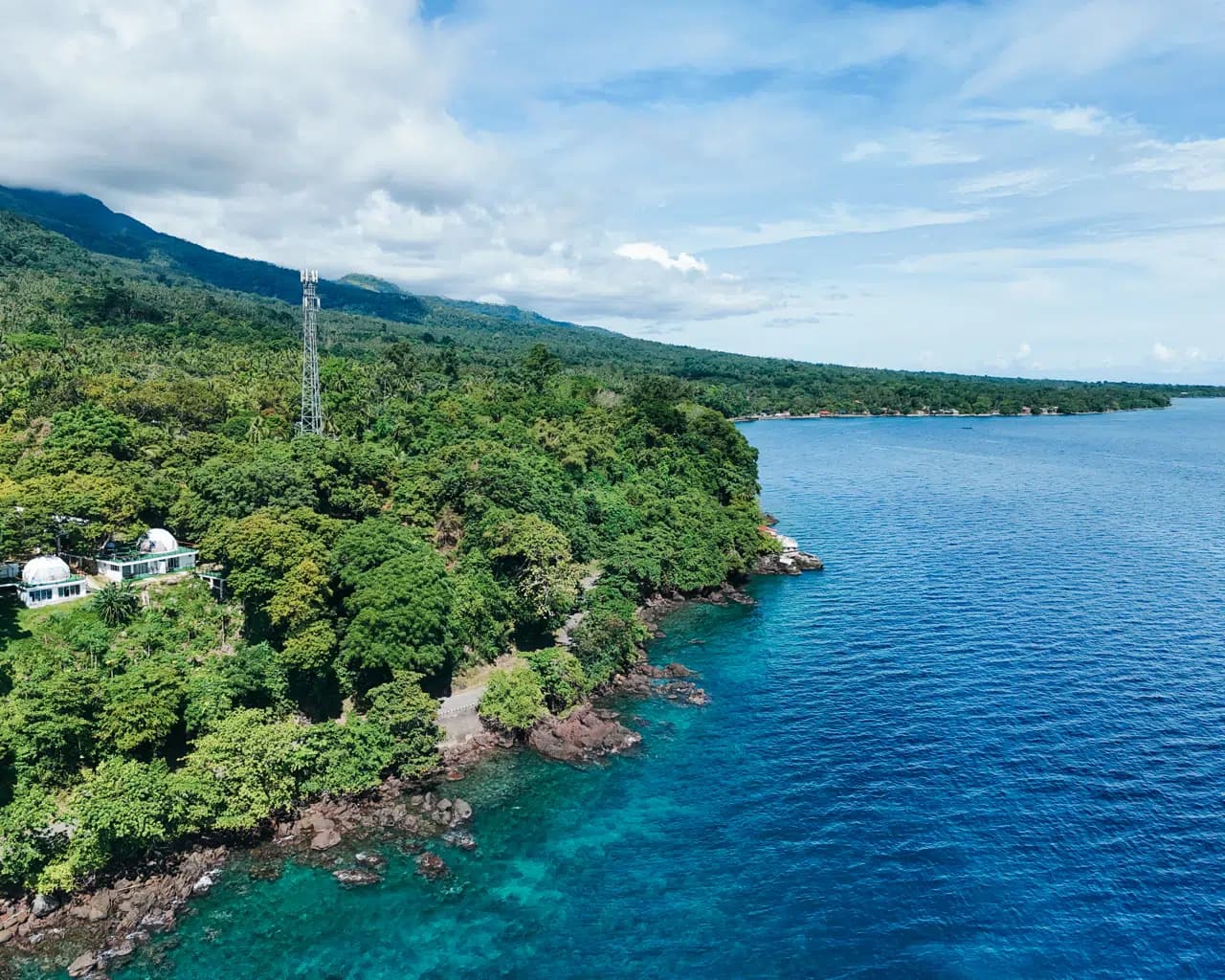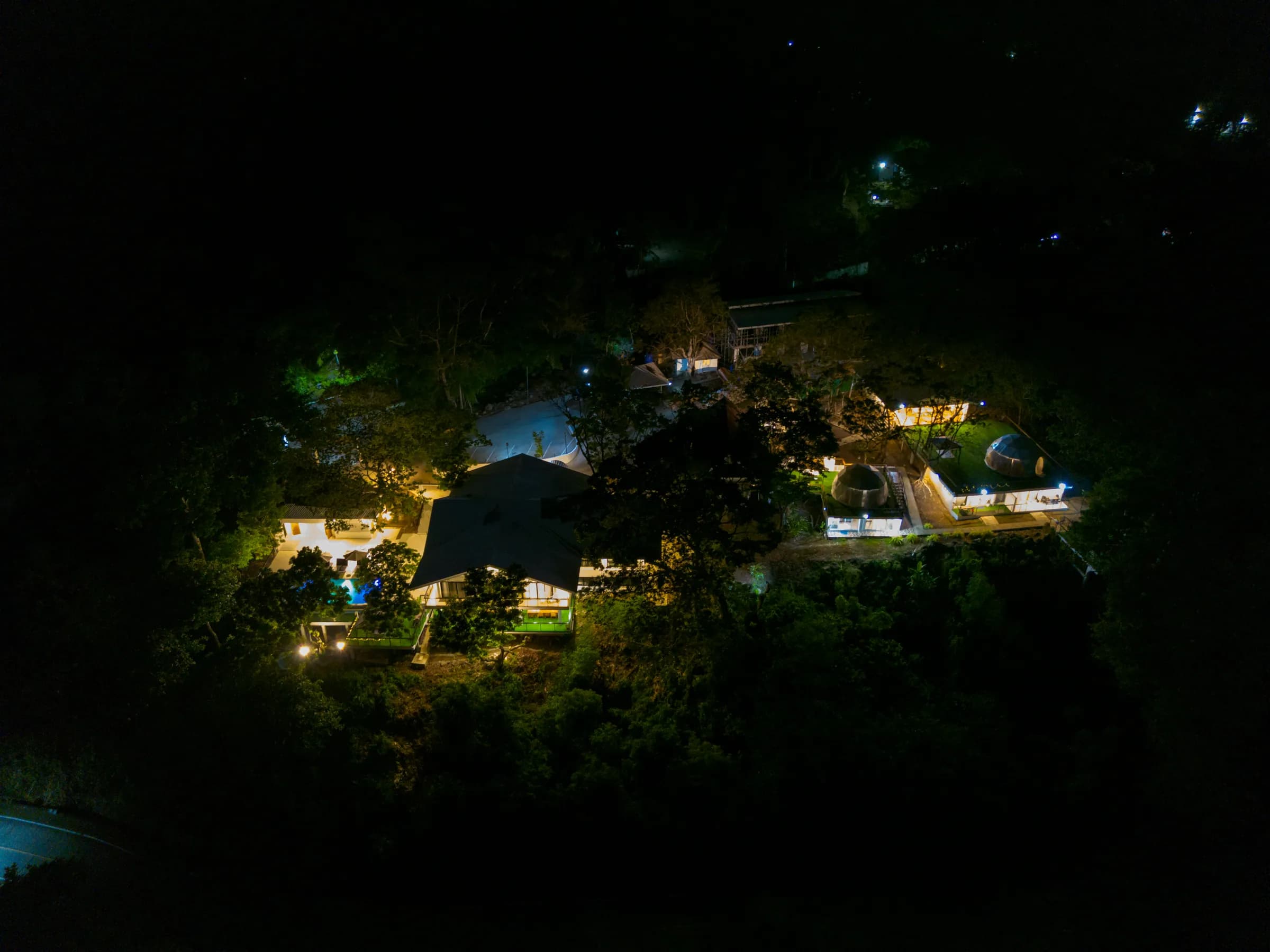

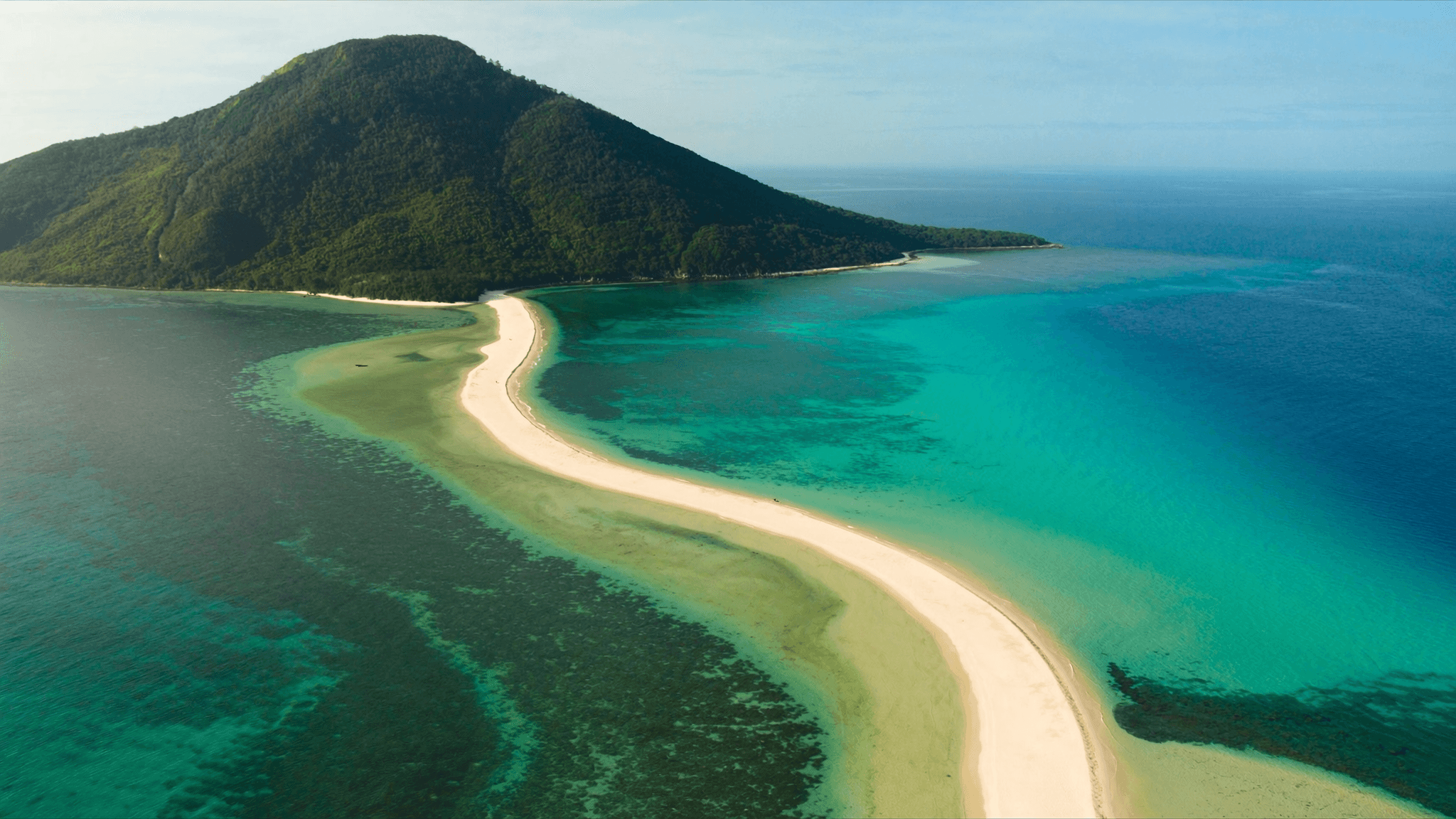
We live here. From our clifftop in Mambajao, between Mt. Hibok-Hibok and the Bohol Sea, we watch travellers arrive with the same question every week: how do you actually do Camiguin? Not in a rushed weekend, but properly — the sunrise sandbar, the waterfalls, the slow merienda afternoons. This Camiguin itinerary is the three-day plan we give our own guests: a real, local, day-by-day route around the island, with honest prices, sensible timing, and a quiet place to come home to each night.
It is short enough to fit a long weekend and complete enough to leave nothing essential behind. And because we are not a travel blog passing through — we are the family who owns the fourteen-room cottage on the cliff — every day here closes the way it should: with the sea at eye level and dinner waiting.
Written by the family at Txaleta de Camiguin. Last updated June 2026.
How many days do you need in Camiguin?
Three full days is enough to see Camiguin's highlights — White Island at sunrise, the Sunken Cemetery, a waterfall, the Giant Clam Sanctuary, and Mantigue Island. Stay four to five days if you want a slower pace, an extra beach day, time to hike Mt. Hibok-Hibok, or simply to do less and feel the island more. Camiguin is small; you are never far from anything.
That is the honest answer. Most travellers underestimate Camiguin precisely because it is compact — the entire island is ringed by a 64-kilometre road you can drive, non-stop, in about an hour. But "drivable in an hour" is not the same as "seen." The island rewards a gentler rhythm. Below is the three-day version, then how to stretch it to four or five.
Camiguin Itinerary at a Glance (3-Day Plan)
Here is the plan in one glance — the order matters, because it groups stops by geography and chases the light at the right hours.
- Day 1 — Arrive & settle: airport transfer to the clifftop, infinity pool, sunset kayak at the Sunken Cemetery cross, Filipino-Spanish dinner.
- Day 2 — Sea day: White Island at sunrise by banca, the Giant Clam Sanctuary, then Mantigue Island for snorkelling and a Picnic To-Go lunch.
- Day 3 — Ring-road loop: Katibawasan Falls, Sto. Niño Cold Spring & the Bura soda pool, Ardent Hot Springs, and the Gui-ob Church Ruins.
Three days, three distinct moods: arrival, the sea, and the land. Now, the detail.
How many days in Camiguin is enough? 3 vs 4 vs 5 days
No two travellers want the same trip, so here is the trade-off laid out plainly. This is the comparison we wish someone had given us before we first came to the island.
| Days | Best for | What you'd add |
|---|---|---|
| 3 days | First-timers, long weekends, the highlights done well | White Island, Sunken Cemetery, Mantigue, the ring road — the essentials, no padding |
| 4 days | Travellers who want one adventure or one slow day | A guided Mt. Hibok-Hibok ascent or a wellness day: cliffside yoga, hilot massage, a sunset picnic |
| 5 days | Couples, families, anyone in no hurry | A genuinely unstructured day — glamping mornings, Tuasan Falls, a cooking session, one last sunset |
If you are weighing a Camiguin 4 days 3 nights itinerary, the fourth day is where the island stops being a checklist and starts being a feeling. Five days is when you stop checking the time at all.
Day 1 — Arrive, breathe, and meet the sea
You fly in from Cebu — the easiest gateway, with the flight running under an hour (more on routes in our guide on how to get to Camiguin from Cebu). The plane banks over green volcanic ridges and a coastline so close to the runway you can see the reef, and then you are down.
From Camiguin (Mambajao) Airport, the transfer to us is short — a ride we arrange for every guest, so you step off the plane and almost immediately into the quiet. No long haul, no negotiation with a tricycle driver in the heat. Just the road narrowing toward the cliff, and then the gate.
Drop your bags. Do not unpack yet. The infinity pool is open from sunrise to sunset and it edges right out over the Bohol Sea — the water in the pool seems to spill into the water of the ocean, with nothing between you and the horizon but air. This is the first thing every guest does, and we never tire of watching faces the moment they see it.
Late afternoon — sunset kayak at the Sunken Cemetery. Camiguin's most famous landmark is a large white cross standing alone in the sea, marking a town the 1871 eruption pulled beneath the water. Most visitors photograph it from the shore. We send you out on the water instead — a calm sunset paddle as the light goes gold and then rose behind the cross. It is haunting and beautiful and utterly Camiguin, and it is the right way to understand this island before you do anything else: it was made, and remade, by its volcanoes.
Dinner. Back at the cliff, our Filipino-Spanish kitchen is open — to our guests and to walk-in visitors alike. Start with tapas: gambas al ajillo, croquetas, a plate of pork sisig. Then the paella, which is the reason people come back. A Spanish latte or a moonlight cocktail to finish. "Filipino Heart, Spanish Soul" is not a slogan we made up for a wall; it is genuinely how we cook and how we host.
Where you sleep: in one of our fourteen ocean-view rooms, the sea murmuring below the cliff. If it is your first night, ask for the Premier Seaview Suite — king bed, floor-to-ceiling glass, a private terrace, and White Island sitting out there on the water, waiting for you to reach it at dawn.
Day 2 — The sea day: White Island, the clams, and Mantigue
This is the big one. An early start, but the best morning of your trip.
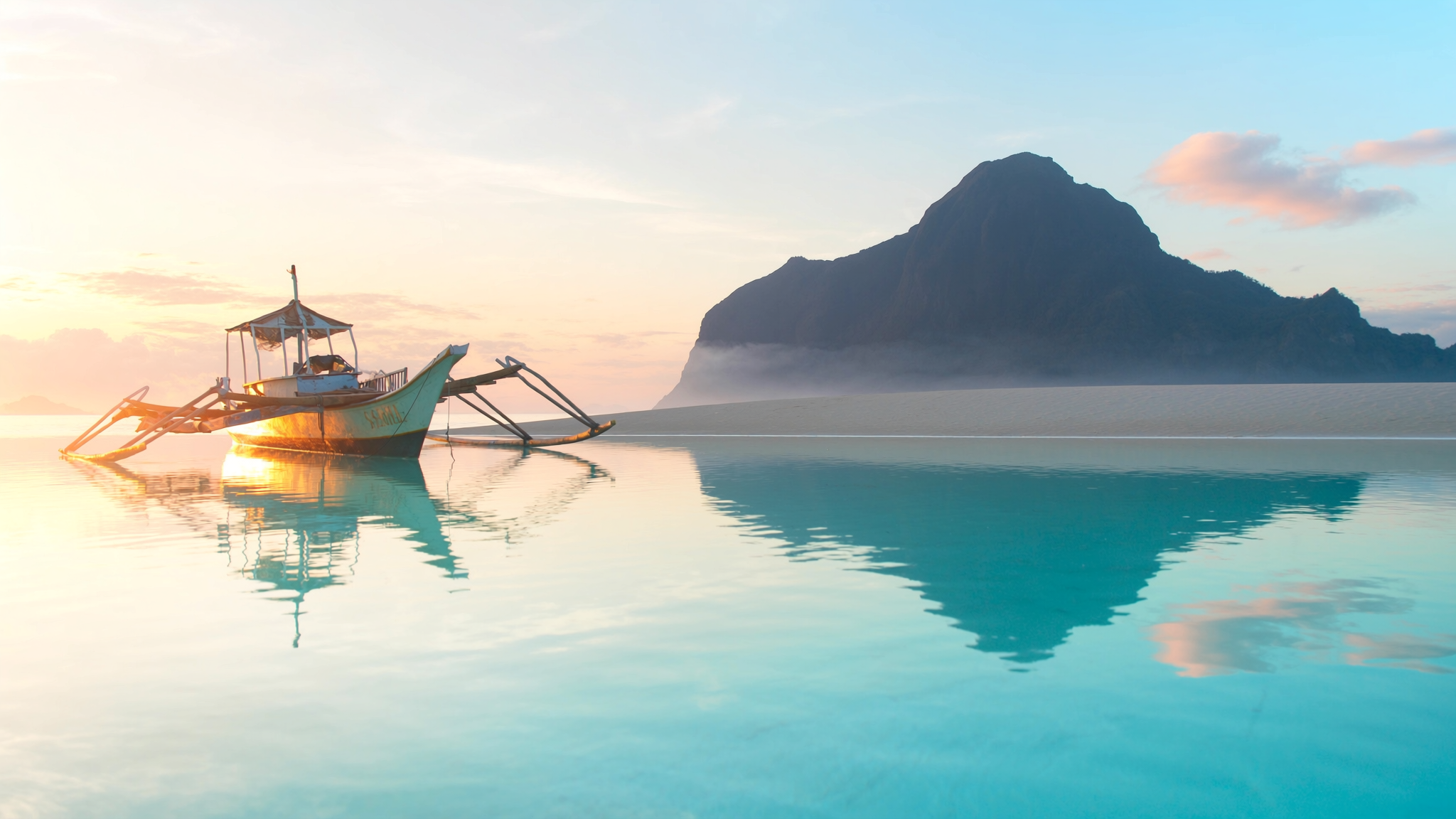 Camiguin itinerary day two — banca outrigger boats moored at White Island off Mambajao
White Island at sunrise
White Island is best at sunrise — be on the water by about 5:30 to 6:00 a.m. It is a pure white sandbar, no trees, no shade, no buildings, sitting just off the Mambajao coast with the volcanic skyline of Camiguin rising behind it. You reach it by banca, the traditional outrigger boat — it is not walkable and not connected to the main island. We arrange a private banca for you the night before, so there is no haggling at the port at dawn.
Two things matter here, and the blogs often skip them. First, the light: at sunrise the sandbar glows and the heat is gentle, whereas by ten o'clock it is blinding and there is genuinely nowhere to hide from the sun. Second, the tide — White Island's shape changes with the tide, and at high water it can shrink to a sliver. We check the tide tables for your date and time the boat accordingly. This is the kind of thing you only know if you live here.
Bring water, a hat, reef-safe sunscreen, and a sense of stillness. You will have the place nearly to yourselves. (Fares, tide timing and the full packing list are in our dedicated White Island guide.)
The Giant Clam Sanctuary
On the way, your banca can stop at the Giant Clam Sanctuary off Cantaan — a marine conservation site where giant clams the size of armchairs rest in the shallows, their mantles in impossible blues and greens and golds, some of them decades old. You snorkel right above them in clear, shallow water. It is one of the most underrated stops on the island and a quiet reminder of what Camiguin protects.
Mantigue Island
By late morning, on to Mantigue Island — a small forested islet ringed by white sand, with a sharp coral drop-off just off one shore that is among the best snorkelling in the region. (Note the three-hour cap on the island; our dedicated guide explains how to work around it.) Reef fish, soft corals, the blue going suddenly deep. We pack you a Picnic To-Go from the kitchen so you eat well on the sand instead of settling for whatever is there.
Spend the warm middle of the day here. Swim, snorkel the drop-off, lie under the trees. There is no rush — this is, after all, the sea day.
Where you sleep: back on the cliff by late afternoon, salt still in your hair, for an outdoor shower and the pool at golden hour. Tonight, if the sky is clear, ask us about Tahimik Nights — Camiguin's low light pollution makes the stargazing genuinely good. For the full island-edge experience, this is the night to be in the Ocean View Glamping: a proper bed under canvas at the cliff's very edge, a private deck above the Bohol Sea, and the sound of the water all night. It is our hero room, and it is the closest you will come to sleeping on the sea.
Day 3 — The ring-road loop: waterfalls, springs, and ruins
Today you drive the island. The 64-kilometre ring road circles all of Camiguin and can be driven non-stop in about an hour — but you will not drive it non-stop, because the whole point is what you stop for. Take a full, unhurried day.
How you'll get around (and what it costs)
You have options, and we arrange any of them at the front desk:
- Scooter — PHP 450/day. The classic Camiguin way. The roads are quiet and in good condition, the island is small, and a scooter gives you total freedom. Our pick for confident riders.
- SUV / AUV — PHP 2,850/day (or PHP 1,500 for a half day). Cooler, drier when the afternoon rain comes, and roomier for families or couples with gear. Add a local driver for PHP 1,000/day and you simply look out the window — which, on the ring road, is the whole pleasure.
- Jet ski — PHP 7,000 for 3 hours (+PHP 1,500 per extra hour), if you would rather take to the water.
See everything on our experiences and rentals page. Whatever you choose, the loop below works in either direction; we will tell you which way to go based on the day's light and tide.
The stops, in order
Katibawasan Falls — a single ribbon of water dropping seventy metres into a cold, clear pool ringed by ferns and orchids. Go early, before the day-trippers; the morning light through the spray is the best of it. Swim if you dare — the water is bracing.
Sto. Niño Cold Spring & the Bura soda pool — spring-fed pools of startlingly clear, cold water bubbling up from the sand, shaded by tall trees. The nearby Bura soda pool is a local curiosity: naturally carbonated water you can feel fizzing faintly against your skin. A perfect midday cool-down.
Ardent Hot Springs — and then the opposite. Volcanically heated pools tucked into the forest on the flank of Hibok-Hibok, warm and mineral-rich. Late afternoon is the time, as the air cools and the heat of the water finally makes sense.
Gui-ob Church Ruins — close the loop at the old stone church ruins near the Sunken Cemetery, the coral-and-egg-white walls left standing roofless after the 1871 eruption. At sunset the light comes sideways through the empty windows and the whole site goes quiet. A fitting end: you began this trip understanding Camiguin was shaped by fire, and here it is again.
Where you sleep: home on the cliff for your last dinner — order the paella again, you have earned it — and a final nightcap over the dark water. A 5% service charge on dining keeps our table fair to the family who runs it.
Extending the trip: Day 4 and Day 5
Day 4 — Adventure or stillness (the 4-day plan)
The fourth day is a fork in the road, and both paths are good.
The adventure: a guided ascent of Mt. Hibok-Hibok, the active volcano on whose flank the whole island rests. This is a real climb — Hibok-Hibok is active, the trail is steep, and a registered guide and permit are required. It is not a casual stroll, and we will only book it for you if you are fit for it. The reward is a crater lake and a view across the Bohol Sea to Bohol itself. We arrange the guide, the permit, and an early breakfast packed to go — and our honest Hibok-Hibok trekking guide tells you whether you're actually up for it.
Or the stillness: a wellness day with no agenda. Begin with Sunrise Saludo, our cliffside yoga as the sun comes up over the sea. A hilot massage — traditional Filipino healing touch — through the warm part of the day. And in the evening, La Merienda, a sunset picnic set out on the cliff: small plates, a glass of something cold, the sky doing its slow work. Some of our guests who chose the climb their first trip choose the stillness their second.
Day 5 — The slow day (the 5-day plan)
By the fifth day you have stopped planning, which is exactly right.
A glamping morning with breakfast brought to your deck above the sea. A late drive to the island's quieter north for Tuasan Falls — wilder and less visited than Katibawasan, the kind of place you might have to yourself. In the afternoon, Pamilya sa Palayok, our family cooking session, where you learn a Camiguin dish in the palayok (clay pot) and then eat what you made. And then your last sunset — and by now you know which corner of the cliff is yours for it.
If you are travelling with family or want a cooler, greener room set among the trees rather than at the cliff edge, the Deluxe Garden Room is the gentle choice for a longer stay — double bed wrapped in tropical garden, a little hideaway from the sun.
Your base for these three days
Here is the single decision that makes this whole itinerary work: stay in one place and let the island come to you. Camiguin is small, so there is no good reason to change hotels — and Mambajao, the main town, sits at the perfect midpoint. White Island launches from its coast, the airport is close, the ring road begins at your door, and the Sunken Cemetery is a short hop along the shore.
(Choosing between the island's coasts and barangays is a whole subject of its own — we break it down area by area in where to stay in Camiguin.)
This is, frankly, the one thing a travel blog cannot offer you: a base. We are not just a stop on the map — we are Txaleta de Camiguin, a family-owned boutique resort of fourteen rooms on a Mambajao clifftop, between the volcano and the Bohol Sea. The name "Txaleta" comes from the Spanish word for a small home, a cottage, and that is exactly what we built: more than a resort, a place to belong.
Every day in this plan ends here on purpose. Breakfast by the water is part of every morning — our Almusal sa Bahay heritage table of tsokolate, pan de sal con keso de bola, garlic adobo, and sweet Camiguin mango. The infinity pool is open from first light. The hosts who pour your coffee are the same people who arranged your banca and checked your tide times. That continuity is the luxury — luxury without pretense.
Ready to lock it in? Book direct with us — it lets us arrange your airport pick-up, boats, and rentals before you even land.
Which months suit this itinerary best
This plan works year-round, but Day 2 is a sea day, and sea days reward dry weather. March, April and May give the calmest banca crossings to White Island and Mantigue; June and September are the quiet, good-value alternatives. If you can time it, October brings the Lanzones Festival — Camiguin's signature celebration of the sweet fruit it is famous for — and the island at its most joyful. Book early; rooms go quickly that week.
The full month-by-month breakdown, including what to do when the rain arrives, is in our guide to the best time to visit Camiguin.
The island is small, safe, and refreshingly uncrowded whenever you come — one of the genuine pleasures of Camiguin over busier Philippine destinations.
Is Camiguin worth comparing? Camiguin vs the rest
If you are still deciding where in the Philippines to go, two more of our guides may help. Camiguin is often weighed against its mystical neighbour — we lay out the honest differences in Camiguin vs Siquijor. And if you are planning a wider trip, see where the island lands in our take on the best islands in the Philippines. We are not entirely impartial, and we say so.
Frequently Asked Questions
How many days do you need in Camiguin?
Three full days is enough to cover the highlights — White Island, the Sunken Cemetery, a waterfall, the Giant Clam Sanctuary, and Mantigue Island. Add a fourth day for a slower pace, a Mt. Hibok-Hibok hike, or a wellness day, and a fifth if you simply want to do less and stay longer.
What is the best Camiguin itinerary for first timers?
The classic three-day plan: Day 1 arrive and settle in with a sunset kayak at the Sunken Cemetery; Day 2 a sea day with White Island at sunrise, the Giant Clam Sanctuary, and Mantigue Island; Day 3 the 64-kilometre ring road for waterfalls, cold springs, hot springs, and the Gui-ob Church Ruins. Base yourself in Mambajao so you never have to move hotels.
Can you do Camiguin in 3 days?
Yes. Three full days is the sweet spot for a first visit and comfortably covers every highlight without rushing. The island is compact — the entire ring road takes about an hour to drive — so three days lets you see the sea, the land, and the volcanic landmarks while still slowing down each evening.
What does this itinerary actually cover?
Day 1 arrival, the infinity pool and a sunset kayak at the Sunken Cemetery; Day 2 the sea — White Island at sunrise, the Giant Clam Sanctuary and Mantigue Island; Day 3 the ring road — Katibawasan Falls, Sto. Niño Cold Spring, the Bura soda pool, Ardent Hot Springs and the Gui-ob Church Ruins. Our full list of 25 things to do in Camiguin covers everything else the island holds.
How do you get around Camiguin?
The 64-kilometre ring road circles the whole island in about an hour, so most travellers rent a scooter (PHP 450/day) or an SUV/AUV (PHP 2,850/day, or PHP 1,500 half day, plus PHP 1,000/day for a local driver). A jet ski (PHP 7,000 for 3 hours) is an option for the coast. We arrange any of these at the resort.
Where should you base yourself for this itinerary?
Base yourself in Mambajao, the island's main town and natural midpoint — it puts White Island, the airport, the Sunken Cemetery, and the ring road all within easy reach, so you never need to change hotels. Txaleta de Camiguin is a fourteen-room boutique resort on a Mambajao clifftop with an infinity pool over the Bohol Sea, ocean-view rooms, and breakfast by the water.
Is Camiguin worth visiting?
Yes — Camiguin is one of the Philippines' most rewarding small islands precisely because it is uncrowded, safe, and easy to navigate. In a few days you get sandbars, snorkelling, waterfalls, hot and cold springs, an active volcano, and warm Filipino hospitality, all on an island you can circle in an hour.
Which months suit this itinerary best?
March, April and May bring the calmest seas and the most reliable boat days to White Island and Mantigue, with June and September the quieter, better-value alternatives. October brings the Lanzones Festival, Camiguin's liveliest celebration — book well ahead if you want to be here for it.
Come home to Camiguin
This is the plan we would follow ourselves, and most days, in pieces, we do. Three days for the highlights, four for one more adventure or one slower morning, five to forget the calendar entirely. Whatever you choose, end each day where the island ends — on the cliff, with the sea at eye level.
Book your stay direct with us at Txaleta, and let us arrange the airport pick-up, the banca to White Island, and everything in between before you arrive.
Come for the views. Stay for the feeling. Welcome home.
Txaleta de Camiguin — Purok 6, Puting Balas, Mambajao, 9100 Camiguin, Philippines. Call +63 917 582 2277 or message us on WhatsApp/Viber.