
Almost every article on this question gives you the same answer: December to April, the dry season.
That answer is not wrong. It is just incomplete in a way that ruins trips, because the Philippines does not have one season. It has two monsoons that blow from opposite directions and soak opposite coasts, and an archipelago 1,800 kilometres long lying across both of them. "Dry season" is a statement about where you are standing, not about the country.
Book Palawan in August on blanket advice and you may spend a week watching rain move sideways. Book the eastern seaboard in January on the same advice and you can get the same result — in the month the guides call the best of the year.
We live on a small island in the south, and we watch this play out from the receiving end: guests who arrived in a "bad" month and had flawless weather, guests who came in a "good" month and lost two days to swell. This is the version that accounts for geography.
Quick answer: For most first-time trips, late January through April is the most reliable window across the largest part of the country — driest, calmest seas, and past the December–January crowd peak. March to May is hottest. June to early November is the broad wet season and also typhoon season, peaking roughly August to October. But the two monsoons hit opposite coasts, so the honest answer is: decide where you're going first, then pick the month.
Written by the family at Txaleta de Camiguin, on an island in the Bohol Sea. Last updated September 2026.
The thing that makes this question hard: two monsoons, opposite coasts
This is the whole key, and it is the part blanket advice leaves out.
Amihan — the northeast monsoon, roughly November to February or March. It brings the cool, dry air that makes December and January so pleasant across much of the country. But it blows onto the eastern seaboard, so the coasts facing east — much of Eastern Visayas, Bicol, the eastern side of Mindanao — get rain and swell in exactly the months the rest of the country calls dry.
Habagat — the southwest monsoon, roughly June to September. It reverses everything. Now the west-facing coasts get the weather: Manila, the western side of Palawan, Boracay's famous beach. Meanwhile parts of the east can be having a perfectly good time.
So the same calendar month is a different trip depending on which side of the archipelago you booked:
| Period | West-facing coasts (Manila, Boracay, west Palawan) | East-facing coasts (Bicol, E. Visayas, E. Mindanao) |
|---|---|---|
| Dec – Feb (amihan) | Cool, dry, the classic season | Wetter, windier, choppier seas |
| Mar – May | Hot and dry, calmest seas | Generally the driest window here too |
| Jun – Sep (habagat) | Wettest stretch of the year | Often calmer than the west |
| Oct – Nov | Transitional, storms possible | Transitional, storms possible |
March to May is the one stretch that is broadly good almost everywhere. It is also the hottest, and it contains Holy Week, when the whole country travels at once. There is no free lunch in this calendar.
A technical note worth knowing if you like to check things yourself: the national weather service, PAGASA, divides the country into four climate types, precisely because a single national season does not exist. Type I has a sharp wet/dry split. Type IV — which covers a number of places, ours included — has rainfall spread more evenly through the year and no pronounced dry season at all. If a website tells you the Philippines has one dry season, it is describing Type I and quietly assuming you are going there.
Month by month
Broad strokes, for the parts of the country most visitors go to. Treat it as a planning frame, not a forecast.
| Month | What it's generally like | Good for |
|---|---|---|
| January | Cool, dry, bright over much of the country. Peak amihan | Almost everything in the west; the most comfortable heat of the year |
| February | Similar to January, warming slightly. Very reliable | Beaches, island hopping, walking cities without melting |
| March | Dry and heating up. Seas usually calm | Diving, sandbars, the broadest "good everywhere" month |
| April | Hot. Holy Week falls here or late March — domestic travel peaks | Water, and being in it. Book far ahead |
| May | Hottest month. Building humidity, first rains late in the month | Last of the calm seas; shoulder pricing after Holy Week |
| June | Habagat arrives. Afternoon rain in the west | Green landscape, thinner crowds, lower prices |
| July | Wet in the west. Typhoon season underway | Budget travel if you're flexible |
| August | Often the wettest month in the west. Typhoon peak begins | Honestly: not the month to gamble a short trip on |
| September | Still wet, still typhoon season | Lower prices; waterfalls at full volume |
| October | Rain easing in places, storms still likely | Festivals, including the lanzones harvest in the south |
| November | Transition. Amihan begins. Improving in the west | Good value before December pricing arrives |
| December | Dry and cool returns. Christmas crowds and peak rates | The classic season, at the classic price |
Typhoon season, without the panic
Roughly June through December, peaking around August to October. That is the honest window and it deserves neither dismissal nor dread.
What matters more than the dates is the track. Most Philippine typhoons cross Luzon and the Visayas, moving broadly west or northwest. The further south you are, the less exposed you generally are — which is why the southern islands stay green without being regularly flattened, and why our own Camiguin season guide says direct hits here are uncommon rather than impossible.
Practical rules we give guests:
A typhoon is a travel-disruption problem before it is a safety problem. For a visitor in a decent building, the realistic cost is cancelled flights, suspended ferries and two days indoors — not danger. Domestic aviation here suspends early and generously, which is the right call and also the thing that eats your itinerary.
Buy flexible fares between June and November, or accept that you may lose a day. The fare difference is smaller than the cost of a forfeited ticket.
Put the slack at the start of the trip, not the end. A day lost on arrival is an inconvenience. A day lost before an international connection is a missed flight.
Watch PAGASA, not international apps. Local signal warnings are the thing ferries and airlines actually act on.
When to go, by what you came for
Beaches and island hopping: late January to April. Calm seas matter more than sunshine for this — a beautiful day with a two-metre swell still cancels the boat.
Diving and snorkelling: March to May generally gives the best visibility and the flattest water across much of the country. Our own honest take on where the good diving actually is sits in Camiguin vs Bohol — Balicasag beats us, and we say so.
Surfing: roughly the opposite of everything above. The eastern swell that ruins a beach holiday is what surfers want, which is why Siargao's season runs through the months other people avoid. We compare the two moods in Camiguin vs Siargao.
Budget: June to early November, excluding festival weeks. Rooms, flights and tours all soften, and the landscape is at its greenest.
Festivals: January for Sinulog and Ati-Atihan, October for the harvest festivals in the south — including the Lanzones Festival here in Camiguin, which is the one week our quiet island is not quiet.
The crowd and price calendar
Weather is only half of "best time". The other half is who else is coming.
Mid-December to early January — the highest domestic and international peak of the year. Filipino families travel, overseas workers come home, and rates rise everywhere. Book months out or avoid it.
Holy Week (March or April) — the single biggest domestic travel week. Beaches fill, ferries sell out, prices spike. Wonderful to witness, expensive to be caught inside unprepared.
Chinese New Year and Japanese Golden Week — regional spikes on the islands with direct flights from those markets.
The genuinely quiet months — June, September, early November. Same country, sometimes half the price, and you will have places to yourself.
What this means for the south, and for us
We are in the Bohol Sea, off northern Mindanao, and our weather does not follow the national script. There is no sharp dry-season switch here; rain is spread more evenly through the year, and the island stays green because of it. Our own driest, most reliable stretch is March to May — which is why our month-by-month Camiguin guide gives different dates from the national ones you will read elsewhere. That is not a contradiction. It is the whole point of this page.
It also means the south makes a good second half to a trip. Start in the west during the classic season, finish somewhere less exposed — the pairing we lay out in Camiguin vs Bohol, which is one ferry rather than two flights. If that is the shape of your trip, tell us your dates and we will say honestly whether the month you have in mind works for this coast. Getting down here is covered in how to reach Camiguin from Manila, and where the island lands on a wider shortlist is in best islands in the Philippines.
The honest part
There is no perfect month. Every window in this calendar trades something.
January and February are the most comfortable and the most expensive, with the east coast paying for the west's good weather. March to May is the most broadly reliable and the most punishingly hot. June to November is cheap, green and empty, and asks you to accept that you might lose two days. December is beautiful and full.
If you made us pick one answer for a first trip with fixed dates and no flexibility: late February to early April. If you asked what we would book for ourselves: September or early November, with flexible fares, because the country is emptier, greener and cheaper, and we are not in a hurry.
And the thing worth repeating, because it is the only advice on this page that changes outcomes: choose the destination first. A month is only good or bad relative to a coast.
Once you have the month, the next constraint is how many places you try to fit inside it — which is its own trap, and the subject of 2 weeks in the Philippines.
Frequently asked questions
What is the best time to visit the Philippines?
For most trips, late January through April — driest across the largest part of the country, with the calmest seas. March to May is the most broadly reliable stretch nationwide but also the hottest. Because two monsoons soak opposite coasts, the honest answer depends on where you are going, so choose the destination before the dates.
What months are the rainy season in the Philippines?
Broadly June to early November, driven by the southwest monsoon (habagat), which hits the west-facing coasts hardest — Manila, western Palawan, Boracay. The east-facing coasts have a different pattern and get their wettest weather from the northeast monsoon (amihan) between roughly November and February.
What are amihan and habagat?
The two monsoons. Amihan is the northeast monsoon, roughly November to February or March, bringing cool dry air to much of the country but rain and swell to east-facing coasts. Habagat is the southwest monsoon, roughly June to September, which reverses it and brings the wet weather to the west. They are the reason the Philippines has no single national season.
When is typhoon season in the Philippines?
Roughly June through December, peaking around August to October. Most typhoons track across Luzon and the Visayas, so the southern islands are generally less exposed. Travel those months with flexible fares and slack at the start of your itinerary rather than the end.
Is it safe to travel to the Philippines during typhoon season?
For a visitor in solid accommodation, a typhoon is usually a disruption problem rather than a danger — cancelled flights, suspended ferries, a day or two indoors. Domestic airlines and ferries suspend services early. Watch PAGASA warnings rather than international weather apps, and build flexibility into the front of your trip.
What is the cheapest time to visit the Philippines?
June to early November, excluding festival weeks. Flights, rooms and tours all soften, the landscape is at its greenest and the popular places are genuinely quiet. The trade is rain and the possibility of losing a day or two to a storm.
What is the hottest month in the Philippines?
May, typically, with April close behind. March to May is the hot dry season across much of the country. If heat is a problem for you, aim for January or February instead, which are the most comfortable months of the year.
When should I avoid visiting the Philippines?
August and September are the hardest months to gamble a short trip on in the west — wettest and inside the typhoon peak. Mid-December to early January and Holy Week are worth avoiding for a different reason: the country is travelling, and prices and crowds are at their highest.
Does the whole Philippines have the same weather?
No, and this is the most common planning mistake. The national weather service divides the country into four climate types. Some regions have a sharp wet and dry split; others, including a number of southern islands, have rainfall spread through the year and no pronounced dry season at all.
When is the best time for island hopping and diving?
Late January to April for island hopping, and March to May for diving, when visibility and sea conditions are generally at their best. For boat trips, calm seas matter more than sunshine — a bright day with a big swell still cancels the banca.
Is December a good time to visit the Philippines?
Weather-wise, yes — it is the start of the cool dry season across much of the country. But mid-December to early January is the busiest and most expensive travel period of the year, with Filipino families and overseas workers all moving at once. Book months ahead or come in late January instead.
When is the best time to visit Camiguin specifically?
March to May is our driest and most reliable stretch, which is different from the national dates because this part of the south has no sharp dry season. October brings the Lanzones Festival, the one week the island is busy. The full month-by-month breakdown is in our Camiguin season guide.
Come home to Camiguin
Whatever month you land on, the archipelago rewards the same thing: going slowly, and choosing fewer places.
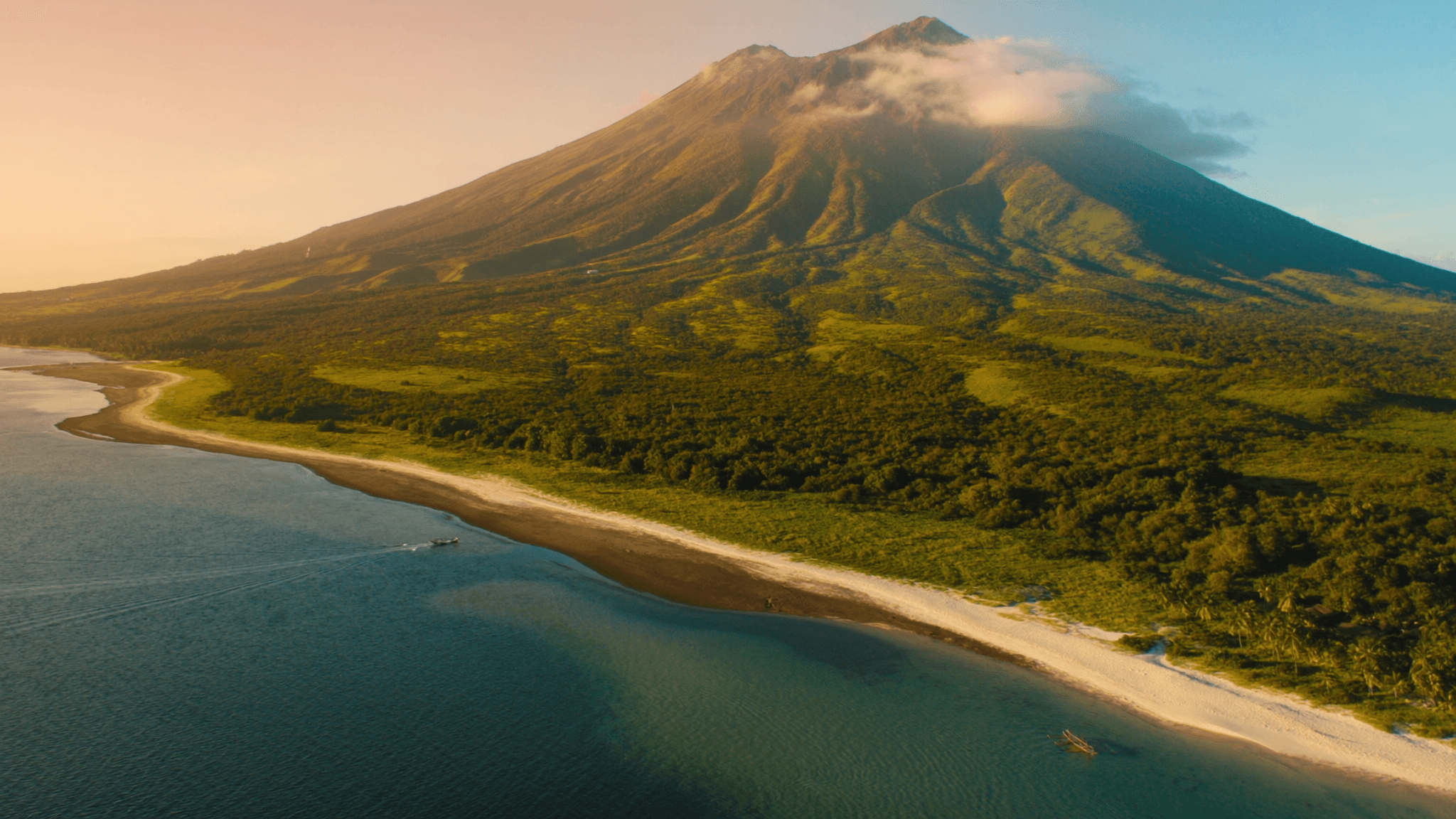
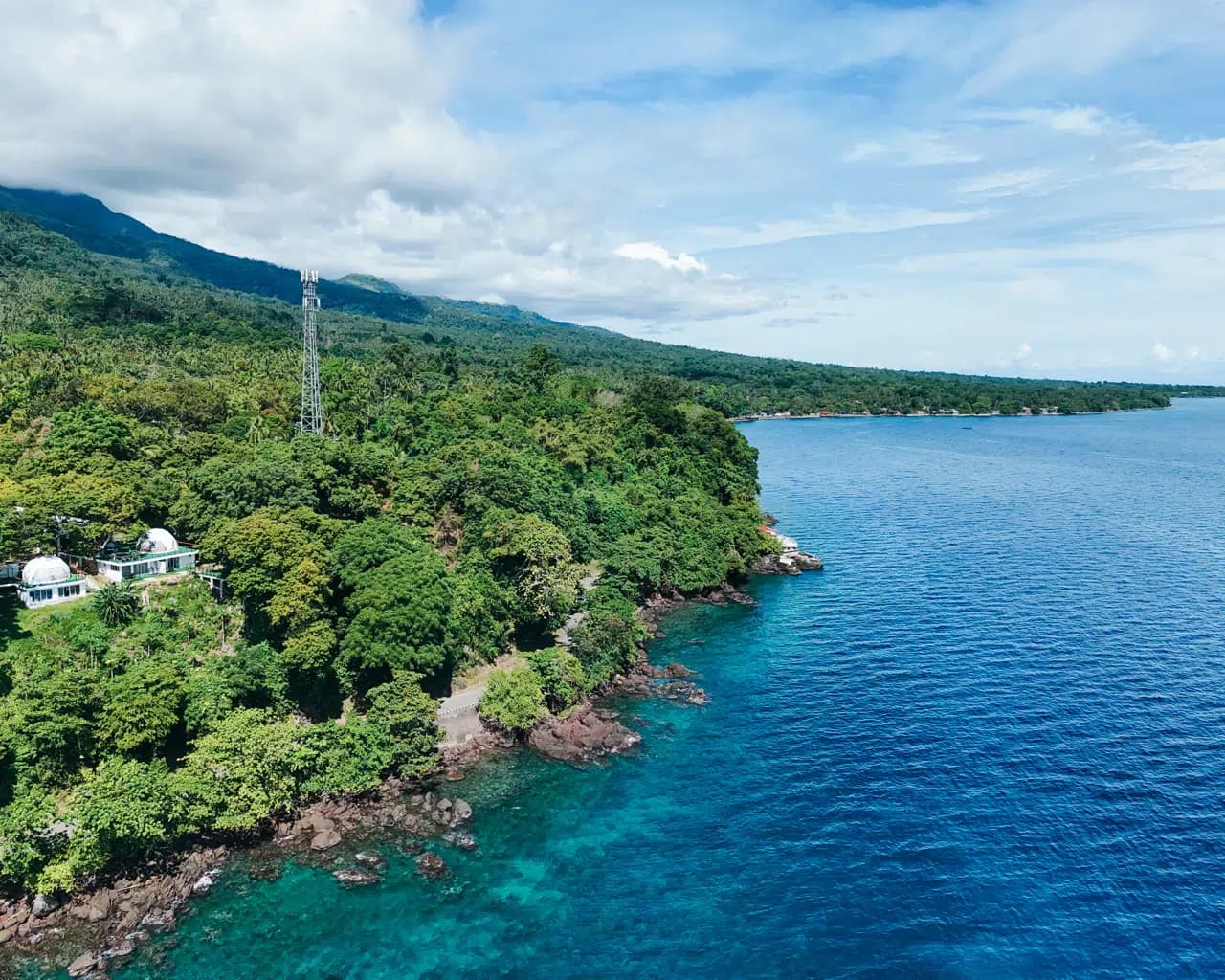
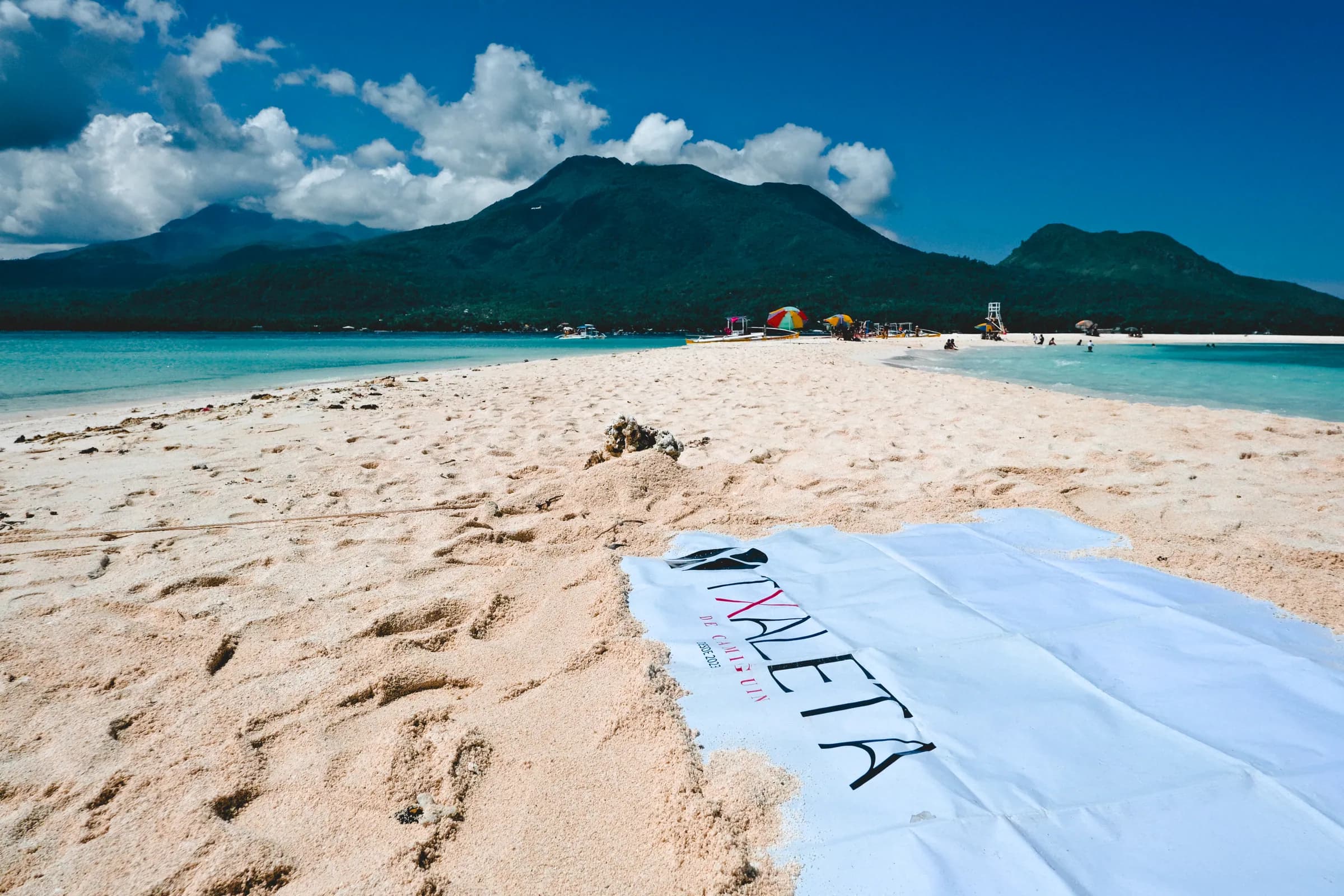
We are one of the quiet ones — a volcanic island in the Bohol Sea with a 64-kilometre ring road, hot springs, a white sandbar that moves with the tide, and a fourteen-room house on a clifftop where breakfast is served over the water.
Read the Camiguin season guide, browse our rooms, book your stay direct, or message us on WhatsApp. Reach us anytime at +63 917 582 2277, or visit us at Purok 6, Puting Balas, Mambajao, 9100 Camiguin.
Pick the place first. The month will follow. Welcome home.
More Than a Resort. A Place to Belong. — Txaleta de Camiguin