
Here is the shape of a Philippine budget, and once you see it you can plan the whole trip properly:
The Philippines is cheap to be in and expensive to move around.
Meals cost a few hundred pesos. A waterfall costs less than a coffee. A scooter for a day costs less than a city taxi ride. Then you change islands, and a single domestic flight can cost more than three days of everything else put together.
Almost every budget guide gets this backwards. They give you a tidy daily figure and bury transport in a footnote — but transport is the line that actually decides what your trip costs, because it is the one that multiplies with every place you add.
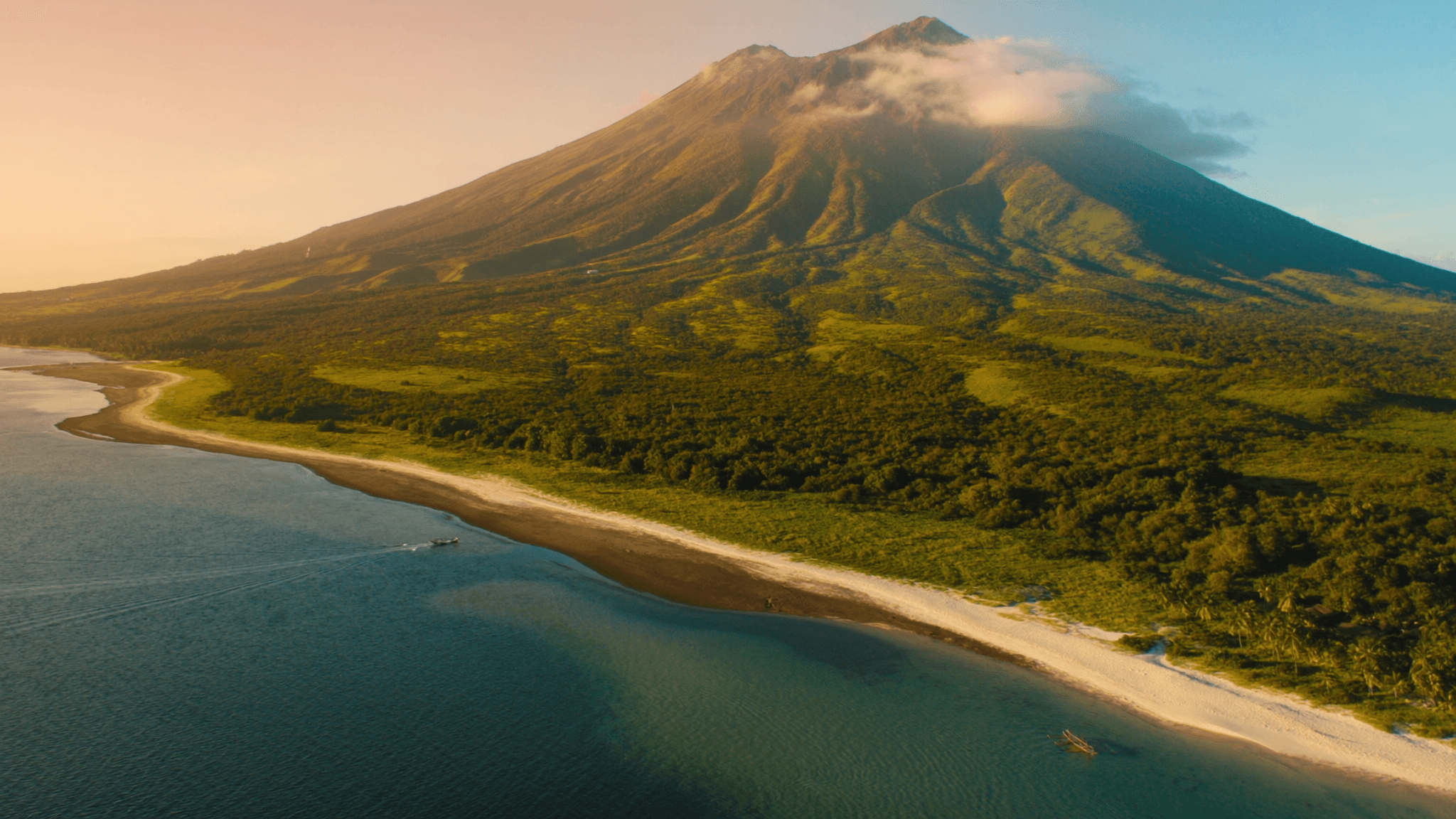
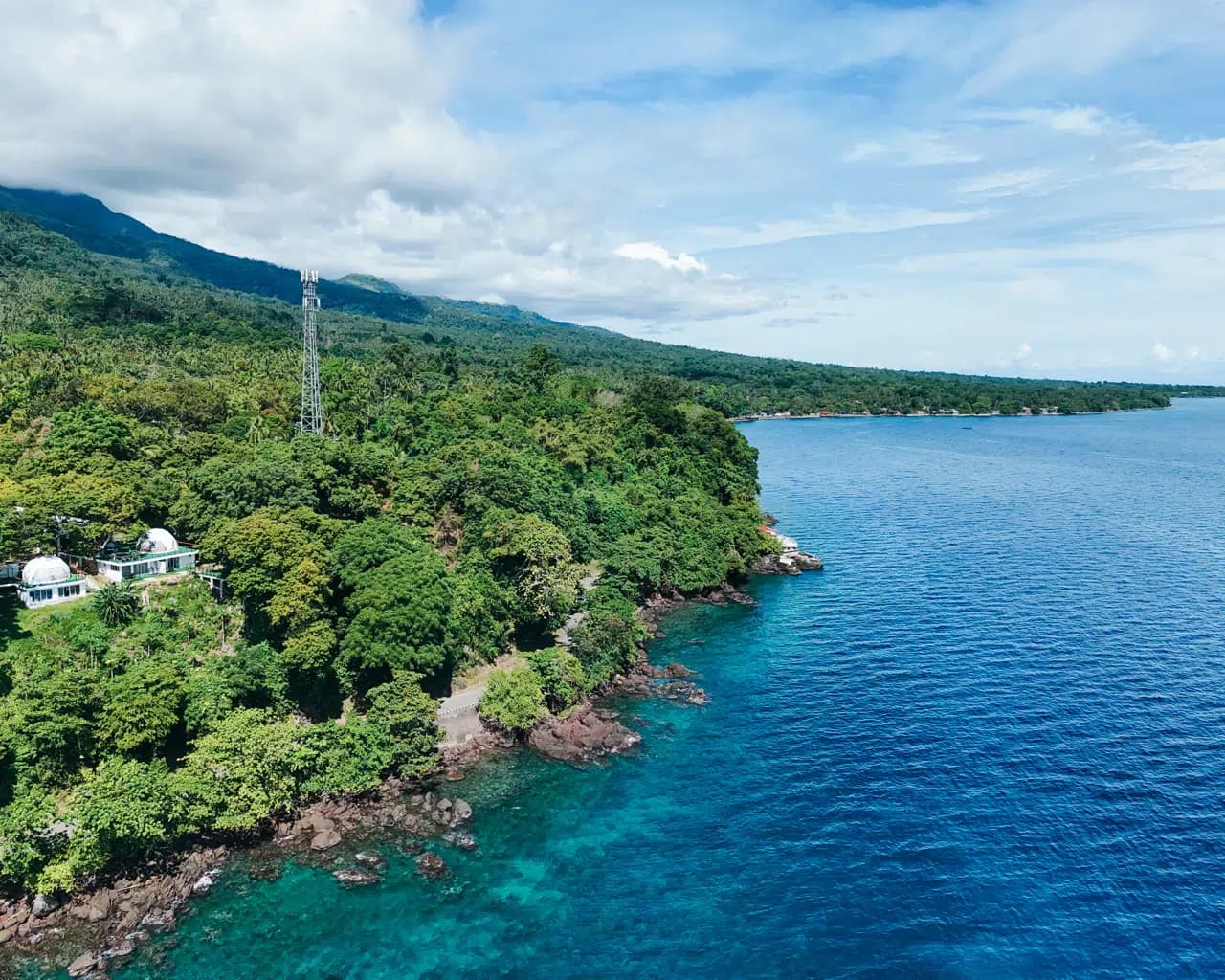
We run a small house at the end of one of those island chains, so we see the arithmetic from the receiving end. This is the honest version.
Quick answer: On the ground, budget roughly ₱1,500–2,500 per person per day backpacking, ₱3,500–5,500 mid-range, and ₱7,000–12,000+ comfortable. Then add flights separately: an international arrival, plus ₱1,500–4,500 per domestic hop. For two weeks with three islands, a realistic all-in for a mid-range traveller is around ₱75,000–110,000 per person excluding the international flight. Book the domestic flights early — that single decision moves the total more than anything else on this page.
Written by the family at Txaleta de Camiguin, on an island in the Bohol Sea. Last updated September 2026. All figures are indicative — Philippine fares and fees move without much announcement.
The split that decides your budget
Two categories, behaving completely differently.
Being there is cheap and predictable. Food, rooms, entrance fees, local transport. It barely varies with how well you plan, and a week costs roughly what two half-weeks cost.
Moving around is expensive and entirely in your control. Domestic flights, ferries, airport transfers. This scales with how many places you visit, not how long you stay — which is why the single most effective budget decision in this country is visiting fewer islands for longer.
We worked the time side of that argument out in 2 weeks in the Philippines: every island change costs half a day to a full day. This is the same argument in pesos. A fortnight across five islands can cost 40% more than the same fortnight across three, for a worse trip.
Daily budgets on the ground
Per person, per day, excluding flights.
| Style | Per day | What that looks like |
|---|---|---|
| Backpacker | ₱1,500 – 2,500 | Hostel or fan room, carinderia meals, shared scooter, public transport, entrance fees |
| Mid-range | ₱3,500 – 5,500 | Guesthouse or mid-range resort, restaurant meals, own scooter, tours |
| Comfortable | ₱7,000 – 12,000+ | Sea-view or boutique room, private boat and driver, dining out properly |
For a rough foreign-currency sense, the peso has historically traded somewhere around ₱50–60 to the US dollar — check the live rate, because that band moves.
These bands hold reasonably across the country, with one adjustment: developed beach destinations run higher. Panglao, Boracay and El Nido will push you toward the top of each band or past it. Small islands and provincial towns sit at the bottom. Our own island is firmly at the cheap end, which we break down peso by peso in the Camiguin trip cost guide.
Flights: the line that dominates
International. Entirely dependent on where you're coming from and how early you book, so we won't invent a number. What matters is that it is usually a fixed, one-off cost — and unlike everything else here, it is not affected by your itinerary.
Domestic. This is the one people underestimate. Expect roughly ₱1,500–4,500 one way on the main routes, with a genuinely enormous spread:
- Booked months ahead or in a seat sale: the low end, sometimes lower
- Booked a fortnight out in high season: the top end or beyond
- The small routes — single daily turboprops to islands like ours — sell out entirely and then the price stops mattering
The structural fact that costs people money: domestic flying is hub-and-spoke through Manila and Cebu. There is usually no direct flight between two smaller islands, so a hop that looks short on a map is two flights. Budget accordingly.
Ferries are the exception, and the saving. Where two islands are genuinely adjacent, the boat is a fraction of the airfare and skips the hub entirely. The Bohol–Camiguin crossing costs under ₱1,000 and replaces two flights; the Balingoan RoRo is around ₱300–359. Our Manila and Cagayan de Oro route guide costs those legs out in full.
Accommodation
Nightly, double room.
| Type | Per night |
|---|---|
| Hostel dorm | ₱500 – 1,200 |
| Basic private room / fan | ₱800 – 1,800 |
| Guesthouse or inn | ₱1,500 – 3,000 |
| Mid-range resort | ₱3,000 – 6,000 |
| Boutique / sea view | ₱5,000 – 12,000+ |
Two questions worth asking before you compare prices anywhere: is breakfast included, and is the airport or port transfer included or extra. On small islands the second one matters more than it sounds, because there is often no ride-hailing and the negotiation happens when you are tired.
Rates rise sharply at Christmas and New Year, during Holy Week, and around local festival weeks — the timing of which we map out in the best time to visit the Philippines.
Food
| Meal | Typical |
|---|---|
| Carinderia (local eatery) | ₱80 – 200 |
| Casual restaurant main | ₱250 – 500 |
| Resort or tourist restaurant main | ₱400 – 900 |
| Local beer | ₱70 – 150 |
| Coffee | ₱80 – 200 |
| Fresh fruit from a roadside stall | very little |
This is where the country is genuinely, unarguably cheap — if you eat where Filipinos eat. A carinderia meal is a fraction of a resort main and is frequently better. The gap between the two is the single largest discretionary lever in your daily budget.
A note on the bill: many resorts, ours included, add a 5% service charge on dining.
Getting around locally
| Option | Cost |
|---|---|
| Jeepney / tricycle, short hop | ₱15 – 50 |
| Scooter rental, per day | ₱400 – 600 |
| Car or van with driver, per day | ₱2,500 – 4,000 |
| Airport transfer, small island | ₱500 – 1,700 |
| Grab in Manila or Cebu | varies with traffic; budget generously |
There is no ride-hailing outside the major cities. On most islands your options are a tricycle, a multicab or a transfer arranged by your accommodation. Budget for the transfer rather than assuming an app.
Entrance fees and activities
The cheerful part. Most natural attractions cost between ₱50 and ₱200. Boat trips are usually priced per boat, not per person, which makes them dramatically cheaper split between four.
The genuine expenses are the organised activities: diving (per dive or per course), permitted hikes with accredited guides, and island-hopping tours sold as packages. Those are worth budgeting individually rather than folding into a daily figure.
Worked budgets
Per person, excluding the international flight, assuming two people sharing a room and a scooter.
One week, two islands
| Backpacker | Mid-range | Comfortable | |
|---|---|---|---|
| Accommodation (6 nights) | ₱4,500 | ₱18,000 | ₱42,000 |
| Food | ₱4,000 | ₱9,000 | ₱18,000 |
| Local transport | ₱2,500 | ₱4,500 | ₱12,000 |
| Fees and activities | ₱2,000 | ₱4,500 | ₱9,000 |
| Domestic flights (1 hop) | ₱2,000 | ₱3,500 | ₱5,000 |
| Total | ~₱15,000 | ~₱39,500 | ~₱86,000 |
Two weeks, three islands
| Backpacker | Mid-range | Comfortable | |
|---|---|---|---|
| Accommodation (13 nights) | ₱10,000 | ₱39,000 | ₱91,000 |
| Food | ₱8,500 | ₱19,000 | ₱38,000 |
| Local transport | ₱5,000 | ₱9,000 | ₱24,000 |
| Fees and activities | ₱4,500 | ₱9,000 | ₱18,000 |
| Domestic flights (2–3 hops) | ₱5,000 | ₱9,000 | ₱14,000 |
| Total | ~₱33,000 | ~₱85,000 | ~₱185,000 |
Note what happens in the flight row when you add a fourth or fifth island — and note that it is the only row you can change without changing the quality of your trip.
What people forget to budget for
Terminal and environmental fees. Small, frequent, cash-only, and they add up across a fortnight.
The transfer at both ends of every island. Two per island change, not one.
A buffer for weather. Between June and November a cancelled flight or suspended ferry can cost you an unplanned night plus a rebooking. Budget one contingency night.
Cash. ATMs are scarce on small islands and often out of service or low on notes. Card acceptance thins out fast outside cities. Carry more cash than feels sensible.
Travel insurance. Medical care on small islands handles ordinary problems; anything serious means a flight to a regional city. This is not a line to skip.
Where to save, and where not to
Save on: eating where Filipinos eat, sharing boats and scooters, travelling in the green season, and — the big one — visiting fewer islands.
If you want a sanity check on what a given budget actually buys on a small island, ask us — we will tell you honestly whether your numbers work for the trip you are describing.
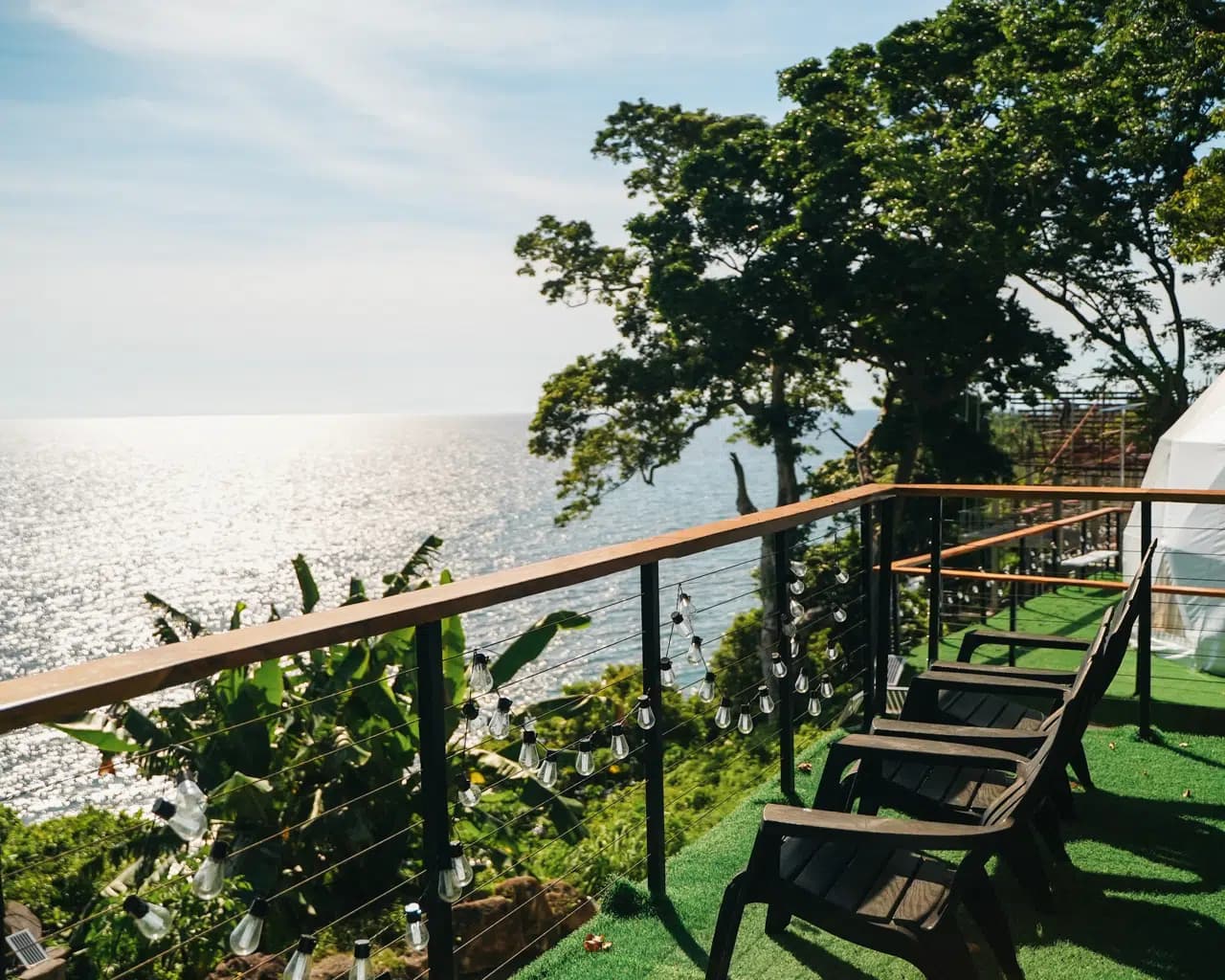
Don't save on: the domestic flights, by booking late. Or on a room with a view, if the view is why you came. On these islands, where you wake up is a large part of what you are buying, and the difference between a windowless room and one over the water is smaller than most people assume.
The honest part
The Philippines is not the cheapest country in Southeast Asia to travel around, and anyone who tells you otherwise is quoting ground costs and ignoring the archipelago.
Being here costs very little. Getting between seven thousand islands costs real money, because water is expensive to cross and the route map goes through two hubs. A month in one region will cost you less than a fortnight hopping.
Which happens to be the better trip anyway. That is the part we actually believe: the budget advice and the travel advice point the same direction. Go to fewer places. Stay longer. Spend the difference on a room where you can hear the sea.
Frequently asked questions
How much does a trip to the Philippines cost?
On the ground, budget roughly ₱1,500–2,500 per person per day backpacking, ₱3,500–5,500 mid-range, and ₱7,000–12,000 or more comfortable. Add flights separately: an international arrival plus ₱1,500–4,500 for each domestic hop. Two weeks across three islands comes to roughly ₱33,000 backpacking, ₱85,000 mid-range, excluding the international flight.
Is the Philippines expensive to travel?
It is cheap to be in and expensive to move around. Food, rooms and entrance fees are genuinely inexpensive, but domestic flights dominate the budget and every island you add is another fare. Travellers who stay in one region spend far less than those hopping between five islands in the same time.
What is a daily budget for the Philippines?
Excluding flights: ₱1,500–2,500 backpacking, ₱3,500–5,500 mid-range, ₱7,000–12,000 or more for comfortable travel. Developed beach destinations like Boracay, El Nido and Panglao push toward the top of each band; small provincial islands sit at the bottom.
How much are domestic flights in the Philippines?
Roughly ₱1,500–4,500 one way on the main routes, with an enormous spread depending on how early you book. Small island routes served by a single daily turboprop sell out entirely in peak season. Booking early moves your total budget more than any other single decision.
How can I travel the Philippines cheaply?
Eat at carinderias rather than tourist restaurants, share boats and scooters, travel between June and early November, and above all visit fewer islands for longer. Cutting one destination from a fortnight saves a flight, two transfers and a set of terminal fees.
How much money do I need for 2 weeks in the Philippines?
For three islands, excluding the international flight, roughly ₱33,000 per person backpacking, ₱85,000 mid-range and ₱185,000 comfortable. The flight row is the one you can change without lowering the quality of the trip, by visiting fewer places.
Is food expensive in the Philippines?
No. A carinderia meal runs ₱80–200, a casual restaurant main ₱250–500, and a resort main ₱400–900. The gap between eating locally and eating at tourist restaurants is the biggest discretionary lever in a daily budget.
Should I take ferries or fly between islands?
Fly for long distances; take the ferry when two islands are genuinely adjacent. A ferry between neighbours costs a fraction of an airfare and avoids backtracking through a hub. The Bohol to Camiguin crossing costs under ₱1,000 and replaces two flights.
How much cash should I carry in the Philippines?
More than feels sensible. ATMs are scarce on small islands and frequently out of service or short of notes, and card acceptance thins quickly outside cities. Withdraw in a city before heading to an island, and budget for cash-only terminal and environmental fees.
When is the cheapest time to visit the Philippines?
June to early November, outside festival weeks. Flights, rooms and tours all soften and the country is genuinely quiet. The trade is rain and typhoon season, so travel those months with flexible fares and a spare day at the front of the trip.
Is Camiguin cheaper than the rest of the Philippines?
Yes, once you are on it. Entrance fees are measured in tens of pesos and a scooter for a day costs less than a city taxi ride. What is not cheap is getting here, since the island takes roughly one small flight a day from Cebu. The full island breakdown is in our Camiguin cost guide.
Come home to Camiguin
If the budget maths on this page points anywhere, it points at staying put.
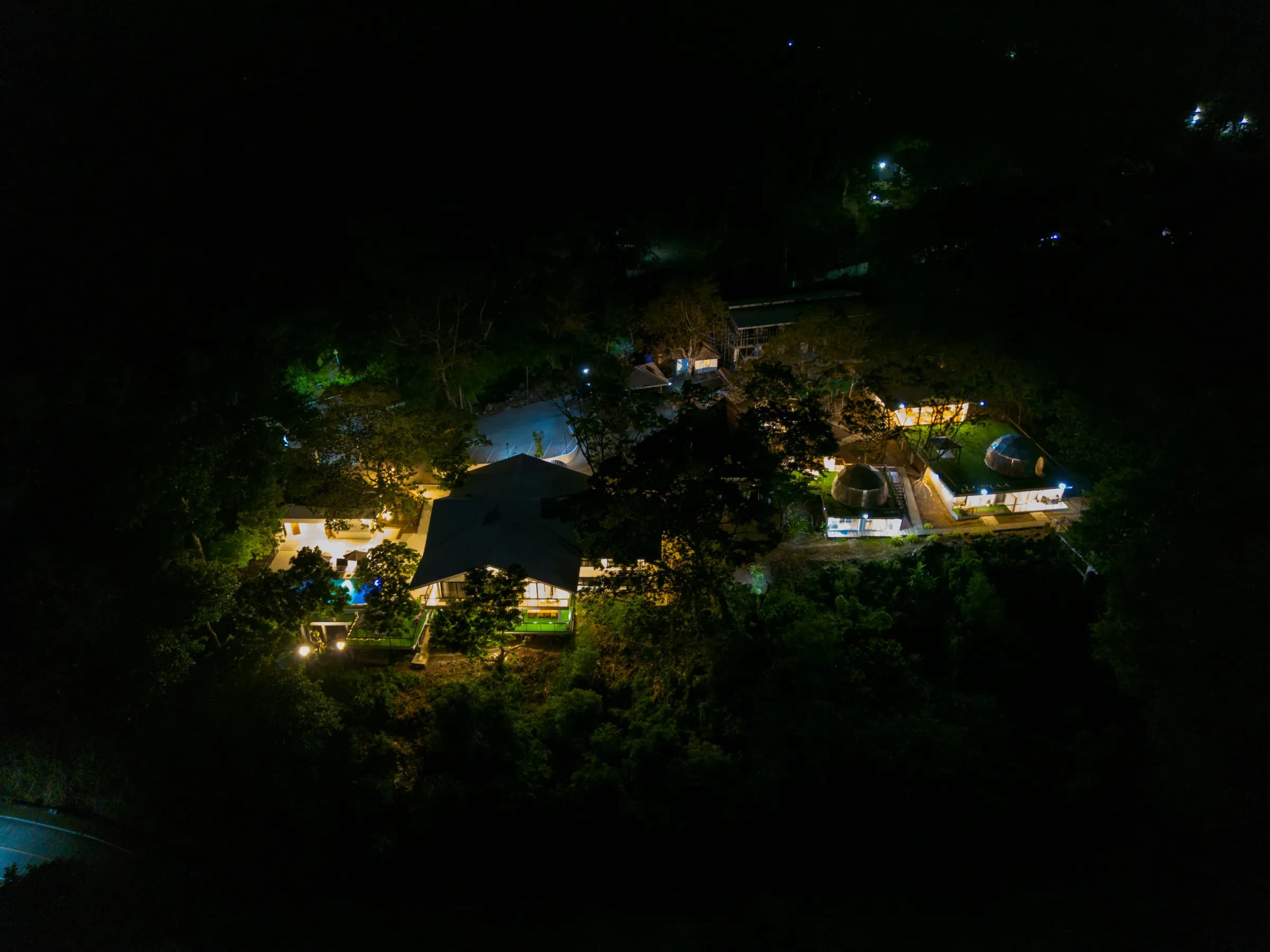
We are the kind of place that argument ends at: a fourteen-room house on a clifftop in Mambajao, breakfast over the water every morning, and an island where the entrance fee to a waterfall costs less than your coffee did at the airport.
Read the Camiguin cost breakdown, browse our rooms, book your stay direct, or message us on WhatsApp. Reach us anytime at +63 917 582 2277, or visit us at Purok 6, Puting Balas, Mambajao, 9100 Camiguin.
Fewer places. Longer stays. Welcome home.
More Than a Resort. A Place to Belong. — Txaleta de Camiguin