
Search this question and you will be handed a lot of fourteen-day itineraries containing five islands.
They are fiction. Not because the islands aren't worth seeing, but because of one fact that almost none of those articles put in writing:
In the Philippines, every island change costs you between half a day and a full day. Not the flight time — the day. And a fourteen-day trip with five islands is not a two-week holiday. It is nine days of holiday and five days of airports.
We know this from the receiving end. We run a small house on Camiguin, usually the last stop on somebody's chain, and we can tell within about a minute of the gate opening whether a guest planned three islands or five. The five-island people arrive grey.
This is the version built around that constraint.
Quick answer: For 2 weeks in the Philippines, plan three islands, four at the absolute most. Budget half a day minimum for every island change, because domestic flights route through Manila or Cebu rather than island to island, and inter-island ferries usually sail once a day. Put your spare time at the start of the trip, not the end. Three good routes are below — including the one we know first-hand, because we live on it.
Written by the family at Txaleta de Camiguin, on an island in the Bohol Sea. Last updated September 2026.
The rule the itineraries leave out
Two structural facts about this country decide your whole plan.
Domestic flying is hub-and-spoke. Manila and Cebu are the hubs. Direct island-to-island flights between two smaller destinations mostly do not exist — so getting from, say, Siargao to Palawan means flying back to a hub and out again. Two flights, a connection, and most of a day gone. The map makes these places look adjacent. The timetable does not care.
Inter-island ferries mostly sail once a day. Not once an hour. If the boat leaves at two in the afternoon and you arrive at three, your next opportunity is tomorrow. That single fact dictates entire days — we walk through a real example of it in how to get to Camiguin from Manila, where one afternoon sailing governs the whole route.
Add the two together and you get the arithmetic that should drive your itinerary:
| Islands in 14 days | Days actually in transit | What the trip feels like |
|---|---|---|
| 2 | ~1 | Deeply relaxed. You will know a place |
| 3 | ~2 | The sweet spot. Variety without exhaustion |
| 4 | ~3–4 | Busy. Workable if two are close together |
| 5+ | ~5 | A logistics exercise with scenery |
Three is the number. If you take one thing from this page, take that.
Two more things that quietly eat days, and that nobody counts:
Your arrival day is not a holiday day. Long-haul flights land in Manila at awkward hours, and the domestic connection is often the next morning. Write that day off honestly rather than planning a sunset on it.
Your departure day isn't either. Working backwards from an international flight, you usually need to be back at a hub the night before. That is two days of your fourteen gone before you have chosen a single beach.
So a "two-week trip" is realistically eleven or twelve usable days. Plan those.
Route 1: The classic first-timer
Manila → Palawan → Cebu or Bohol → out
The route most first-time visitors want, and a sound one. Roughly: a night in Manila on arrival, four or five days in Palawan (El Nido and Coron are the headline, and getting between them is itself a boat day worth counting), then a flight back through a hub to Cebu or Bohol for the second week, and out from there.
Honesty declaration, because this site runs on it: we live in the Bohol Sea, not in Palawan. We have not run a boat in Bacuit Bay and we are not going to write as if we have. What we can tell you with confidence is the structural part — that El Nido to Coron is a sea crossing to budget properly for, that Palawan's own internal transfers are longer than they look on a map, and that pairing Palawan with anywhere else in a fortnight means at least two hub connections. For what the place is actually like, read someone who was there.
Why it still works: it is two regions, not five islands, and the second week can be genuinely slow.
Route 2: The southern slow route — the one we know
Cebu → Bohol → ferry → Camiguin → out via Cebu
This is our own backyard, so this is the section where we can be specific rather than general.
Days 1–2 — Cebu. Arrive, sleep off the flight, and use Cebu as what it is: the country's best-connected hub, with decent food and an easy onward network. Don't over-invest days here.
Days 3–7 — Bohol. Chocolate Hills, the tarsiers, the Loboc River, and Panglao's white sand and Balicasag diving. Bohol is genuinely better than us at several things and we say so plainly in Camiguin vs Bohol — the beaches and the diving among them.
Day 8 — the ferry, and the reason this route exists. From Jagna, on Bohol's south coast, a ferry crosses to Balbagon near Mambajao on Camiguin in around four hours. No flight, no hub, no backtracking. This is rare in the Philippines and it is why these two islands belong in the same fortnight.
The catch, stated plainly: departures are limited — commonly one early-afternoon sailing — and the schedule moves. Confirm with the operator before you build a day around it, and note that Balbagon is a different port from Benoni, which serves the Cagayan de Oro route.
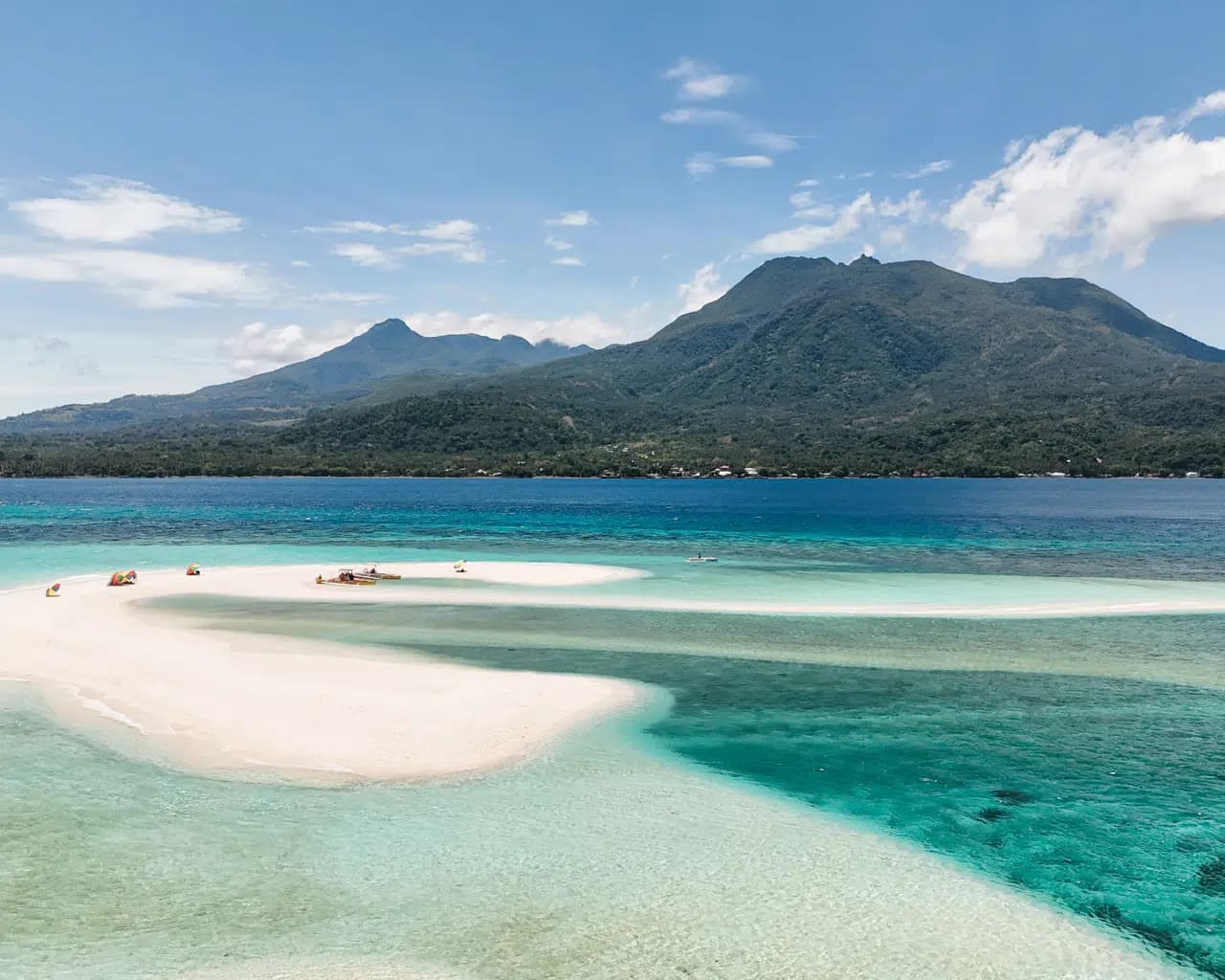
Days 9–13 — Camiguin. A 64-kilometre ring road with a volcano, two waterfalls, hot springs, a cold spring, a natural soda pool, a sunken cemetery and a white sandbar inside it. Three days covers the highlights; five lets you stop checking the time. Our three-day Camiguin itinerary is the order we'd do it in, and if this is the leg you want, send us your ferry date — we'll meet the boat at Balbagon.
Day 14 — out. The Cebgo turboprop from Camiguin back to Cebu, roughly 55 minutes, and onward. One flight a day, so book it early and don't schedule it tight against an international departure. Detail in how to get to Camiguin from Cebu.
Total island changes: two. One of them is a ferry. That is why this route leaves you rested.
Route 3: Surf, then stop
Siargao → (via Cebu) → Camiguin
For travellers who want one high-energy week and one quiet one. Siargao for the surf, the social scene and the lagoons; Camiguin for the opposite of all three.
The honest cost: there is no quick hop between them. They sit on opposite sides of Mindanao and you route through Cebu — a flight out and a flight back in, and most of a day gone. We lay the two islands side by side in Camiguin vs Siargao.
Do it in this order. Siargao first, Camiguin second. Going loud-to-quiet is the right direction for a holiday to end; the reverse leaves you departing from the busiest point of the trip.
What we would cut
The most useful thing in any itinerary article is what it tells you to remove.
Cut the third region, not the days. People try to keep five destinations by shortening each to two nights. Two nights somewhere is one usable day after travel. Delete the destination instead.
Cut Manila, unless you want it. It is a real city with real things in it, but as a stopover it mostly costs you traffic. Connect through and come back to it another time if it interests you.
Cut the "quick side trip." In this country there is no such thing. Every side trip is a hub connection wearing a disguise.
Don't cut the buffer. Between June and November especially, weather cancels flights and suspends ferries. A spare day at the front of the trip absorbs that; a tight plan turns one storm into a lost week. Which month you choose matters more here than almost anywhere — see the best time to visit the Philippines, where the short version is that two monsoons hit opposite coasts and there is no single national dry season.
What it costs
The flights dominate. Internal Philippine fares are cheap when booked early and punishing when booked late, and every island change is another fare. A three-island fortnight with fares bought months ahead can cost less than a five-island one bought a fortnight out, before counting the days you get back.
The full arithmetic — daily budgets, worked one- and two-week totals, and what each extra island actually adds — is in how much a trip to the Philippines costs.
On the ground it is inexpensive. We break our own island down peso by peso in the Camiguin trip cost guide — entrance fees in the tens of pesos, a scooter for a day costing less than a city taxi ride.
The honest part
We only know one corner of this country well.
We can tell you exactly which port the Jagna ferry lands at, what the Camiguin flight does when the festival is on, and how long the road from Benoni actually takes. We cannot tell you which boatman to use in El Nido, and we are not going to pretend otherwise — half the itineraries online are written by people who have never been to two-thirds of the places in them, and you can usually tell.
So use Route 2 as a route we stand behind, Routes 1 and 3 as structurally sound frames, and read specialists for the legs we don't live on.
The other honest thing: two weeks is not long here. The Philippines has over seven thousand islands. You are not going to see it. The travellers who enjoy a fortnight most are the ones who accept that early, pick three places, and stop trying to win.
Frequently asked questions
How many islands can you visit in 2 weeks in the Philippines?
Three comfortably, four at a push. Every island change costs between half a day and a full day, because domestic flights route through Manila or Cebu rather than island to island, and inter-island ferries usually sail once a day. Five islands in fourteen days means roughly five days in transit.
Is 2 weeks enough for the Philippines?
It is enough for one region properly, or two or three islands at a relaxed pace. It is nowhere near enough to "see the Philippines" — there are over seven thousand islands. Treat a fortnight as a trip to a corner of the country rather than a tour of it.
What is the best 2-week Philippines itinerary for first-timers?
The most popular is Manila to Palawan, then Cebu or Bohol, and out. The one we know first-hand is Cebu to Bohol, then the Jagna ferry to Camiguin and out via Cebu — it works well because only two island changes are involved and one of them is a ferry rather than a hub connection.
How do you get between islands in the Philippines?
Mostly by flying through a hub, since direct flights between two smaller islands are uncommon. Ferries connect some neighbours directly, but they typically sail once a day, so a missed connection costs you a full day. Always check the sailing schedule before committing an itinerary to it.
Can you island hop from Bohol to Camiguin?
Yes, and it is one of the few direct inter-island links that avoids a hub. A ferry runs from Jagna on Bohol's south coast to Balbagon near Mambajao on Camiguin in around four hours. Departures are limited, commonly one early-afternoon sailing, so confirm with the operator before planning around it.
How many days do you need in each place?
Three to five nights is the useful minimum for somewhere with an airport transfer at both ends. Two nights is one usable day once travel is subtracted. If your plan has several two-night stops, remove a destination rather than shortening the others.
When is the best time for a 2-week trip to the Philippines?
Late January to April is the most reliable window across the largest part of the country, with March to May the broadest "good almost everywhere" stretch. June to early November is cheaper and greener but sits inside typhoon season, so travel those months with flexible fares and spare days at the front of the trip.
Should I include Manila in a 2-week itinerary?
Only if the city itself interests you. As a stopover it mostly costs traffic and a night. Most visitors connect through it on arrival and spend the time somewhere else, which is a reasonable choice for a fortnight.
How much does 2 weeks in the Philippines cost?
The domestic flights usually dominate, and they rise steeply as they fill, so booking early matters more than any other saving. On the ground the country is inexpensive — entrance fees on our island are measured in tens of pesos and a scooter for a day costs less than a city taxi ride.
What is the biggest mistake in Philippines itineraries?
Too many islands. The second biggest is counting the arrival and departure days as holiday days — long-haul flights land at awkward hours and the domestic connection is often the next morning, which quietly removes two days from a fourteen-day trip before you have chosen a beach.
Is it better to fly or take ferries between Philippine islands?
Fly for long distances; take the ferry when two islands are genuinely adjacent, because it avoids a hub connection and the backtracking that comes with it. The Bohol to Camiguin crossing is a good example of a ferry that saves a day rather than costing one.
Come home to Camiguin
However you build the fortnight, we would make one suggestion: finish somewhere quiet.
A trip that ends on a busy beach ends at a high pitch. A trip that ends on a small volcanic island with a ring road, a sandbar and nowhere in particular to be sends you home differently.
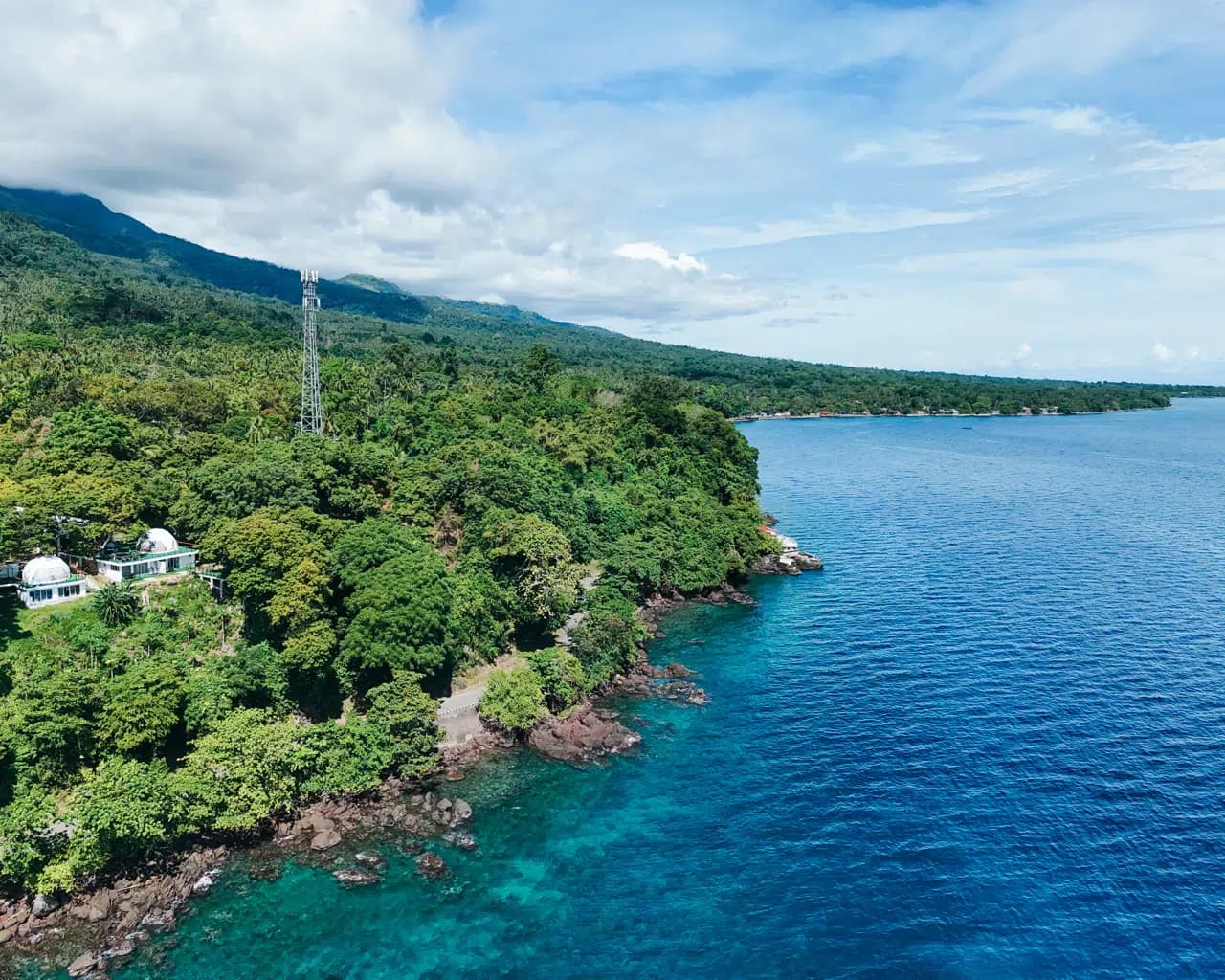
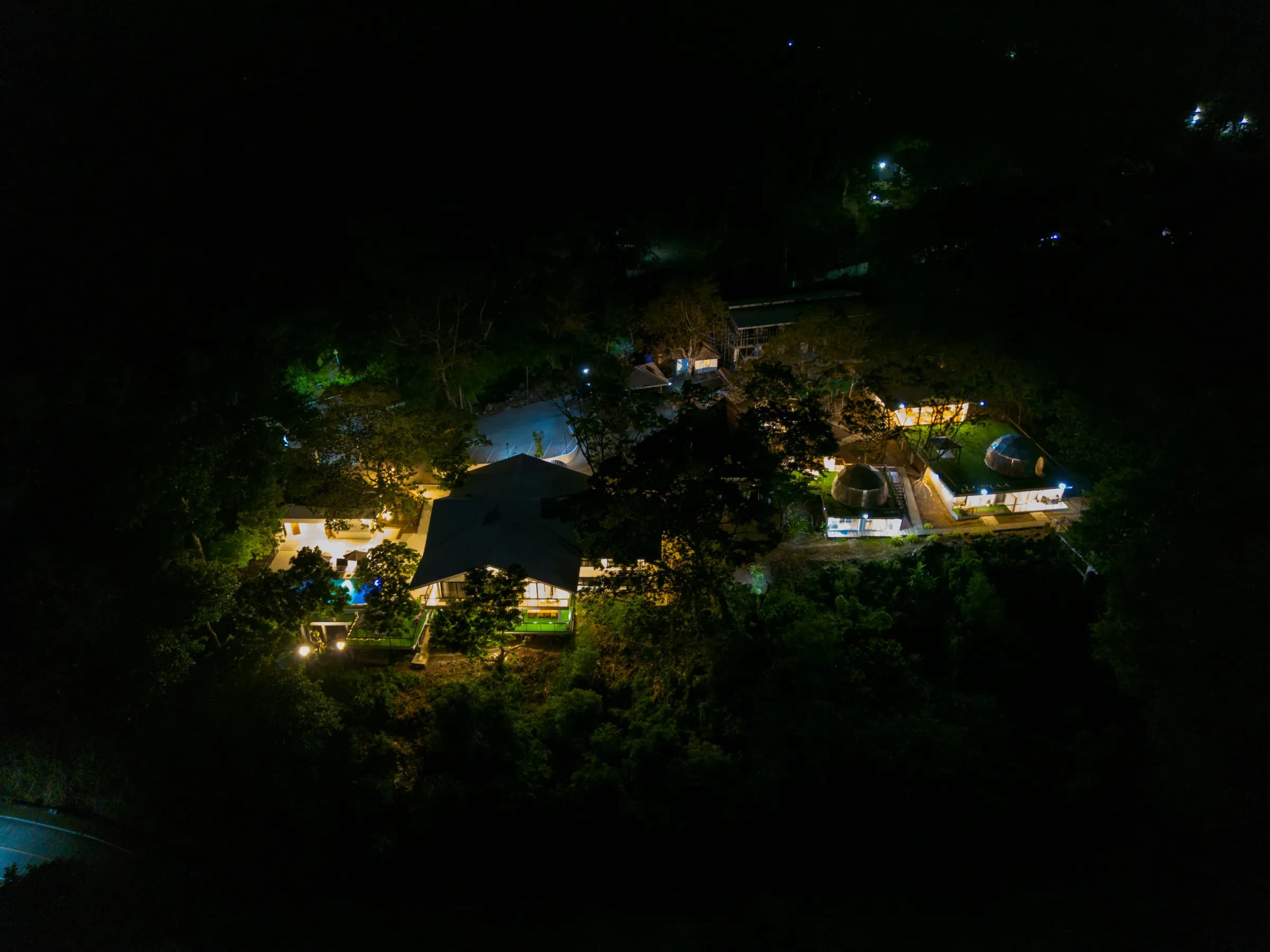
That is the part of the country we can speak for. Fourteen ocean-view rooms on a clifftop in Mambajao, breakfast over the water, and a whole island that closes early.
Read the Camiguin itinerary, browse our rooms, book your stay direct, or message us on WhatsApp. Reach us anytime at +63 917 582 2277, or visit us at Purok 6, Puting Balas, Mambajao, 9100 Camiguin.
Pick three places. Give them time. Welcome home.
More Than a Resort. A Place to Belong. — Txaleta de Camiguin