These two get compared constantly, and the comparison is slightly unfair in both directions. Bohol is roughly twenty times the size of Camiguin. It has an international airport, a landscape on the currency, a primate found almost nowhere else, and one of the best dive sites in the country. Camiguin has a 64-kilometre ring road and seven volcanoes.
So the honest framing is not "which island is better." It is "which of these two very different trips do you actually want" — and, because the ferry between them exists, "should you just do both?"
We live on one of them, which we will declare now rather than at the bottom. That bias is real. What we can offer against it is the thing a listicle cannot: we watch people arrive here from Bohol every week, and we know exactly which ones are delighted and which ones spend two days wondering where the restaurants went.
Quick answer: Choose Bohol for marquee sights and variety — Chocolate Hills, tarsiers, the Loboc River, and Panglao's white-sand beaches and diving. Choose Camiguin for quiet, volcanic landscape, hot and cold springs, and a genuinely uncrowded island at a lower cost. Bohol is the bigger, easier, busier trip; Camiguin is the slower, emptier one. They are linked by a ferry from Jagna, so the best answer for a two-week trip is usually both.
Written by the family at Txaleta de Camiguin. Last updated September 2026.
Camiguin vs Bohol at a glance
| Camiguin | Bohol | |
|---|---|---|
| Size | ~238 km², one ring road | ~4,800 km² plus Panglao and outlying islands |
| Character | Volcanic, slow, quiet, family-run | Varied, developed, well-organised for tourism |
| Signature sights | White Island sandbar, Sunken Cemetery, hot and cold springs | Chocolate Hills, tarsiers, Loboc River, Panglao beaches |
| Beaches | Dark volcanic sand; white sand offshore at the sandbar and Mantigue | Long white-sand stretches on Panglao |
| Diving | Uncrowded, good, not famous | Balicasag — genuinely world-class |
| Crowds | Very low, all year | Moderate to high, especially Panglao |
| Nightlife / dining | Essentially none; kitchens close early | Real restaurant and bar scene at Alona |
| Getting there | One small airport, ~1 flight/day from Cebu | International airport, direct flights from Manila and Cebu |
| Days needed | 3 for the highlights, 5–7 to relax | 4–6, more with island-hopping |
| Cost | Lower across the board | Higher, particularly on Panglao |
Read that table honestly and a pattern shows up immediately: Bohol wins on almost every measure of "things available to you." Camiguin wins on the absence of other people. Whether that is a win depends entirely on what you are coming for.
Credit where it's due: what Bohol does better
We are not going to pretend otherwise on any of these.
The sights are genuinely world-class, and we have nothing like them. The Chocolate Hills are a landscape you cannot see anywhere else on earth — over a thousand near-symmetrical mounds turning brown in the dry season. The Philippine tarsier is one of the smallest primates alive and Bohol is where you responsibly see one. Camiguin has beautiful landscape; it has no icon of that order, and it would be silly to claim it does.
Panglao's beaches beat ours, plainly. Long white sand, calm water, the whole postcard. Camiguin's mainland sand is black — volcanic, and lovely in its own way, but it is not what most people picture. Our white sand is offshore, at White Island and Mantigue, and you take a boat to it.
The diving is better. Balicasag is a serious dive site with turtles, walls and sardine schools, and it draws divers from all over the world. Camiguin's diving is uncrowded and good — the Sunken Cemetery is a strange and memorable dive — but it is not in the same league, and any dive shop will tell you so.
Getting there is far easier. Bohol-Panglao has an international terminal and takes direct flights from Manila. Camiguin takes roughly one small turboprop a day, from Cebu only. That single difference decides a lot of trips, and we have written the whole awkward business up in how to get to Camiguin from Manila.
There is more to eat, drink and do after dark. Alona Beach has an actual scene. Camiguin does not, at all, and we will come back to that.
If your holiday depends on any of the five things above, book Bohol. Genuinely — a disappointed guest is worse for us than an empty room.
Where Camiguin pulls ahead
It is still, actually, quiet
This is the whole argument, and it is not a small one.
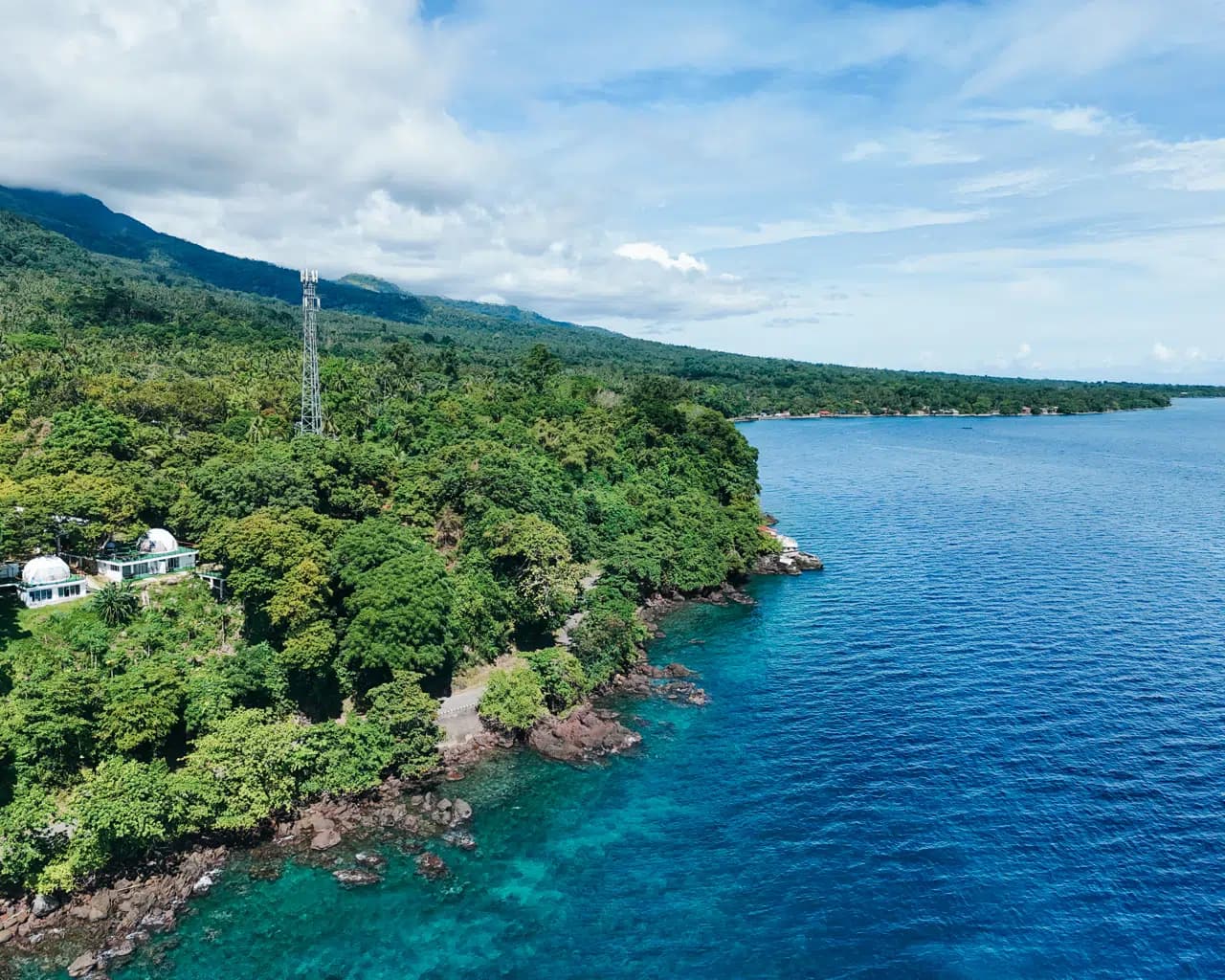
Bohol is a well-developed destination and Panglao in particular has been building hard for years. It is well-run and it is busy. Camiguin gets a fraction of the visitors, spread over an island you can drive around in an hour, and the difference is not subtle — it is the difference between sharing a viewpoint with four coaches and being the only car on the road.
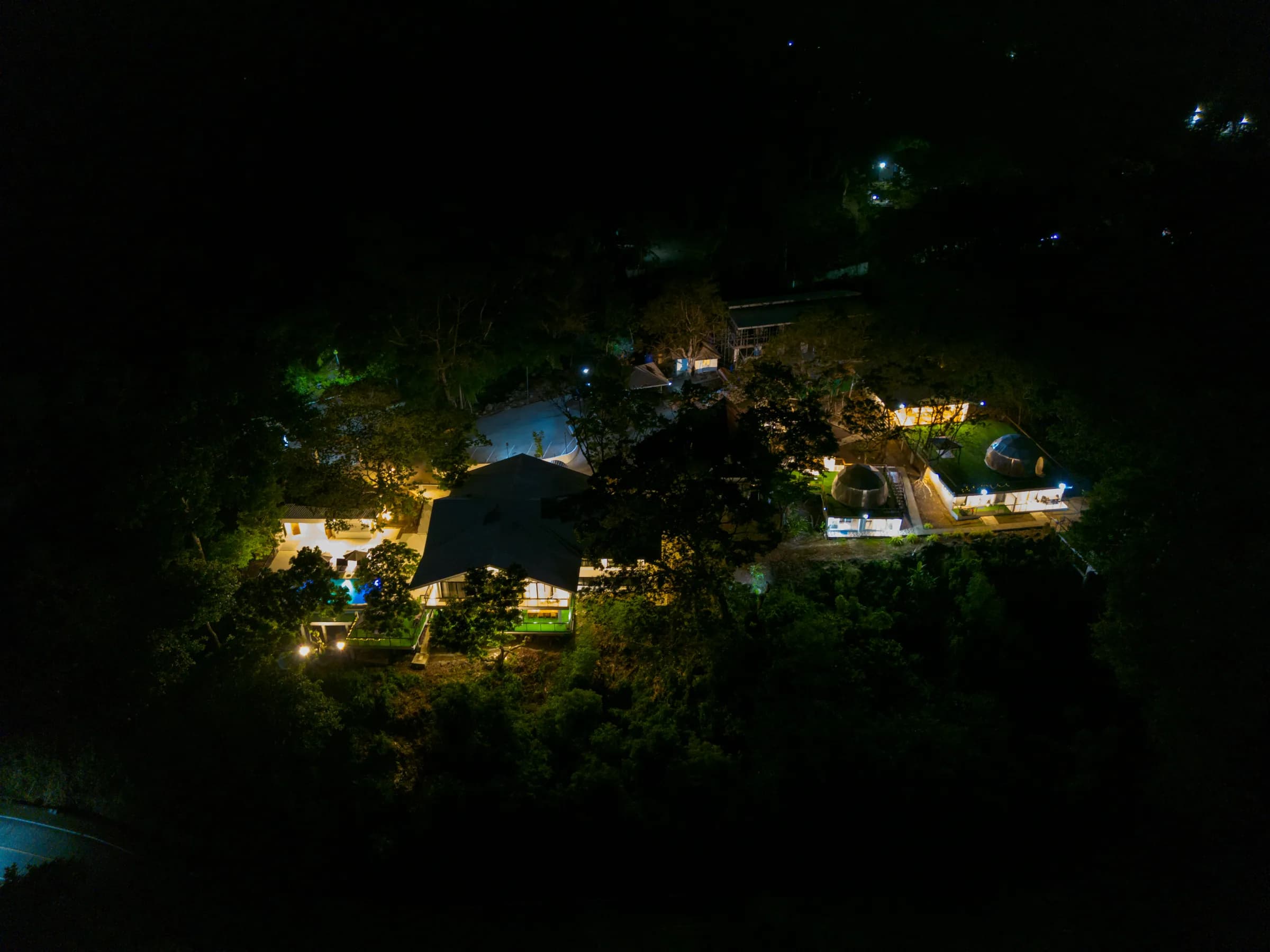
The night photograph at the top of this page is not styling. That is what this coast looks like after dark: unlit, quiet, the sea audible from the road.
More distinct landscape per square kilometre
Bohol is bigger, so its attractions are spread across hours of driving — Chocolate Hills inland, tarsiers in Corella or Loboc, beaches on Panglao, the quiet coast out at Anda. Real days go into transfers.
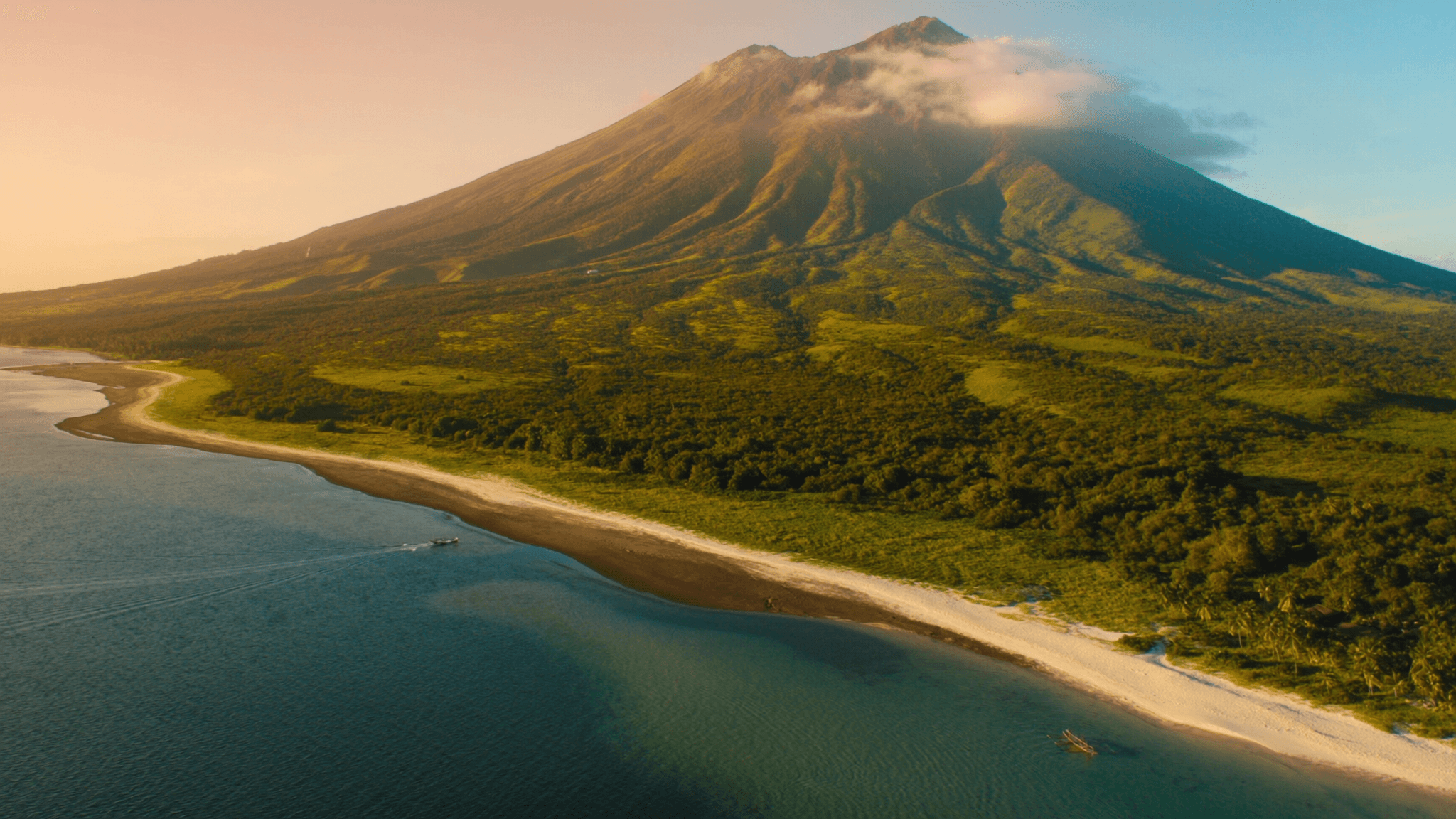
Camiguin puts a volcano, two waterfalls, hot springs, a cold spring, a naturally carbonated soda pool, a sunken cemetery and a white sandbar inside a 64-kilometre loop. You can do the ring road in a day and stop at all of it. Our things to do in Camiguin lays the whole loop out, and the three-day itinerary puts it in order.
Nowhere else in the Philippines has this density of different landscapes in this small a space. That is Camiguin's actual claim, and it holds up.
The springs
Bohol has no answer to this one. Ardent hot springs on the volcano's flank, Sto. Niño cold spring, and the Bura soda pool — water that comes out of the ground naturally carbonated. Our guide to the springs covers all three. It is the most distinctive thing about the island and almost nobody arrives knowing it exists.
It costs less
Across rooms, food, transport and entrance fees. Camiguin's attractions are priced in tens of pesos. Panglao is priced like a developed beach destination, because it is one. The full breakdown is in our Camiguin trip cost guide.
It is better for a certain kind of couple
If the point of the trip is to be somewhere together and unhurried, Camiguin does that better than a busy beach strip does. That is most of why people choose us, and we have written the honeymoon version of the argument separately.
The honest case against Camiguin
The things that make people regret choosing us, listed plainly. Every one of these is a reason to pick Bohol instead.
The sand is black. If you have pictured white sand outside your room, that is Panglao, not here. Ours is offshore and you reach it by boat.
There is no nightlife. None. Most kitchens close early and by nine the island is quiet. This is a feature if you want it and a genuine problem if you do not.
Restaurant choice is thin. Bohol has a real range. Here, most visitors eat where they sleep, which puts a lot of weight on choosing the right place — see where to stay in Camiguin and what to eat.
One flight a day, from one city. It sells out around the October festival and the holidays, and there is no alternative airline.
No marquee sight. Nothing here will impress people at home the way a photograph of the Chocolate Hills does. What Camiguin gives you is a week, not a picture.
Rain, in the green season. We are honest about the months in the best time to visit rather than pretending the year is uniform.
The best answer is usually both
Here is the part almost nobody writes up properly, and it is the reason this comparison is different from Camiguin vs Siquijor or Camiguin vs Siargao: there is a direct ferry between Bohol and Camiguin.
It sails from Jagna, on Bohol's south coast, and lands at Balbagon, near Mambajao — not Benoni, which is the port for the Cagayan de Oro route. Crossing time is around four hours.
The one thing that governs this leg is frequency. Departures are limited — commonly one early-afternoon sailing — and our own guides have carried slightly different figures for it over the past year, which tells you how much the schedule moves. Confirm the sailing with Super Shuttle Ferry before you build a day around it, because if you miss it you are waiting a long time, and Jagna is not where you want an unplanned night.
The itinerary that actually works
Fly into Bohol-Panglao (easy, direct from Manila), give Bohol four to five days, take the Jagna ferry to Camiguin, give Camiguin three to four days, then fly out of Camiguin via Cebu.
That is an open-jaw trip with no backtracking, and domestic tickets in the Philippines usually price it the same as two one-ways. You get the marquee sights and the beaches first, then the quiet island at the end, in the order that works — because coming to Camiguin after Bohol feels like arriving somewhere, whereas doing it the other way round can feel like leaving somewhere to go be busy.
Ten to twelve days covers both without rushing. If you have only a week, pick one. And if you are building a longer trip around this pairing, 2 weeks in the Philippines shows where it sits alongside the other routes — and why three islands is the honest ceiling for a fortnight.
So which should you pick?
Pick Bohol if it is your first trip to the Philippines, you want the recognisable sights, you are travelling with people who need options, you want white sand outside your room, you dive seriously, or you want somewhere with a dinner scene.
Pick Camiguin if you have done a busy island before and did not love it, you want landscape over attractions, you are travelling as a couple, you are on a budget, or the actual goal is to stop moving for a week.
Do both if you have ten days or more. It is the better trip, and the ferry makes it one journey rather than two.
Coming to us from Bohol
If you take the Jagna crossing, you land at Balbagon, which is close to Mambajao and close to us. Tell us your sailing and we will meet the boat — the last mile here is not something to improvise, because there is no ride-hailing on the island at all.
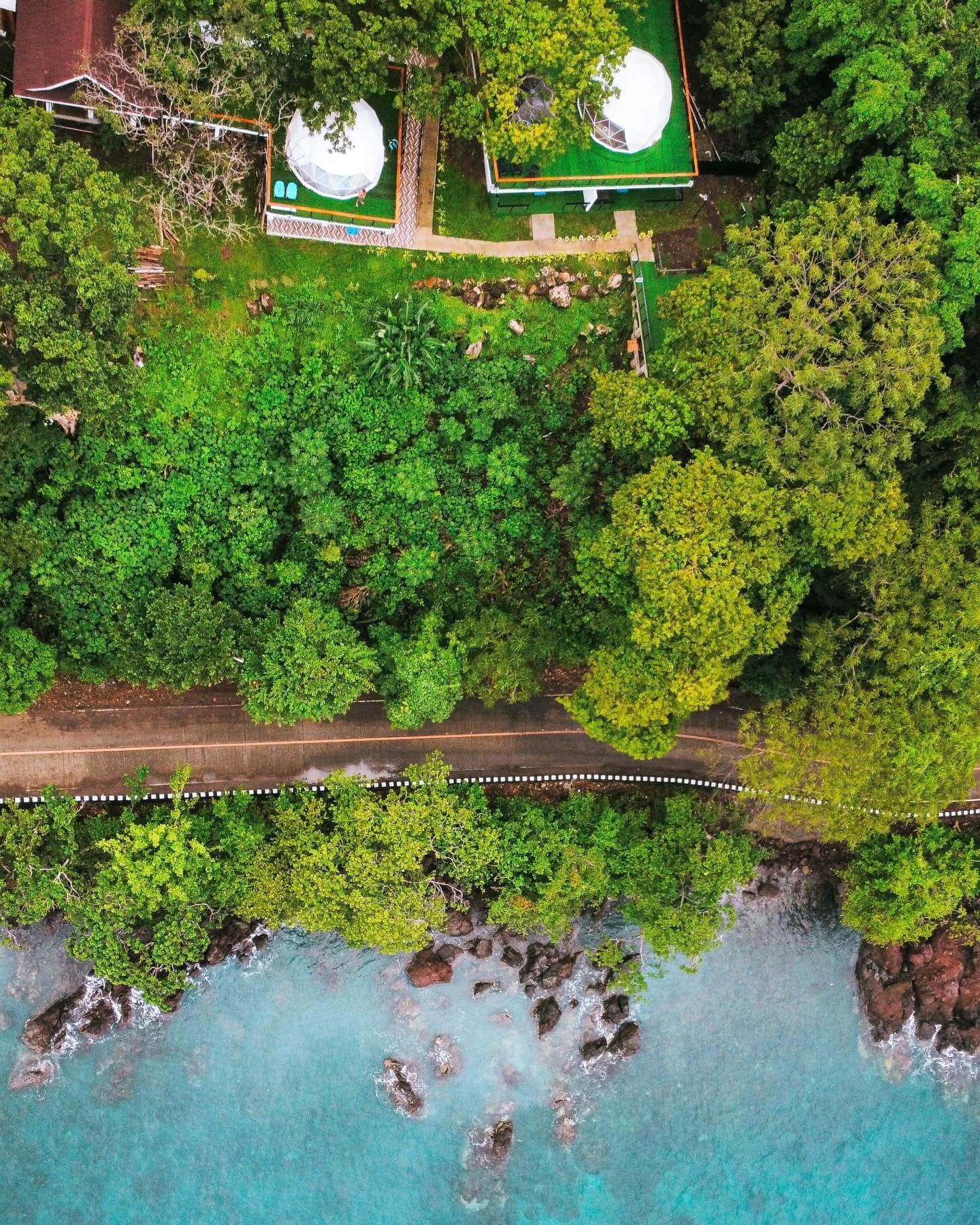
After four hours on a ferry, the Ocean View Glamping at the cliff edge is the room that resets you fastest. Or the Premier Seaview Suite, if you want White Island framed in glass when you wake up.
Frequently asked questions
Camiguin or Bohol — which is better?
Neither, in the abstract. Bohol is bigger, easier to reach and has the marquee sights — Chocolate Hills, tarsiers, Panglao's beaches and Balicasag diving. Camiguin is far quieter, cheaper, more volcanic and better for slow travel, but has black sand, no nightlife and one flight a day. Pick Bohol for variety and sights, Camiguin for quiet.
Is there a ferry from Bohol to Camiguin?
Yes. It sails from Jagna on Bohol's south coast to Balbagon near Mambajao on Camiguin, taking around four hours. Departures are limited — commonly one early-afternoon sailing — and the schedule changes, so confirm with the operator before planning your day around it. Note that Balbagon is a different port from Benoni, which serves the Cagayan de Oro route.
Can you visit Bohol and Camiguin in one trip?
Yes, and it is the trip we would recommend if you have ten days or more. Fly into Bohol-Panglao, spend four to five days in Bohol, take the Jagna ferry to Camiguin for three to four days, then fly home out of Camiguin via Cebu. It is an open-jaw route with no backtracking.
Is Camiguin a good alternative to Bohol?
It is a good alternative if what you did not like about Bohol was the crowds, the prices or the driving between attractions. It is a poor substitute if you wanted the Chocolate Hills, the tarsiers, white sand outside your room or serious diving, because Camiguin does not have equivalents for any of those.
Which is cheaper, Camiguin or Bohol?
Camiguin, across rooms, food, transport and entrance fees. Camiguin's attractions cost tens of pesos and its accommodation is mostly small family-run properties. Panglao in particular is priced as a developed beach destination.
Is Camiguin's sand like Panglao's?
No, and this is the clearest physical difference between the two. Panglao is a limestone island with white sand you walk onto from your room; Camiguin is volcanic, and the mainland sand is black. The white sand is offshore, at the White Island sandbar and at Mantigue Island, both reached by a short boat ride. If you want white sand directly outside your room, Panglao in Bohol is the better choice.
How many days do you need in Bohol and Camiguin?
Four to five days for Bohol, three to four for Camiguin, so ten to twelve days including the ferry day gives you both without rushing. With only a week, choose one rather than splitting it.
Which is better for diving, Camiguin or Bohol?
Bohol. Balicasag is a genuinely world-class site with turtles, walls and sardine schools. Camiguin's diving is good and uncrowded — the Sunken Cemetery is a memorable dive — but it does not compete with Balicasag, and no honest dive shop would tell you otherwise.
Is Bohol too touristy?
That depends on where in Bohol. Panglao and the main attraction circuit are busy and well-developed; the quieter east coast around Anda is much less so. If the developed feel is what puts you off, Camiguin is considerably emptier than any part of Bohol.
Which is easier to get to?
Bohol, by a wide margin. Bohol-Panglao has an international terminal and takes direct flights from Manila. Camiguin takes roughly one small turboprop a day, from Cebu only, and it sells out in peak season.
Which is better for couples?
Camiguin, if the point is to be somewhere quiet and unhurried together. Bohol, if you want beaches, restaurants and things to do in the evening. Both work for a honeymoon; they are simply different honeymoons.
Come home to Camiguin
If you have read this far and you are still weighing it, here is the short version: Bohol is the trip you tell people about. Camiguin is the one you think about afterwards.
Plenty of our guests do both, arrive here off the Jagna boat with Bohol behind them, and spend the first afternoon adjusting to how little is happening. By the second morning it is the thing they say they will miss.
Browse our rooms, book your stay direct, or message us on WhatsApp. Reach us anytime at +63 917 582 2277, or visit us at Purok 6, Puting Balas, Mambajao, 9100 Camiguin.
Come for the quiet. Stay for the feeling. Welcome home.
More Than a Resort. A Place to Belong. — Txaleta de Camiguin