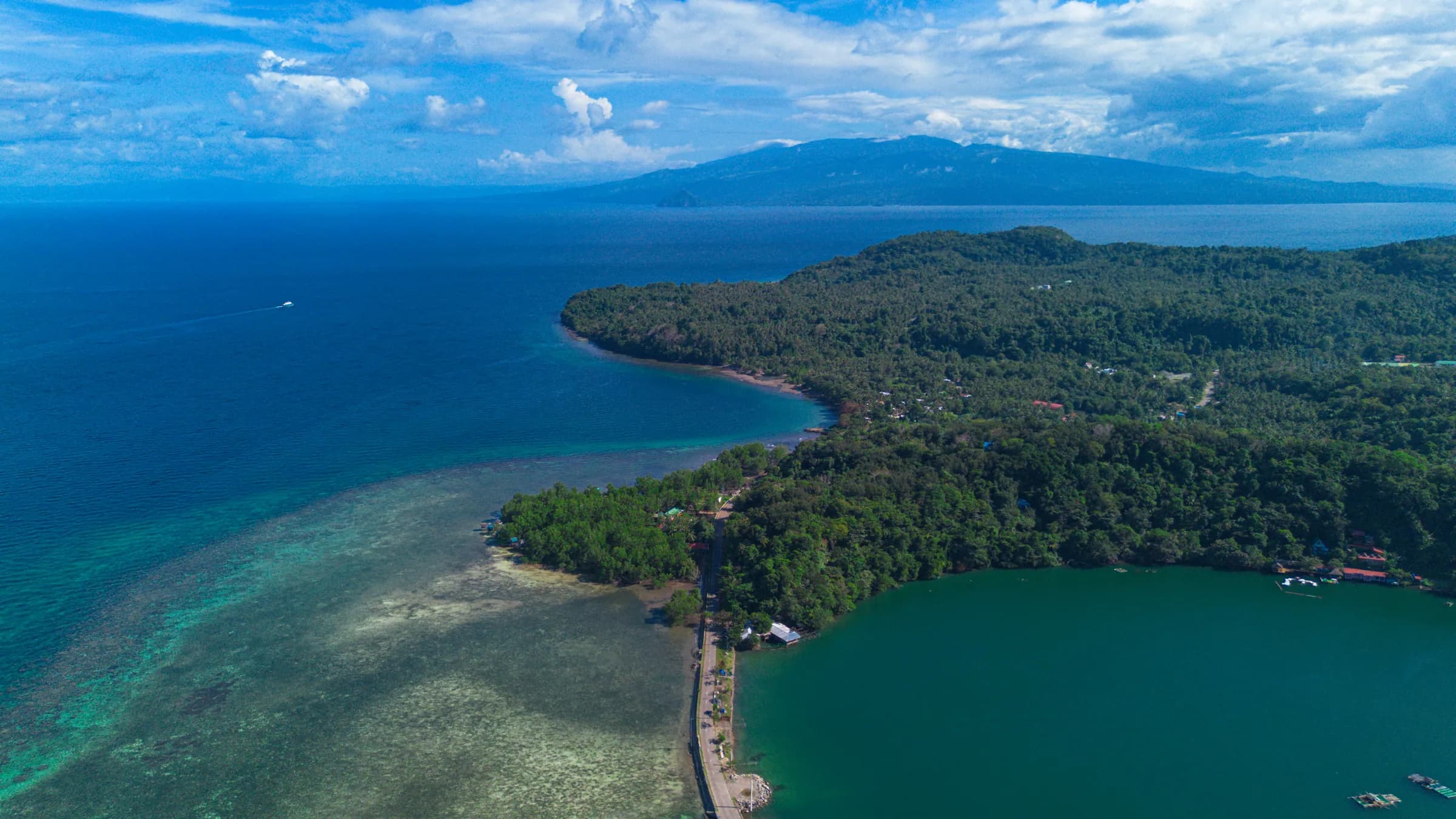
Ask ten travel sites for the best time to visit Camiguin and you'll get the same three words back: March to May. It isn't wrong. It's just the answer of someone who has never actually lived through a Camiguin November — when the rain arrives at four in the afternoon, lasts forty minutes, and leaves behind the best sunset of the month.
We live here. We watch this island change hands with the seasons from a clifftop in Mambajao, and we have opinions about all twelve months, not three. So this is the honest version: what each month really feels like, what the sea does to White Island, what's on, what it costs, and the weeks we'd book if we were the ones flying in.
One thing to know before you read on, because it explains why our dates differ from the national ones: the Philippines has no single season. Two monsoons soak opposite coasts, and this island sits outside the pattern most guides describe. We've mapped that out properly in the best time to visit the Philippines — read it if you're building a wider trip than Camiguin.
Written by the family at Txaleta de Camiguin. Last updated August 2026.
The short answer
If you only read one paragraph:
- The safest weather is March, April and May. Driest, sunniest, calmest sea. April is the driest month of the year.
- The best value with good weather is June and September — the shoulder weeks, when the island is quiet, the rain is an afternoon event rather than a day, and rooms are easier to get.
- The most alive is October, for the Lanzones Festival in Mambajao. Book early; this is the one week the island genuinely fills up.
- The wettest is November through January. Not unusable — Camiguin is green, warm and beautiful in the rain — but plan for lost half-days.
- The one to avoid if you're inflexible: Holy Week (late March / early April) and the days around Christmas and New Year, when Filipino families come home and every good room on the island is spoken for.
Everything below is the why.
Camiguin weather by month, at a glance
Camiguin is a small volcanic island in the Bohol Sea, and its weather is genuinely gentler than the Philippine average — warm all year, roughly 24–32 °C, with an annual rainfall around 1,800 mm that falls unevenly across the year. There is no cold season. There is only drier and wetter, and how much of your afternoon the sky wants.
| Month | Rain | Sea & White Island | What's on | Our verdict |
|---|---|---|---|---|
| January | High | Choppier days; sandbar trips can be re-timed | Post-holiday quiet, island exhales | Cheap and calm, pack a jacket for the boat |
| February | Moderate | Settling down, good visibility returning | Quiet | Underrated — the dry season starting early |
| March | Low | Calm, clear, excellent | Holy Week (some years) | Excellent. Book ahead if Holy Week falls here |
| April | Lowest | Flattest sea of the year | Holy Week (some years), summer peak | The classic best month — and the busiest sunshine |
| May | Low | Warm, calm, superb snorkelling | End of Filipino summer | Our quiet favourite. Heat at its highest |
| June | Moderate | Still good; occasional swell | School year starts, island empties | Best value / weather trade-off of the year |
| July | Moderate–High | Variable; afternoon showers | Very quiet | Fine if you're flexible with mornings |
| August | Moderate | Variable; usually workable | Very quiet | Better than its reputation |
| September | Moderate | Often lovely; a hidden window | Quiet before the festival | The insider's month |
| October | Moderate–High | Mixed | Lanzones Festival, Mambajao | The island at full volume. Book months out |
| November | High | Rougher; boat days need flexibility | Quiet, green, cheap | For rain-tolerant romantics |
| December | High | Rougher | Christmas, Filipino families home | Festive and full. Rooms scarce late Dec |
The pattern in one line: driest March–May, wettest November–January, and a long, workable middle from June to October where the rain tends to be an afternoon guest rather than a permanent resident.
Camiguin's dry season: March, April, May
This is what everyone means by the best time to visit Camiguin, and for good reason.
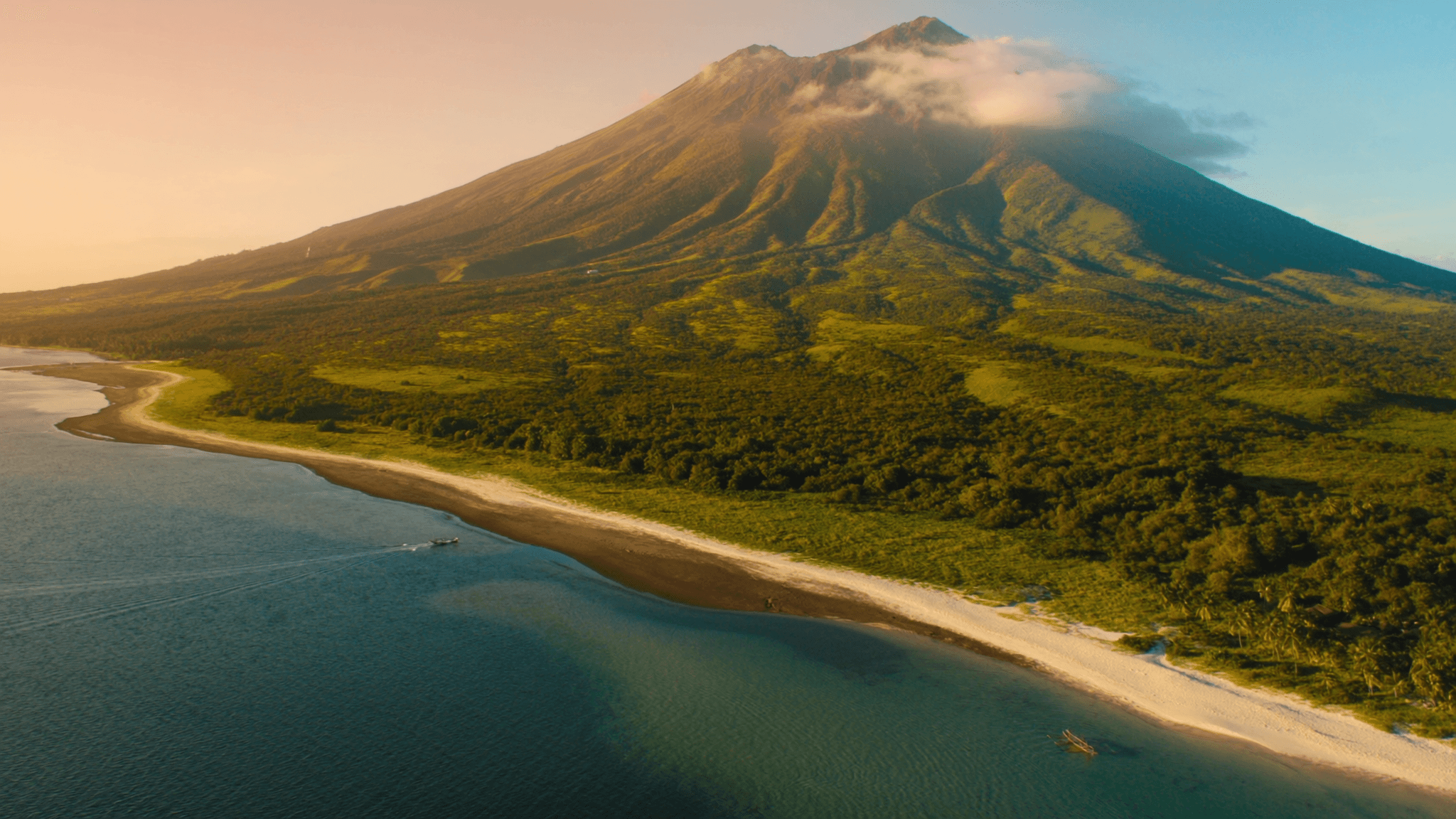
By March the north-east winds have eased, the Bohol Sea flattens, and the light changes — mornings come up clean and hard-edged, and Mt. Hibok-Hibok stops wearing its cloud. April is the driest month of the year, typically the one with the least rainfall on the whole calendar. May holds the line, with the heat at its most serious.
What that buys you, concretely:
- White Island at its best. The sandbar is a bare spit of white sand with no shade and no shelter, reached by a short banca ride. Calm water means the crossing is easy, the shallows are glass, and the sunrise trip actually happens on the morning you booked it.
- The clearest water for snorkelling and diving — the Cantaan Giant Clam Sanctuary, the Sunken Cemetery's coral garden, the Mantigue Island sanctuary.
- The best odds on Hibok-Hibok. A guided ascent of an active volcano is a weather-dependent thing. Dry-season mornings give you the ridgeline view instead of the inside of a cloud.
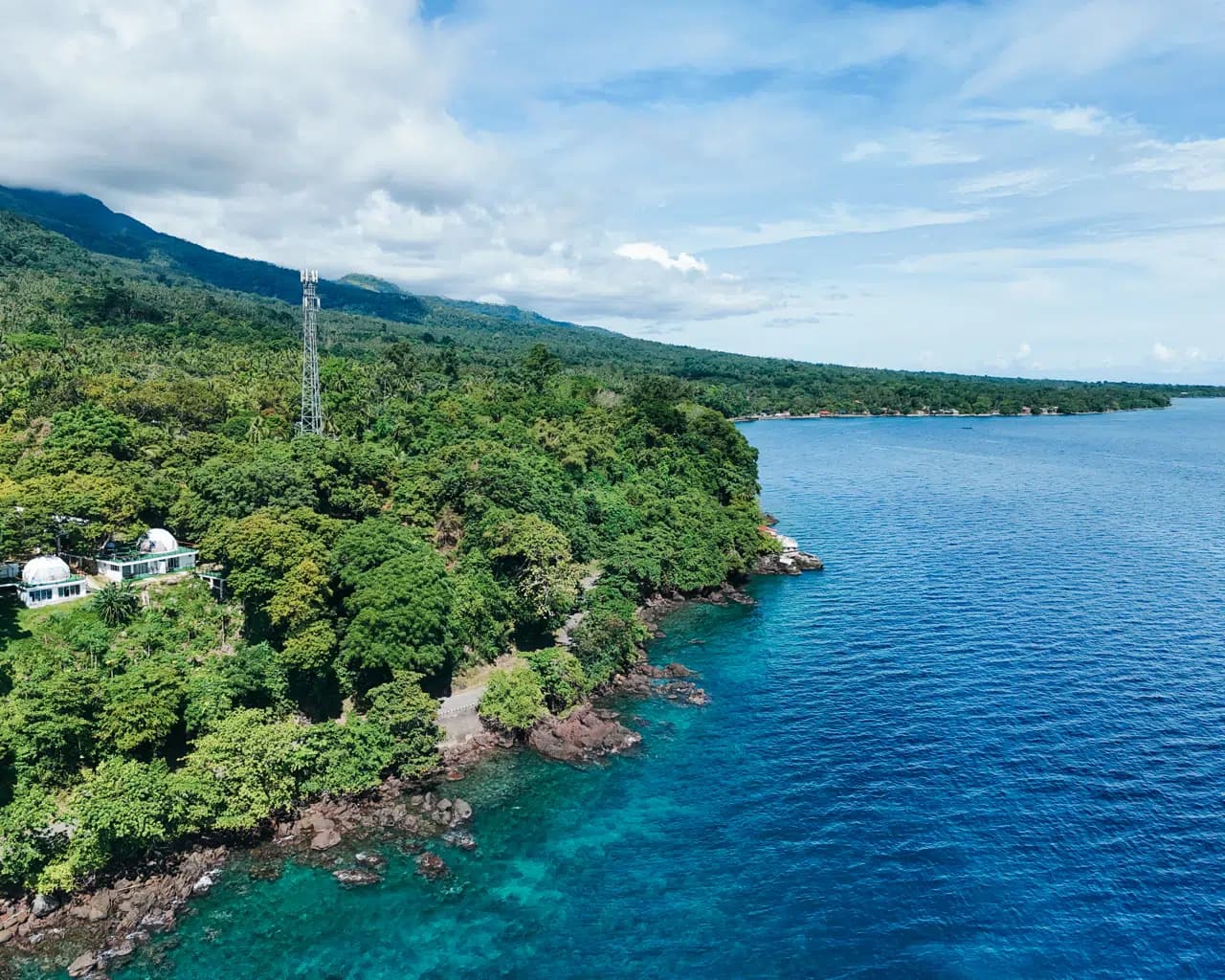
- Reliable sunsets from the west-facing cliffs, which — we'll be honest — is half of why people come.
The trade-offs are real too. April and May are Filipino summer holidays, so domestic travel peaks; add Holy Week, which moves between late March and mid-April depending on the year, and you have the tightest booking window on the island. And it is hot: 31–32 °C in the afternoon, higher in the sun, with the humidity you'd expect. Plan your island days for the morning, and let the middle of the day belong to the pool.
If you want the dry season without the crowd: aim for early March or mid-to-late May, either side of the Filipino school break.
The green season: June to October
Here's the part the round-up articles skip.
From June the rain returns, but in Camiguin it usually returns politely — building through the day, arriving mid-to-late afternoon, clearing by evening. You lose a couple of hours. You don't lose the holiday. In exchange:
- The island is empty. Not quiet — empty. Waterfalls with nobody at them.
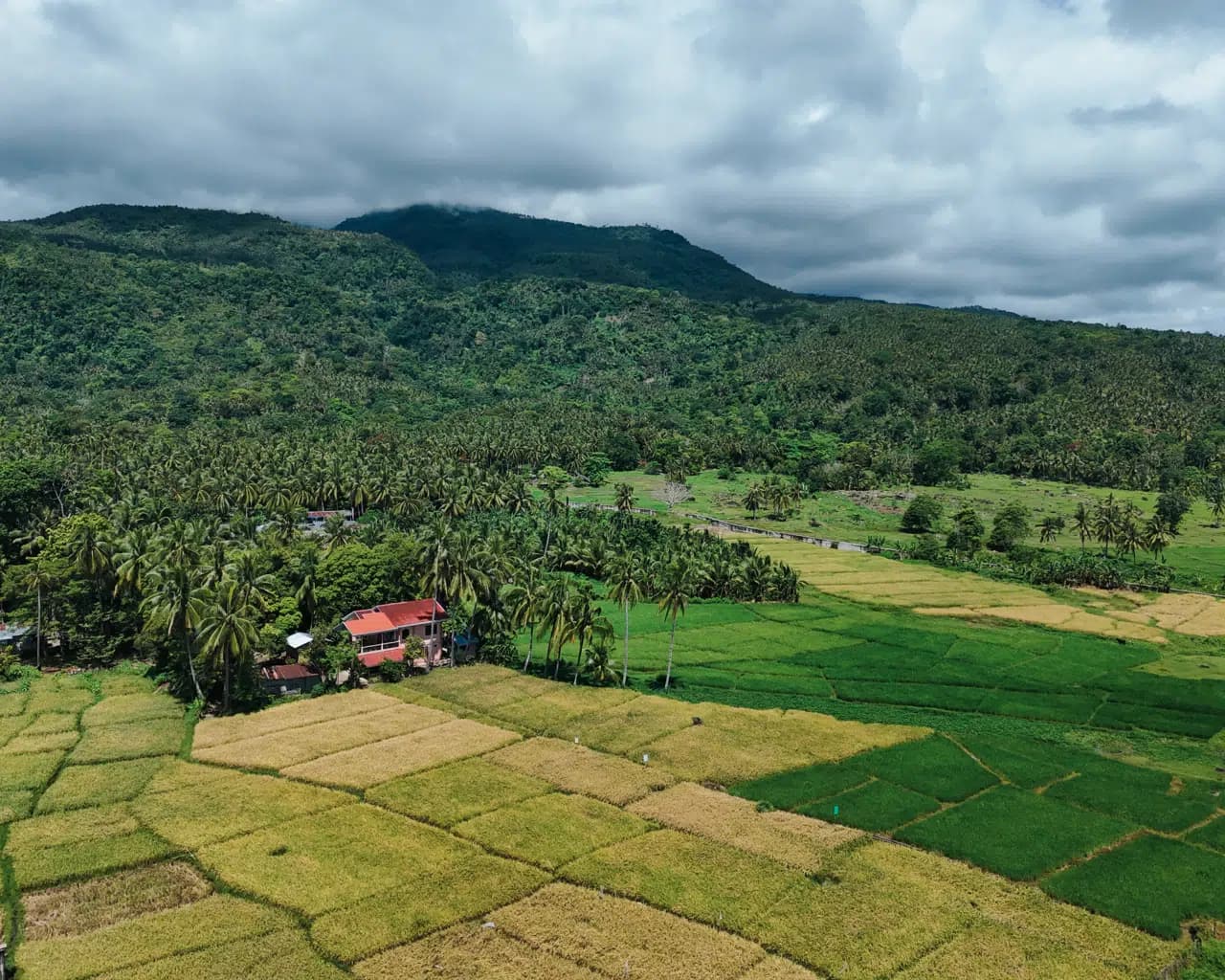
- Everything is green, at a saturation the dry season simply doesn't produce. Katibawasan Falls runs heavier. Tuasan runs heavier.
- Rates soften, availability opens, and you can book two weeks out instead of two months.
- The sunsets after rain are the best of the year. That is not marketing; it's a physical fact about wet air and low sun, and we watch it happen from the terrace every June.
September deserves special mention. It sits after the school year has taken everyone home, before the festival crowd arrives, and the weather is frequently excellent. If you asked us to pick one under-booked week on the calendar, it would be in September.
The honest caveats: boat trips to White Island and Mantigue depend on sea conditions, so build a flexible day into a green-season trip and let us re-time your banca rather than cancel it. And bring a dry bag.
October: the week the island fills up
Once a year Mambajao stops being a sleepy capital and becomes a street party. For a week in the second half of October, the island celebrates its lanzones harvest with street dancing in costume, parades, pageants and an island-wide reunion of everyone who ever left.
If cultural travel is the point of your trip, this is the single best week to be on Camiguin. If solitude is the point, it's the one week to avoid.
Either way: book months ahead. Fourteen rooms, one island, one festival. October fills first.
We've written the whole week up properly — the fruit, the events, where to stand, and the honest case for and against — in our Lanzones Festival guide.
The wet months: November, December, January
November through January is Camiguin's wettest stretch, with December and January typically the heaviest of all — the months where rainfall can run to a couple of hundred millimetres and the sea gets a chop on it.
We're not going to tell you it's the best time to visit Camiguin. It isn't. But we will tell you who it is for:
- Couples who want the island to themselves. The rooms are cheaper, the restaurant is quiet, and a storm over the Bohol Sea watched from under a roof with a drink in your hand is a genuinely great evening.
- Anyone who came for the springs, not the sea. Ardent Hot Springs is warmed by the volcano and does not care what the weather is doing. Neither do the Sto. Niño Cold Spring, the Bura Soda Water Pool, or a hilot massage.
- Travellers who like a country in its real clothes. December in the Philippines is Christmas at full strength — lanterns, carols, family, food. It's lovely.
The exception inside the exception: the last week of December and the first days of January are the busiest domestic travel days of the year. Filipino families come home to Camiguin. Availability disappears. Price is not the problem; space is. If you want those dates, book them now.
Does Camiguin get typhoons?
The straight answer: rarely, but not never. Camiguin sits in northern Mindanao, well south of the corridor most Philippine typhoons take across Luzon and the Visayas, and it is meaningfully less exposed than the islands further north. Most years pass without a direct hit, which is exactly why the island stays green and its coral stays healthy.
"Less exposed" is not "immune", and any honest local will tell you the same. Storms further out still push swell and rain across the Bohol Sea. What that means practically is simple: in the November–January window, travel with flexible dates or insurance, and let your hosts move your boat day rather than gambling on it.
The best time for the thing you actually came for
Nobody visits an island in the abstract. Pick your priority and the month picks itself.
| You came for… | Best window | Why |
|---|---|---|
| White Island sandbar | March–May | Calm crossing, glass shallows; go at sunrise for shade and low tide |
| Snorkelling & diving | March–June | Best visibility on the reefs, Sunken Cemetery and Mantigue |
| Hiking Mt. Hibok-Hibok | February–May | Driest trail, clearest summit view, safest footing |
| Waterfalls at full flow | July–December | Katibawasan and Tuasan are at their most dramatic |
| Culture & festival | Second half of October | The Lanzones Festival in Mambajao |
| Birdwatching | Year-round, dawn | The endemic birds sing at first light in every season |
| Honeymoon & quiet | May, June, September | Warm, calm, and the island nearly to yourselves |
| Lowest prices | June–September, plus January | The green season and the post-holiday lull |
| Families with school-age kids | April–May | Aligns with Filipino and many international school breaks |
Peak season, prices and how far ahead to book
Camiguin doesn't have a European-style high season with a doubled tariff. What it has is a handful of dates where the good rooms simply run out.
The four windows that sell out:
- Holy Week — late March or early April, depending on the year.
- Filipino summer, roughly late March through May.
- Lanzones Festival week, second half of October.
- Christmas to New Year, roughly 22 December to 3 January.
How far ahead we'd book, honestly: three to four months for those four windows; three to six weeks for anything else; a fortnight is often fine in the green season. Flights into Camiguin's own airport are the tighter constraint — the near-daily Cebgo service from Cebu is a small aircraft, and the seats go before the rooms do. Our full breakdown of routes and timings is in how to get to Camiguin from Cebu.
One quiet advantage of the shoulder months worth naming: in June, September and January we can usually offer choice — the seaview room and the glamping tent, the sunrise banca and the late checkout. In April, you take what's left.
The best time of day, which matters more than the month
This is the local's real secret, and we'd rather you had it than a fourth paragraph about rainfall.
On Camiguin the hour beats the month. A wet-season morning is usually better weather than a dry-season afternoon.
- 05:30–09:00 — the golden window, in every month of the year. Flat sea, soft light, no heat. This is when White Island is worth doing, when Hibok-Hibok is climbed, when the birds sing, when the infinity pool is at its best and there is nobody in it.
- 09:00–15:00 — the heat. Springs, waterfalls, a long lunch, the ring road under an aircon roof.
- 15:00–18:30 — the sky's turn. In the wet season this is when the rain comes and goes; in the dry season it's the second-best light of the day.
- After dark — the reason we put a telescope on the cliff. Camiguin has very little light pollution, and on a clear night the stars over the Bohol Sea are the thing guests message us about months later.
Plan a trip around mornings and Camiguin will be good to you in any month on the calendar.
What to pack, by season
Dry season (March–May): reef-safe sunscreen, a hat you don't mind losing to the wind, a rash guard for the sandbar (there is no shade on White Island), and more water than you think. Evenings are warm; you'll never need a jacket.
Green season (June–October): a light rain shell, a dry bag for the banca, quick-dry clothes, and shoes with grip — the trails and the falls' steps get slick. Add a small torch.
Wet season (November–January): all of the above, plus a second pair of shoes, and a genuinely waterproof phone pouch. Bring a book. You'll want an afternoon indoors and you'll enjoy it more than you expect.
Every season: mosquito repellent, a power bank, and cash — Camiguin's ATMs are few and not always in the mood.
So when should you come?
If you have one week and no flexibility: April or early May, and book by January.
If you want the best trip rather than the safest one: September, or early June. Warm sea, green island, quiet roads, and afternoons that only occasionally get rained on. It's what we'd choose.
If you want the island at full voice: October, for the Lanzones Festival — and book it now, not in August.
If you want the island to yourselves and don't mind weather: late January, once the holidays have gone home.
And whichever you choose, plan your days around the mornings, keep one day loose for the boat, and give Camiguin more nights than you think you need. Our three-day itinerary shows what a well-spent stay looks like — and why most guests wish they'd booked five.
Frequently asked questions
What is the best time to visit Camiguin?
March to May is the driest, sunniest and calmest stretch, with April typically the driest month of the year — the safest bet for White Island, diving and hiking Mt. Hibok-Hibok. For the best balance of good weather, low prices and an empty island, June and September are the smart choices. For culture, come in the second half of October for the Lanzones Festival.
What are the rainy months in Camiguin?
November, December and January are the wettest, with December and January usually the heaviest. June through October sees moderate rain that typically arrives as an afternoon shower rather than all-day weather.
Is Camiguin worth visiting in the rainy season?
Yes, with the right expectations. The island is greener, the waterfalls run heavier, prices are lower and you'll have the roads and springs largely to yourself. Ardent Hot Springs, the cold springs, the ring road and the food are unaffected by rain. Just keep one flexible day for boat trips to White Island and Mantigue.
Which month is Camiguin busiest?
October, by a wide margin — the island's lanzones harvest festival fills Mambajao for a week in the second half of the month, and Filipino families return home from all over the country. The days between Christmas and New Year are the second busiest. Our Lanzones Festival guide covers that week in full.
What is the cheapest time to visit Camiguin?
June through September, plus the second half of January, are the cheapest and quietest weeks. Rates soften, flights are easier to get, and you can often book two weeks out instead of two months.
Does Camiguin get typhoons?
Rarely. Camiguin lies in northern Mindanao, well south of the corridor most Philippine typhoons follow across Luzon and the Visayas, so direct hits are uncommon. It is not immune, however — distant storms can still bring swell and rain, particularly from November to January. Travel those months with flexible dates.
What is the best month for White Island?
March, April and May. The sea is at its calmest, the crossing is easy and the shallows are clearest. Whatever the month, go at sunrise: the sandbar has no shade at all, and the light and low tide are both better early.
How hot does Camiguin get?
Warm all year — roughly 24–32 °C. April and May are the hottest, with afternoon temperatures around 31–32 °C plus high humidity. There is no cool season; evenings are mild and you will never need a jacket for the weather, only for the boat.
How many days should I spend in Camiguin?
Three days covers the highlights — White Island, the Sunken Cemetery, the waterfalls and the springs. Five to seven lets you actually slow down, which is the reason most people come this far. See our day-by-day Camiguin itinerary for how to spread them.
When should I book to get a room?
For Holy Week, the Filipino summer (late March to May), Lanzones Festival week in October and the days between Christmas and New Year, book three to four months ahead. For everything else, three to six weeks is comfortable, and a fortnight is usually fine in the green season. Flights fill before rooms do.
Is Camiguin good to visit in August?
Yes. August is one of the island's quietest months, with moderate rainfall that mostly arrives in the afternoon, warm seas and low prices. Plan island trips for the morning and keep one day flexible for the boat and it's a very good time to come.
What's the best time of day to explore Camiguin?
Between 05:30 and 09:00, in any month. The sea is flat, the light is soft, the heat hasn't arrived and the island is empty. Mornings are for White Island, the volcano and the birds; middays for the springs and a long lunch; late afternoons for the sky.
Come home to Camiguin
Whatever month you land in, the shape of a good day here is the same: the sea before breakfast, the island in the morning, the pool through the heat, and the sky in the evening.
We'll help you build it. Tell us your dates and we'll tell you honestly what the sea is likely to be doing, when to take the banca to White Island, which morning to climb, and which afternoon to do nothing at all. We'll arrange your airport pickup — we're about fifteen minutes from Camiguin's runway — and have the coffee ready.
Browse our rooms, book your stay direct, or message us on WhatsApp and tell us when you're thinking of coming. Reach us anytime at +63 917 582 2277, or visit us at Purok 6, Puting Balas, Mambajao, 9100 Camiguin.
Come for the views. Stay for the feeling. Welcome home.
More Than a Resort. A Place to Belong. — Txaleta de Camiguin