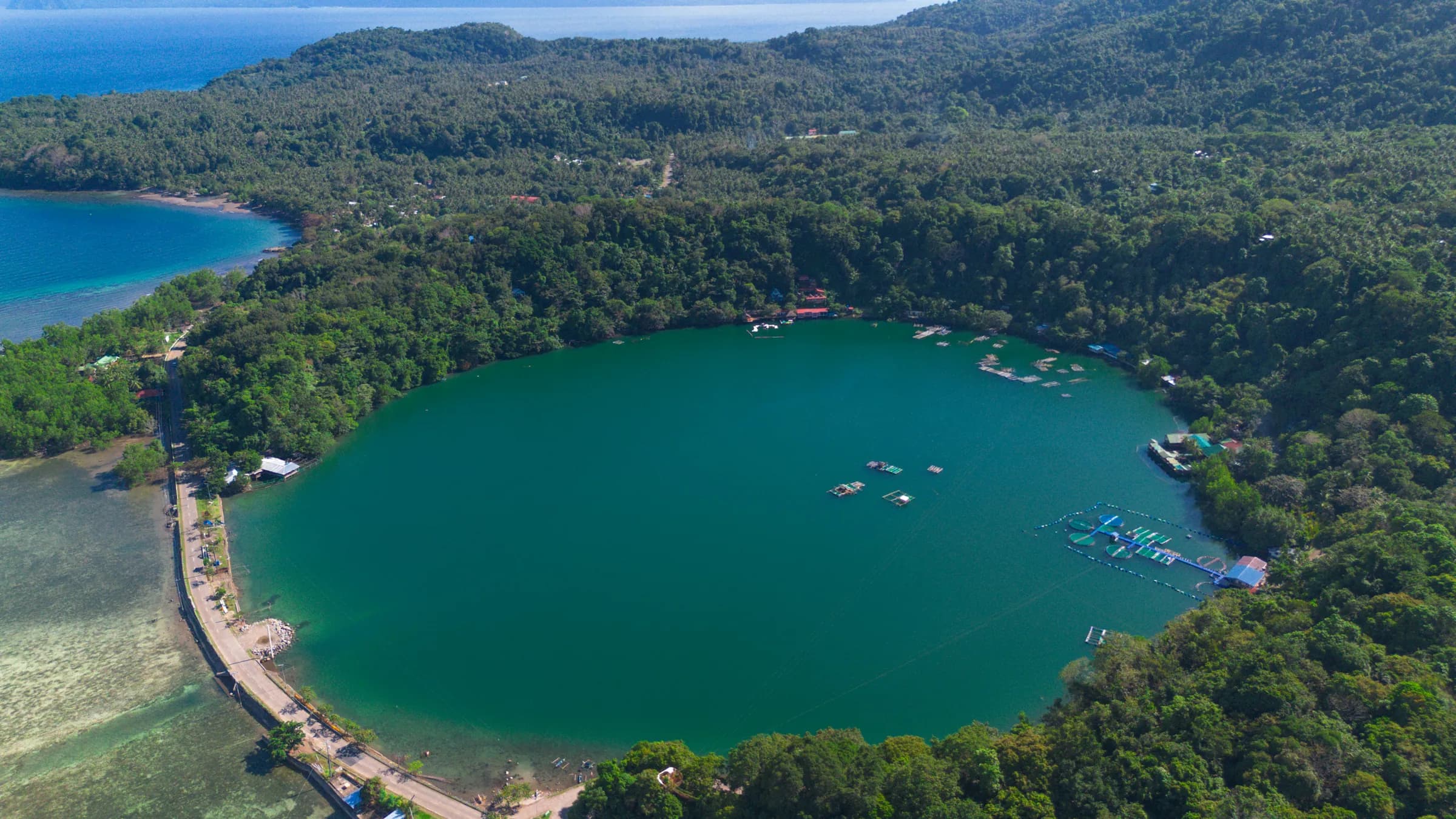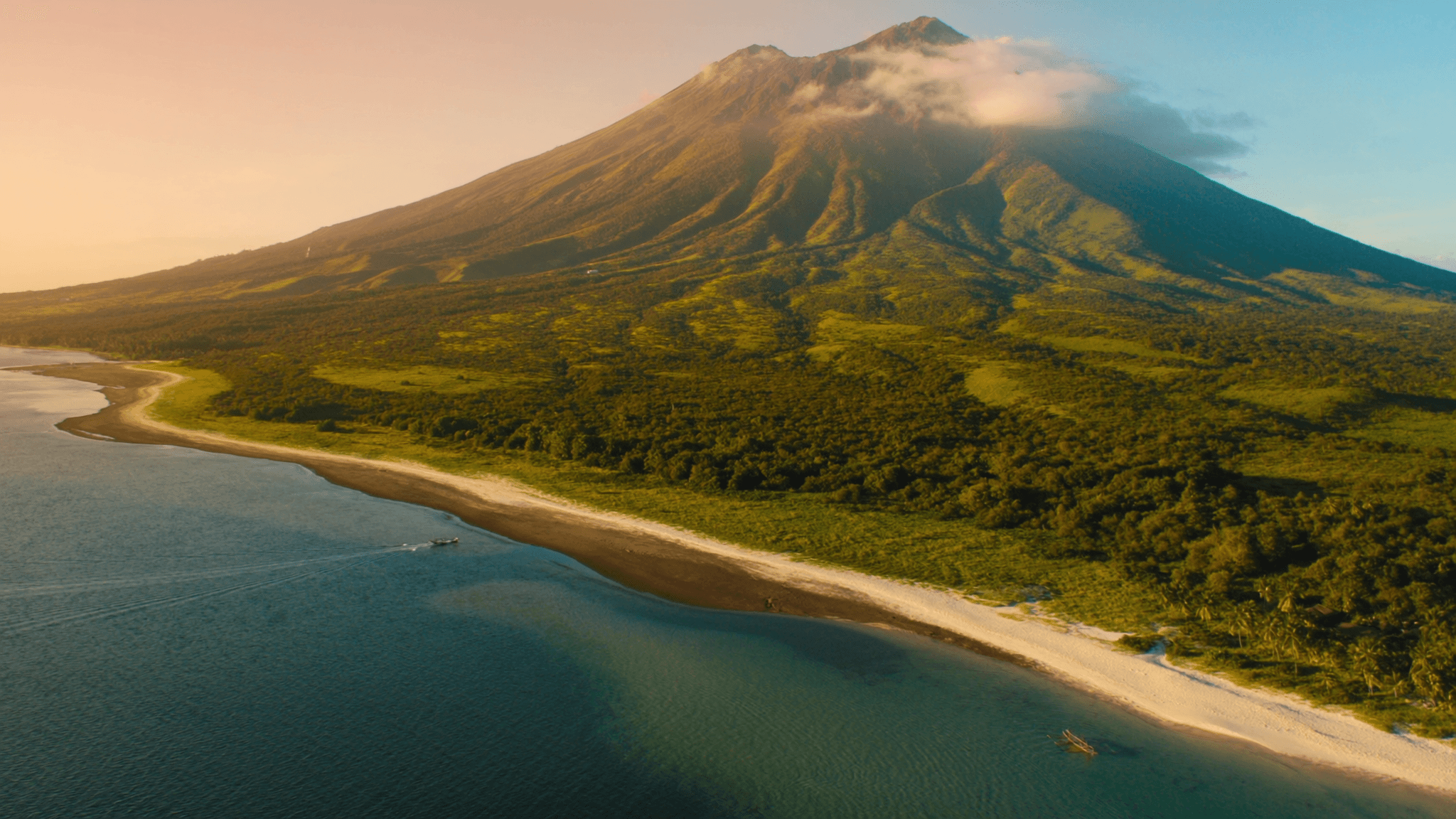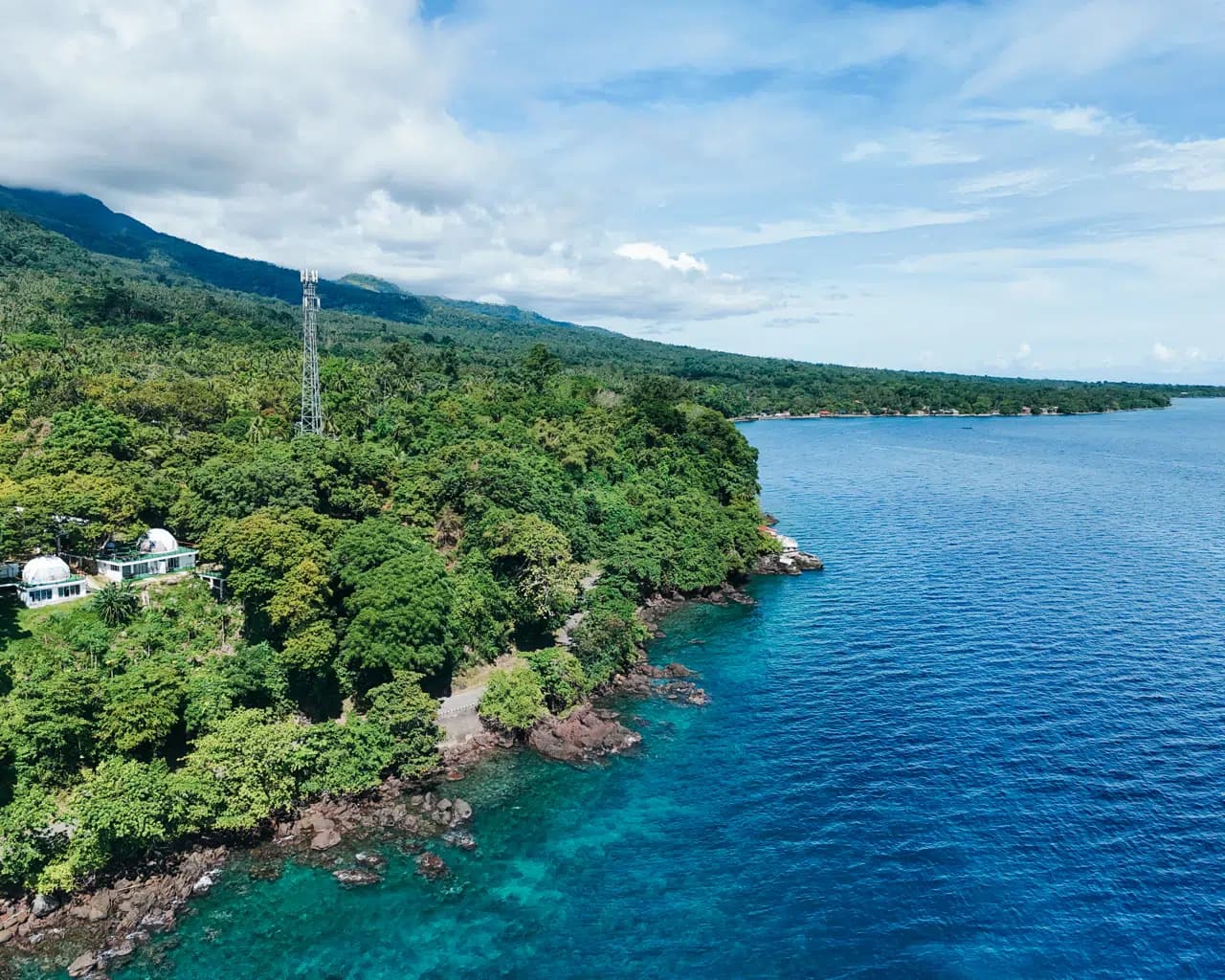

There is a large white cross standing alone in the sea off Camiguin's western coast. Most visitors stop on the road above it, take a photograph, and leave within five minutes.
They've just photographed a graveyard.
Underneath that water is part of an old town — including its cemetery — that the volcano pushed into the sea in the nineteenth century. The cross was put there to mark it. Once you know that, the site stops being a landmark and becomes something else entirely, and the five-minute version starts to feel a little thin.
This is what happened, what's down there, and how to see it properly.
Written by the family at Txaleta de Camiguin. Last updated August 2026.
The short answer
- What it is: a large white cross in the sea off Catarman, on Camiguin's west coast, marking a cemetery and part of a town submerged by volcanic activity.
- What caused it: the eruption of Mt. Vulcan in 1871, which reshaped the coast and drove part of old Camiguin underwater.
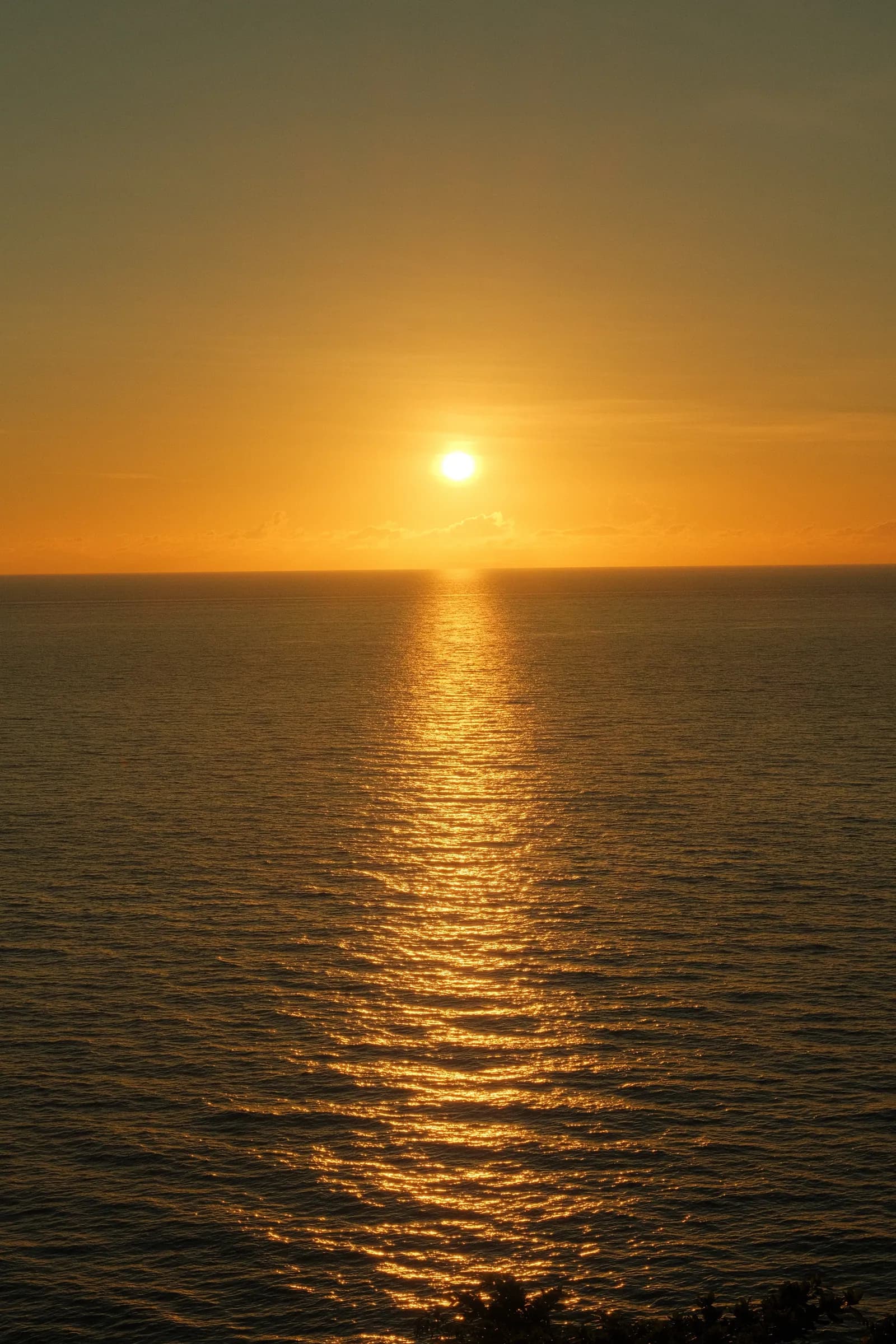
- Best time: sunset, when the light goes gold and the water turns copper.
- How long: five minutes from the shore. An hour if you kayak out. Half a day if you dive it.
- Nearby: the Gui-ob (Bonbon) Church Ruins are a few minutes away and should be seen in the same visit.
- Cost: small or free to view from shore; boat and dive trips are arranged locally.
What happened in 1871
Camiguin is called the Island Born of Fire, and this is the event that earned it.
In 1871, Mt. Vulcan — a new volcano forming on the island's western side — erupted. The event was not a single dramatic morning but a prolonged upheaval that raised new land, destroyed the settlement at Cotta Bato, and pushed part of the old town, including its cemetery, beneath the sea.
The people who survived moved. The town relocated. And what was left behind stayed where it was, underwater, until somebody eventually put a cross above it so that people would know.
That cross is what you photograph. What's beneath it is a nineteenth-century town's burial ground, now grown over with coral.
What's actually down there
This is where the site becomes genuinely extraordinary rather than merely scenic.
The submerged ground has become a hard-coral garden. Over a century and a half, coral has grown across the graves and the remains of structures, and the whole thing now functions as a reef. Fish live in it. The visibility on a calm day is good.
Snorkelling it is possible and takes twenty minutes — you're not going deep, and the shallower parts are reachable from a boat.
Diving it is the proper experience. It's a quiet, strange dive, unlike anything most divers have done: a coral garden with a known human history under it and a cross above as your marker. Camiguin's diving is uncrowded rather than world-famous, and this is its signature site. We work with Scuba de Oro and send divers their way — more on our local partnerships on the community page.
A word on respect. People are buried here. Snorkel and dive it, absolutely — that's welcomed and it's how the site is looked after. But it's a grave, and it deserves the tone you'd bring to one.
The Gui-ob Church Ruins, next door
A few minutes away stand the roofless remains of the Gui-ob Church — also called the Bonbon Church Ruins — from the same catastrophe.
What's left: thick walls of coral stone and lime, scoured by lava and open to the sky, with the bell tower's stump and the outline of the nave still legible. Vines are taking the stonework back. There's no roof, so the whole interior is lit by whatever the sky is doing.
Why go at the end of the day: at sunset the light comes sideways through the empty window openings and the site goes very quiet. It's the most atmospheric half-hour on Camiguin, and it costs nothing.
Do both together. The cross and the ruins are two halves of the same story — the sea took one, the fire took the other, both in the same event. Seeing them separately halves the effect.
How to see it properly
The five-minute version: pull off the ring road, walk to the viewpoint, photograph the cross. Fine, and most people do it. But you've seen a marker, not a place.
The one-hour version: take a small boat or kayak out to the cross itself as the sun goes down. Paddling toward it as the light goes gold and then rose is a different experience — quieter, stranger, and the moment the history lands. We set this up for guests as a sunset paddle, and it's usually the thing they mention first at dinner.
The half-day version: dive it. Coral garden, structures, the cross overhead. Arranged through a local operator.
Where it fits in a trip: the Sunken Cemetery sits on the western loop with the church ruins, Sto. Niño Cold Spring and the Bura soda pool, and Katibawasan Falls not far away. Our three-day itinerary puts them all in one unhurried ring-road day, finishing here at sunset.
The honest note
From the shore, it's brief. We've said this three times because it's the single most common disappointment on the island — people arrive expecting an experience and find a viewpoint. The experience is on the water or under it.
It photographs better than it looks. The cross is further out than photographs suggest, and a phone at the shore won't get you what you've seen online. Either bring a zoom, or get on the water.
And it's a real grave. Camiguin doesn't fence it off or dramatise it, which is to the island's credit. Treat it accordingly.
Frequently asked questions
What is the Sunken Cemetery in Camiguin?
A large white cross standing in the sea off Catarman on Camiguin's west coast, marking a cemetery and part of an old town that was submerged during volcanic activity in the nineteenth century. The submerged ground is now a hard-coral garden that can be snorkelled and dived.
What caused the Sunken Cemetery?
The eruption of Mt. Vulcan in 1871. The upheaval reshaped Camiguin's western coast, destroyed the settlement there, and pushed part of the old town — including its cemetery — beneath the sea. Survivors relocated the town.
Can you dive or snorkel at the Sunken Cemetery?
Yes, and it's the best way to experience it. Over a century and a half, coral has grown across the submerged ground, creating a hard-coral garden with the cross above as a marker. Snorkelling takes about twenty minutes; diving is a half-day and is Camiguin's signature dive site.
What is the best time to visit the Sunken Cemetery?
Sunset. The light goes gold and the water turns copper, and it's also the right hour for the Gui-ob Church Ruins a few minutes away. Pair the two and finish your ring-road day there.
How much does it cost to visit the Sunken Cemetery?
Viewing it from the shore is free or costs a small amount. Boat trips out to the cross and dive trips are arranged locally and priced separately. Full costs for the island are in our trip cost guide.
What are the Gui-ob Church Ruins?
The roofless remains of a Spanish-colonial church at Bonbon, destroyed in the same 1871 eruption. Thick coral-stone and lime walls stand open to the sky with vines taking them back. They're a few minutes from the Sunken Cemetery and should be seen in the same visit.
Is the Sunken Cemetery worth visiting?
Yes, but manage your expectations. From the shore it's a five-minute stop and a photograph. Kayak out to it at sunset, or snorkel or dive the coral garden beneath it, and it becomes one of the most memorable places on the island.
Can you swim at the Sunken Cemetery?
You can snorkel and dive there, usually reached by a short boat trip. It is, however, a burial site as well as a reef, so treat it with the respect you'd give any grave.
Where exactly is the Sunken Cemetery?
Off the coast at Catarman, on Camiguin's western side, directly on the 64-kilometre ring road about a twenty-minute drive from Mambajao. It's signposted and impossible to miss.
What else is nearby?
The Gui-ob Church Ruins are minutes away, and the Walkway to the Old Volcano at Bonbon is close by. Sto. Niño Cold Spring and the Bura Soda Water Pool are on the same western side, making a natural half-day loop.
Come home to Camiguin
The cross is the island's photograph. The story under it is the island's character — a place made and unmade by fire, twice, and still here.
We'll take you out on the water at the right hour, tell you what's below, and then get you back to the cliff before the light goes entirely.
Browse our rooms, book your stay direct, or message us on WhatsApp. Reach us anytime at +63 917 582 2277, or visit us at Purok 6, Puting Balas, Mambajao, 9100 Camiguin.
Come for the views. Stay for the feeling. Welcome home.
More Than a Resort. A Place to Belong. — Txaleta de Camiguin