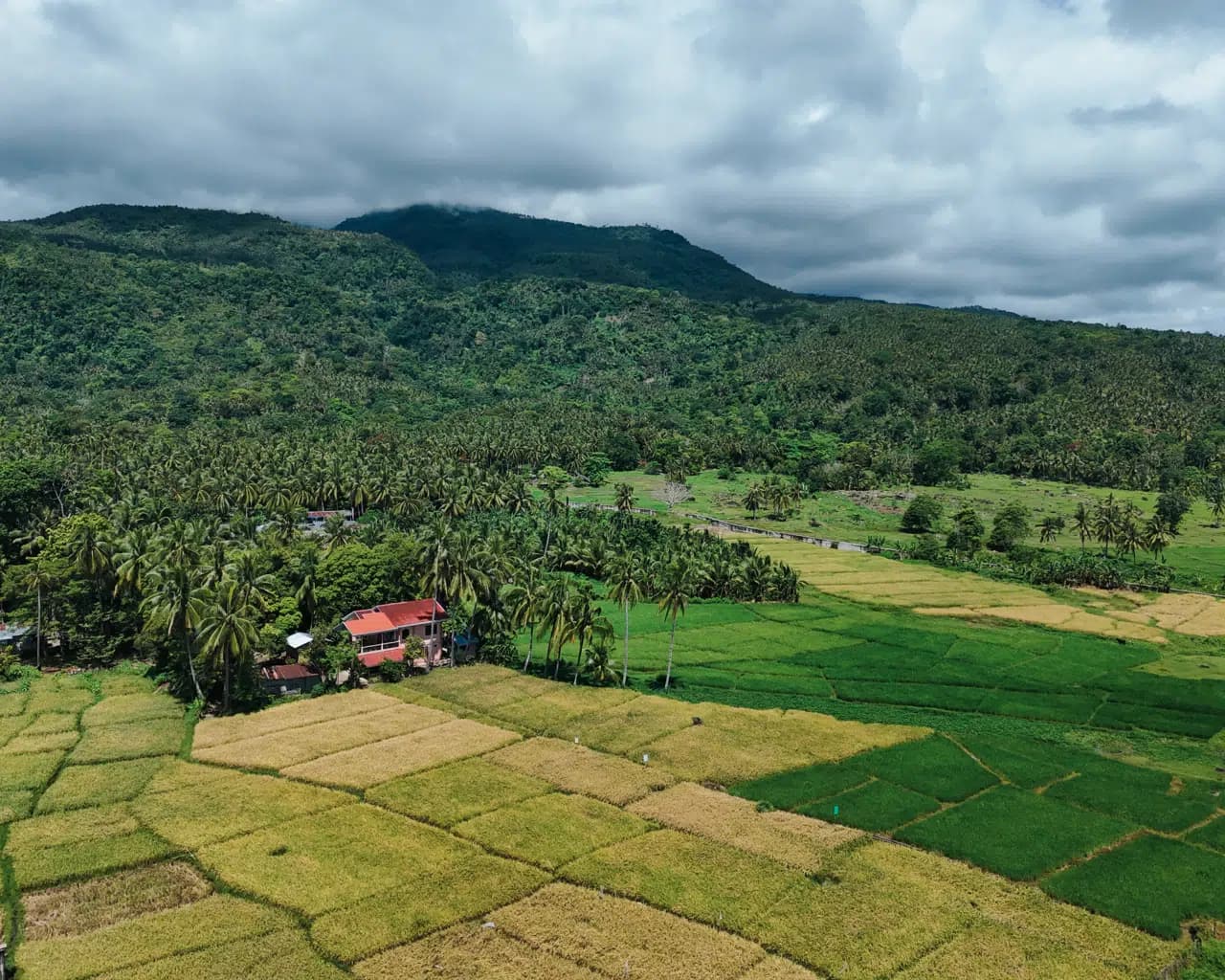

Camiguin is sixty-four kilometres of ring road. You could drive the whole thing before lunch without stopping once.
That fact does two things to visitors. It makes them assume there is nothing here — and then, once they arrive, it makes them try to do everything in a day and enjoy none of it. Both are mistakes, and they're the reason we wrote this list the way we did: not as a ranking, but as a map. Everything below is grouped by where it is, because on an island this small, geography is the only sensible way to plan a day.
We live on a clifftop in Mambajao. We send guests to these places every week, and we hear about them at dinner every evening. So this includes the honest notes too — which ones deserve a morning, which ones are a fifteen-minute stop, and the one or two that are overrated.
Written by the family at Txaleta de Camiguin. Last updated August 2026.
The five you shouldn't leave without doing
If you have two days and no appetite for a list:
- White Island at sunrise — the bare white sandbar with the volcano behind it.
- The Sunken Cemetery — a cross standing alone in the sea over a drowned town.
- Katibawasan Falls — seventy metres of water into a cold, clear pool.
- Ardent Hot Springs at dusk — volcano-warmed water under the trees.
- The ring road itself, slowly, with a scooter and no schedule.
Everything else on this list is a reason to stay longer. Most guests wish they had.
How the island is laid out
The single most useful thing to understand before you plan anything.
| Where | What's there | Plan for |
|---|---|---|
| North-west (Mambajao) | White Island boats, the airport, restaurants, Ardent Hot Springs, Katibawasan Falls, the birding forest | Your base. Most days start and end here |
| West (Catarman) | Sunken Cemetery, Gui-ob Church Ruins, Sto. Niño Cold Spring, Tuasan Falls, the Old Volcano walkway | One half-day loop |
| East (Mahinog) | Mantigue Island, Benoni port, Taguines Lagoon | One morning, boat-dependent |
| South (Guinsiliban / Sagay) | Cantaan Giant Clam Sanctuary, the quietest coast | Add to the Mantigue day |
Base yourself on the north-west coast and everything above is a day trip. We break the coasts down properly in where to stay in Camiguin.
On the water
1. White Island
A bare crescent of white sand sitting on turquoise water off the Mambajao coast, with Camiguin's volcanic skyline behind it. No trees, no buildings, no shade — and that last part matters more than the photos suggest.
Go at sunrise, around 5:30–6:00 am, by banca from Yumbing or Agoho. Two reasons: the light, and the fact that by ten o'clock there is genuinely nowhere to hide from the sun. The sandbar also changes shape with the tide and can shrink to a sliver at high water, so the boat should be timed to the tide table, not to when you feel like waking up. We check it for our guests' dates.
Worth: a whole morning. It's the single best thing on the island — and we've written up the boat fares, the tide problem and everything else in a full White Island guide.
2. Mantigue Island
A small forested islet ringed by white sand off the east coast, with a sharp coral drop-off just offshore that's among the best snorkelling in the region — reef fish, soft corals, and the blue going suddenly deep a few metres from the sand. There's a short nature trail through the trees and a marine sanctuary around it.
Pack lunch rather than relying on what's there. And note: it's a marine sanctuary, not a birding site, despite what a few guides imply.
Worth: a long, unhurried half-day — though note there's a three-hour cap on the island, which we explain along with the fares in our Mantigue and giant clams guide.
3. Cantaan Giant Clam Sanctuary
Off the island's southern tip, giant clams the size of armchairs rest in clear shallows, mantles in blues and greens and golds, some of them decades old. You snorkel directly above them. It's community-run, genuinely conservation-minded, and consistently the most underrated stop on the island.
Easy to combine with Mantigue on the same boat day.
Worth: an hour, and it will be the hour people ask you about.
4. Snorkelling or diving the Sunken Cemetery
Above the water it's a landmark (see #10). Below it, it's a hard-coral garden grown over a town the sea took in the nineteenth century, with the cross above as your marker. Quiet, strange, and completely unlike any other dive site we know.
Camiguin's diving is uncrowded rather than world-famous — the Jicco / Old Volcano lava wall and the Mantigue sanctuary round it out. We work with Scuba de Oro and send divers their way; more on our local partners on the community page.
Worth: a half-day if you dive; twenty minutes of snorkelling if you don't.
5. Sunset kayak at the cross
Most visitors photograph the Sunken Cemetery from the shore. Paddling out to it as the light goes gold and then rose is a different experience entirely — quiet, slightly haunting, and the best possible introduction to understanding that this island was made and remade by its volcanoes.
Worth: the last hour of daylight on your first day.
6. Jet ski across the Bohol Sea
Open throttle, volcano shrinking behind you. Around ₱7,000 for three hours with safety gear and orientation included. For the mornings you'd rather feel the sea than drift on it.
Worth: it, if that's your thing. Book through us and it goes on your stay.
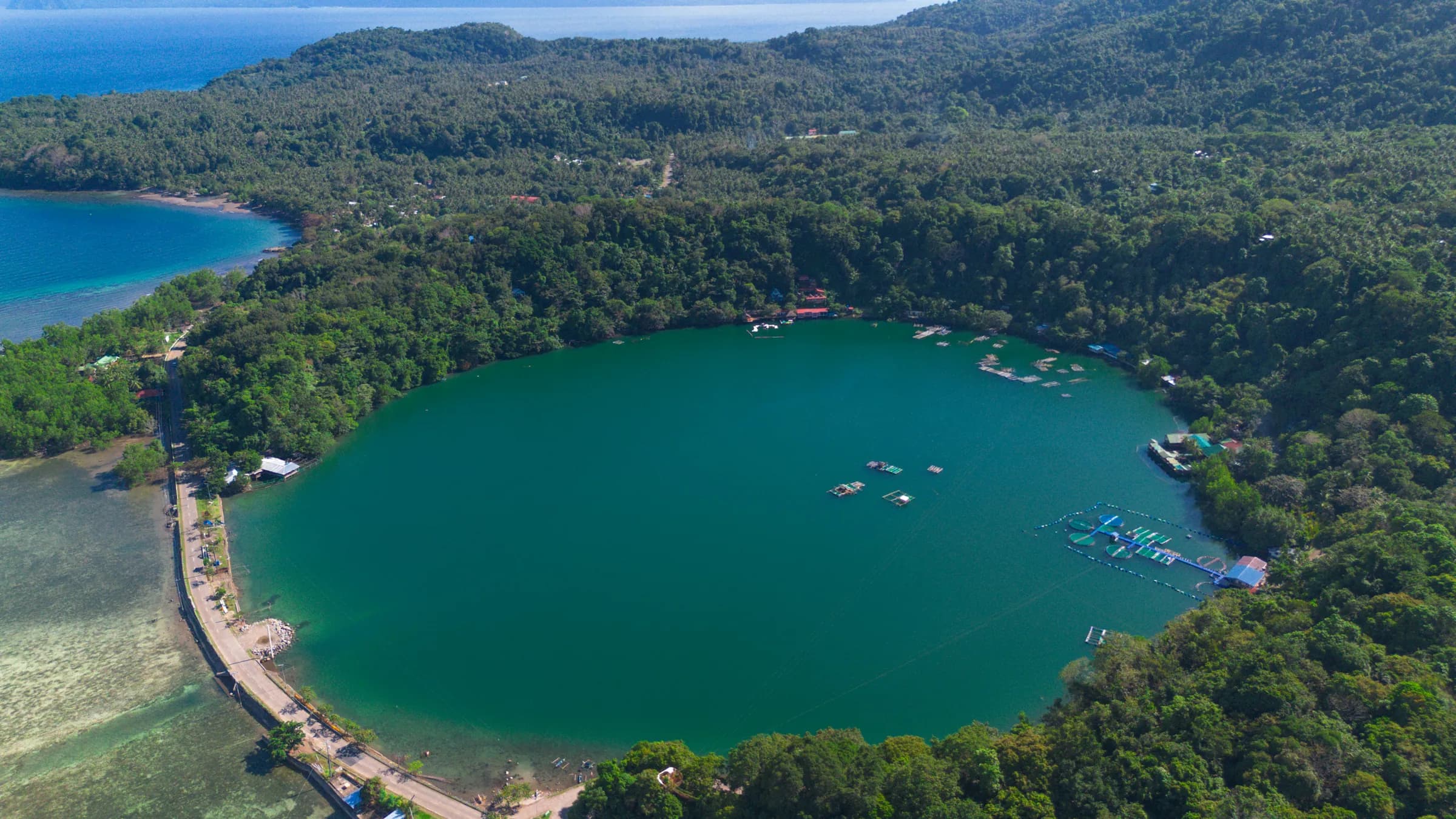
7. Taguines Lagoon
A large lagoon on the east coast near Benoni, good for a paddle, a zipline across the water, and open-country birds — herons, egrets, a Brahminy Kite overhead. Not a headline attraction, but a pleasant stop when you're already on that side for Mantigue.
Worth: thirty minutes in passing.
8. Swim at the black-sand beaches
Camiguin's ring-road beaches are dark volcanic sand, and we say that plainly because it's the most-corrected claim in every forum thread. They're not the white postcard sand — that's offshore at White Island — but they're quiet, warm, and often entirely yours at golden hour. We settle the whole sand question in Camiguin vs Siquijor.
Worth: every evening you're here.
The volcanic island
9. Climb Mt. Hibok-Hibok
The island's serious hike, and a real one: Hibok-Hibok is an active volcano, the trail is steep and rope-assisted in places, and a registered guide and permit are required. The reward is a crater lake and a view across the Bohol Sea to Bohol itself.
Start before dawn. Dry-season mornings (February–May) give you the ridgeline instead of the inside of a cloud. Confirm current guide and permit fees with the tourism office when you book — they change.
Worth: a full day, if you're fit for it. Not a casual stroll — we've written the permit, the fees and the honest difficulty into a full Hibok-Hibok guide.
10. The Sunken Cemetery
The island's signature image: a large white cross standing alone in the sea, marking a town the 1871 eruption pulled underwater. From the shore it's a five-minute stop and a photograph. Understood properly — that there are graves under that water — it's the thing you'll remember.
Best at sunset, when the light goes gold and the water turns to copper.
Worth: twenty minutes, or an hour if you take the kayak. The full story of what happened in 1871 and what's under the water is in our Sunken Cemetery guide.
11. Gui-ob (Bonbon) Church Ruins
Beside the Sunken Cemetery, the roofless remains of a Spanish-colonial coral-stone church, lava-scoured and open to the sky, with vines taking the walls back. At sunset the light comes sideways through the empty windows and the whole site goes quiet.
Worth: thirty minutes, and it pairs naturally with #10.
12. The Walkway to the Old Volcano
A Stations of the Cross climb up the flank of the old volcano at Bonbon, with life-sized stations set along a paved path and the sea unrolling below you as you rise. It's a moderate uphill walk, not a hike, and the view from the top is one of the island's best for the effort involved.
Go early or late — there's little shade.
Worth: an hour.
13. Ardent Hot Springs
Volcanically heated mineral pools set into forest on the flank of Hibok-Hibok, warm year-round and completely indifferent to the weather. This is the island's answer to a rainy afternoon, and it's genuinely better at dusk, when the air cools and the heat of the water finally makes sense.
Worth: a late afternoon, ideally after a waterfall. All three springs, in the right order, are in our Camiguin springs guide.
14. Sto. Niño Cold Spring
The exact opposite: spring-fed pools of startlingly clear, cold water bubbling up through the sand under tall trees. Shaded, shallow enough for children, and the best midday cool-down on the island.
Worth: an hour in the heat of the day.
15. Bura Soda Water Pool
A local curiosity worth the detour: naturally carbonated water rising from the ground, faintly fizzing against your skin. Small, unglamorous, and unlike anything most visitors have swum in.
Worth: twenty minutes, purely for the novelty.
16. Katibawasan Falls
A single seventy-metre ribbon of water dropping into a cold, clear pool ringed by ferns and orchids, a short ride inland from Mambajao town. Go early, before the day-trippers — the morning light through the spray is the whole point. Swim if you dare; the water is bracing.
Worth: a morning hour. The island's best waterfall for effort-to-reward — and our waterfalls guide compares it properly with Tuasan.
17. Tuasan Falls
Wilder, wider and much less visited than Katibawasan, up in the island's quieter north. The road in is rougher and the setting is more raw — which is exactly why you might have it entirely to yourself.
Worth: it, if you have a fourth or fifth day. Skip on a three-day trip.
18. Ride the 64-kilometre ring road
Not an attraction so much as the frame that holds all of them. Rent a scooter (around ₱450/day), take the loop at your own pace, and stop wherever the light is good. Add a local driver (from ₱1,000/day) with an SUV (₱2,850/day) if you'd rather look out of the window — which, honestly, is most of the pleasure.
Worth: a full unhurried day. The experiences page has everything.
19. Birdwatching in the Timpoong–Hibok-Hibok forest
Camiguin has three birds that live here and nowhere else on Earth — the Camiguin Hanging-Parrot, the Camiguin Boobook and the Camiguin Bulbul. You don't have to climb the volcano to find them; the forest-edge road at Itum does most of the work, at first light, with an accredited guide.
Worth: a dawn, if you're at all curious. Full detail in our Camiguin birdwatching guide.
Heritage, culture and people
20. The Lanzones Festival
Once a year, in the second half of October, Mambajao stops being a sleepy capital and becomes a street party — costumed street dancing, a tableau competition, pageants and free lanzones by the sackful, in thanksgiving for the harvest of the fruit this island grows better than anywhere. It's the busiest week of the year and the most alive.
Worth: planning a trip around, if culture is why you travel. Everything you need is in our Lanzones Festival guide.
21. Mambajao town and the public market
The island's capital: small, tidy, and the place to buy fruit, meet people who aren't in hospitality, and see what an ordinary Tuesday looks like here. The market is the best of it. Bring cash — ATMs are few.
Worth: an hour, and more if you like markets.
22. Eat lanzones from a roadside stall
Not a joke, and not a filler entry. Camiguin's volcanic soil produces the sweetest lanzones in the Philippines, and buying a bag from a stall on the ring road costs very little, tastes better than anything that reaches a city market, and puts money directly in the hands of the family that grew it.
Worth: doing at least twice. Everything else worth eating here — pastel, kiping, sikwate — is in our guide to what to eat in Camiguin.
23. Meet the island's artisans
Sea glass jewellery made from glass the tides have worn smooth over decades. Relief paintings of Camiguin's sea life hung throughout the new wing at our place. Mountain guides who carry generations of knowledge about the volcano. These aren't gift-shop encounters — they're the people who make this island what it is, and we introduce our guests to them on the community page.
Worth: the time it takes to have a conversation.
The slow things
24. Stargazing
Camiguin has very little light pollution, and on a clear night the sky over the Bohol Sea is the thing guests message us about months later. We put a telescope on the cliff for exactly this reason. Our Tahimik Nights — a tech-free evening of oil lamps, stars and local stories — is built around it.
Worth: one clear night. You'll want two.
25. Do nothing, properly
The most underrated activity on this island, and the one our guests most often say they wish they'd left more room for. A long breakfast by the water. A hilot massage — traditional Filipino healing touch — through the hot part of the afternoon. A sunset picnic on the cliff. An infinity pool open from first light with nobody in it.
Camiguin is a three-day island if you treat it as a checklist and a seven-day one if you don't. We'd choose seven.
Worth: at least one full day of your trip. Genuinely.
The honest notes
What's overrated: nothing on this island is a tourist trap, but a few things are shorter than their reputation. The Sunken Cemetery is a five-minute stop unless you kayak or dive it. Bura is a novelty, not a destination. And Mantigue is sold as a birding site by some guides — it isn't, it's a snorkelling one.
What's underrated: the Giant Clam Sanctuary, the Walkway to the Old Volcano, and the ring road itself, which most people treat as transit between attractions rather than the best thing they'll do all week.
What depends on the weather: every boat trip. White Island, Mantigue and the clams are all sea-condition dependent, so build one flexible day into your trip and let your hosts move the banca rather than cancel it. Our best time to visit Camiguin guide covers which months give you the calmest crossings.
What you should book ahead: the Hibok-Hibok guide and permit, the private banca, and anything at all during Lanzones Festival week.
What it all costs: less than you'd think. Every entrance fee on this list, plus flights, rooms and boats, is worked out in how much a Camiguin trip costs.
How many days do you need for all this?
- 2 days — the five essentials, rushed but real.
- 3 days — the standard: one sea day, one ring-road day, one arrival-and-settle day. Our three-day itinerary maps it hour by hour.
- 5 days — everything above without hurrying, plus the volcano or a genuine day of nothing.
- 7 days — the version people come back for.
Frequently asked questions
What are the best things to do in Camiguin?
The five essentials are White Island at sunrise, the Sunken Cemetery, Katibawasan Falls, Ardent Hot Springs at dusk, and simply riding the 64-kilometre ring road slowly. Beyond those, Mantigue Island, the Cantaan Giant Clam Sanctuary, Sto. Niño Cold Spring, the Gui-ob Church Ruins and a guided climb of Mt. Hibok-Hibok round out the island.
What is Camiguin famous for?
Volcanoes and the White Island sandbar. Camiguin is called the "Island Born of Fire" — seven volcanoes on an island you can drive around in an hour — and is known for the Sunken Cemetery, its hot and cold springs, and producing the sweetest lanzones fruit in the Philippines.
How many days do you need in Camiguin?
Three days covers the highlights properly. Five lets you add the volcano or a genuinely unstructured day, and seven is when people start planning their return. Two days is possible but rushed.
Is White Island worth visiting?
Yes — it's the single best thing on the island. Go at sunrise by banca from Yumbing or Agoho, around 5:30 to 6:00 am. There is no shade at all on the sandbar, and its shape changes with the tide, so the trip should be timed to the tide table.
Can you do Camiguin without renting a vehicle?
Yes, though you'll miss some of the pleasure. Most resorts arrange a driver, and boats and treks are booked through your hosts. But the ring road is one of the island's great experiences — a scooter runs around ₱450 a day and an SUV around ₱2,850.
What is there to do in Camiguin when it rains?
Plenty. Ardent Hot Springs is volcanically heated and better in cool weather, the cold springs and the Bura soda pool are unaffected, the waterfalls run heavier, and the ring road, the church ruins, the market and a long lunch all work fine. Only the boat trips are weather-dependent.
Which of these attractions work with children?
Sto. Niño Cold Spring (shallow and shaded), the Giant Clam Sanctuary (shallow snorkelling), White Island early in the day, and the waterfalls as short stops. Skip the Hibok-Hibok climb entirely with small children. Our Camiguin with kids guide rates every attraction by age.
What can you do in Camiguin in one day?
Pick the sea or the land, not both. Either a sunrise banca to White Island plus the Giant Clam Sanctuary, or the western loop — Sunken Cemetery, Gui-ob Church Ruins, Sto. Niño Cold Spring and Katibawasan Falls — finishing at Ardent Hot Springs at dusk.
Are there tourist traps in Camiguin?
Not really — the island is refreshingly free of them. A few sites are simply shorter than their reputation: the Sunken Cemetery is a brief stop unless you kayak or dive it, and the Bura soda pool is a novelty rather than a destination. Entrance fees across the island are small.
What's the best month for these activities?
March, April and May are the driest and calmest, which matters most for the boat trips to White Island and Mantigue. June and September are the quieter, better-value alternatives, and October brings the Lanzones Festival. The waterfalls, by contrast, run heaviest from July to December.
Come home to Camiguin
Twenty-five things, one small island, and a ring road that ties them together. The trick isn't doing all of them — it's doing the right five properly and leaving room for the sixth thing you find by accident.
Tell us your dates and we'll build the days around the tide, the light and the weather: which morning for the sandbar, which afternoon for the springs, which evening to do nothing at all. We'll arrange the banca, the guide, the scooter and the airport pickup before you land.
Browse our rooms, book your stay direct, or message us on WhatsApp. Reach us anytime at +63 917 582 2277, or visit us at Purok 6, Puting Balas, Mambajao, 9100 Camiguin.
Come for the views. Stay for the feeling. Welcome home.
More Than a Resort. A Place to Belong. — Txaleta de Camiguin