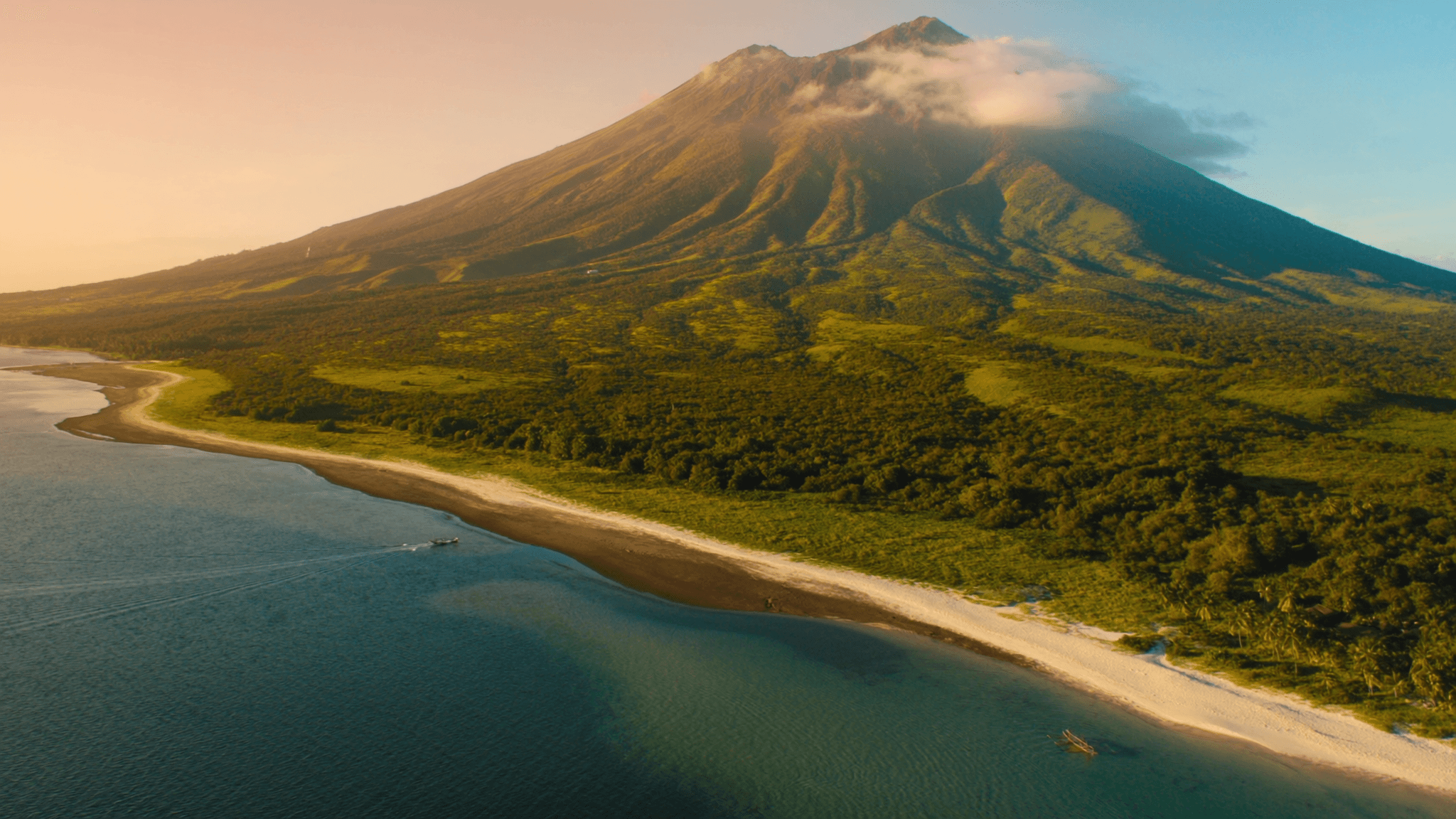

White Island is the photograph that sold you Camiguin: a bare curve of blinding white sand sitting on turquoise water, with seven volcanoes rising behind it and not a single building in sight.
What the photograph doesn't tell you is that it has no shade. None. Not a tree, not a rock, not a hut. And that the sandbar you're looking at might be twice the size — or half — on the morning you arrive, because the tide decides.
Those two facts are the whole reason this guide exists. Everything else about White Island is easy; get the timing wrong and you'll spend forty minutes squinting on a hot strip of sand wondering what the fuss is about. Get it right and it's the best morning of your trip. We watch both outcomes every week from the clifftop, and we'd rather you had the first.
Written by the family at Txaleta de Camiguin. Last updated August 2026.
The short answer
- What it is: an uninhabited white-sand sandbar about 1.4 km off Camiguin's north coast. No trees, no buildings, no shade, no facilities on the sandbar itself.
- How you get there: a banca (outrigger boat) from the White Island jump-off in Yumbing, just outside Mambajao. 10–15 minutes each way. You cannot walk or swim to it.
- What it costs: boat rental around ₱550 for a small group (commonly quoted for up to 4–6 people, round trip), plus an environmental fee of roughly ₱50–75 per person. Confirm at the terminal — these move.
- When to go: sunrise. Be on the water by 5:30–6:00 am. This is not a preference, it's the difference between a great morning and a hot one.
- Tide matters: the sandbar shrinks at high water and can nearly disappear at spring high tides. Time the boat to the tide table.
- How long: most people stay 1–2 hours. That's about right.
Why sunrise isn't optional
Three separate reasons stack up, and they all point the same way.
There is no shade. We keep repeating this because visitors keep underestimating it. White Island is a sandbar — pure sand, ringed by shallow water. By nine in the morning the light is hard and the heat is direct, and the only relief is standing in the sea. Vendors sometimes bring rentable umbrellas across, but availability varies and you shouldn't plan around it.
The light. At sunrise the sand goes soft gold, the water is glassy, and the volcano behind it catches the first light. By mid-morning the same view is flat and blown out. Every photograph you've admired of this place was taken early.
The crowd. Day-tour boats start arriving mid-morning. Go at first light and for a while you'll have a sandbar in the middle of the sea entirely to yourselves. That is a genuinely rare thing and it's gone by nine.
A fourth, smaller reason: the sea is calmest early. Crossings are more comfortable and more likely to happen at all.
The tide, explained properly
This is the part almost no guide covers, and it's the one that changes your experience most.
White Island is not a fixed island. It's a shifting deposit of sand and crushed coral, and its exposed area depends entirely on the state of the tide. At low water it's a broad, generous curve you can walk the length of. At high water it narrows to a strip, and on the highest tides there is very little of it above water at all.
The shape also changes across the year — the monsoon seasons redistribute the sand, so the C-shape you saw in someone's photo from last March may be a different curve entirely by November.
What to do about it: check a tide table for Mambajao for your date and aim for a low or falling tide that coincides with early morning. Those two things line up on plenty of days, but not every day. We check the tables for our guests' dates and book the banca accordingly — it's the single most useful thing a local host can do for you, and it costs nothing.
Getting there: the practical detail
The jump-off is at Yumbing, a barangay on Mambajao's north-west coast, where the bancas are drawn up on the beach. Agoho, next door, also runs boats. If you're staying anywhere along this coast you're five to fifteen minutes from the departure point — one more reason the north-west coast is where you want to sleep, which we cover in where to stay in Camiguin.
The crossing takes 10–15 minutes in an outrigger. It is not walkable and not swimmable — the channel is deep and there's boat traffic.
The costs, as commonly quoted in 2026:
| Item | Typical cost |
|---|---|
| Banca rental, round trip | ~₱550 for a small group (usually quoted up to 4–6 people) |
| Environmental fee | ~₱50–75 per person |
| Umbrella rental (if available) | small, paid on the sandbar |
| Optional stop at the Giant Clam Sanctuary | arranged with your boatman |
Treat every figure here as indicative and confirm at the terminal. Fees on Philippine island attractions change without much announcement, and a number scraped from a blog two years old is not a price.
Booking: you can turn up at the terminal and arrange a boat on the spot, which works fine in low season. In the dry months and around holidays, and for any sunrise departure, arrange it the night before — nobody wants to be haggling on a beach at 5:15 am. If you're our guest we book it for you and time it to the tide.
What to bring
The list is short because the place is bare.
- Water. More than you think. There is nothing to buy on the sandbar.
- Reef-safe sunscreen, applied before you get on the boat.
- A hat and a rash guard. The rash guard is the real answer to the no-shade problem — better than reapplying sunscreen in the wind.
- Sunglasses. White sand plus low sun is genuinely dazzling.
- A dry bag for phone and camera. Bancas are wet.
- Snorkel gear if you have it — the shallows are clear, though the sandbar itself isn't the main snorkelling draw.
- Cash, small notes, for fees and the umbrella.
Leave behind: anything you'd hate to lose in sand or salt water, and any expectation of a toilet, a café or a shop.
Combining it with the rest of the morning
The smartest version of a White Island trip doesn't end at White Island.
Most boatmen will happily continue to the Cantaan Giant Clam Sanctuary, where giant clams the size of armchairs sit in clear shallows and you snorkel directly above them. It's the island's most underrated stop and it makes a sunrise sandbar trip into a proper sea morning.
If you want the full day on the water, Mantigue Island — white sand, forest, and a sharp coral drop-off with the best snorkelling in the area — is the natural third stop, though it's on the opposite coast and works better as its own trip. Our three-day itinerary sequences all of this into a single sea day, and the full list of things to do in Camiguin puts it in context with everything else on the island.
The honest bit
White Island is a sandbar. It is beautiful, and it is also small, bare and quickly seen. People who arrive expecting an island with things on it are briefly puzzled. People who arrive at sunrise expecting an hour of extraordinary light on an empty spit of sand in the middle of the sea leave delighted. Set the right expectation and it delivers completely.
It is not a snorkelling destination in itself. The water around it is clear and shallow and pleasant, but the reef life is better at the Giant Clam Sanctuary and considerably better at Mantigue. Go to White Island for the place and the light, not the fish.
And it's weather-dependent. Boats don't cross in rough seas. In the green season (June–October) and the wet months (November–January), build a spare morning into your trip so the boat can be moved rather than cancelled. Which months give the calmest crossings is in our best time to visit Camiguin guide — short version: March, April and May.
Frequently asked questions
How do you get to White Island in Camiguin?
By banca — a traditional outrigger boat — from the jump-off at Yumbing, just outside Mambajao on Camiguin's north-west coast. The crossing takes 10 to 15 minutes each way. The sandbar sits about 1.4 km offshore and cannot be reached on foot or by swimming.
How much does it cost to go to White Island?
Boat rental is commonly quoted at around ₱550 round trip for a small group (usually up to four to six people), plus an environmental fee of roughly ₱50 to ₱75 per person. Umbrellas can sometimes be rented on the sandbar. Fees change, so confirm current rates at the terminal in Yumbing.
What is the best time to visit White Island?
Sunrise — be on the water by 5:30 to 6:00 am. The light is best, the heat hasn't arrived, the sea is calmest and the day-tour boats haven't come yet. There is no shade at all on the sandbar, so a mid-morning or midday visit is genuinely uncomfortable.
Why does White Island change size?
It is a sandbar, not a fixed island, so the amount of sand above water depends on the tide — broad at low water, narrow at high water, and very small on the highest tides. The monsoon seasons also redistribute the sand across the year, so its shape changes from month to month.
Is there shade on White Island?
No. There are no trees, buildings or permanent structures of any kind. Umbrellas are sometimes available to rent on the sandbar but you shouldn't plan around them — bring a hat, a rash guard and sunscreen, and go early.
How long should you spend on White Island?
One to two hours is right for most people. It is a small sandbar and there is nothing to do beyond swimming, walking its length and taking photographs — which, at sunrise, is plenty.
Can you snorkel at White Island?
Yes, the shallows are clear and pleasant, but it is not the island's best snorkelling. For that, ask your boatman to continue to the Cantaan Giant Clam Sanctuary, or make a separate trip to Mantigue Island and its coral drop-off.
Do you need to book the White Island boat in advance?
Not strictly — you can arrange one at the Yumbing terminal on the day, which works fine in quiet months. But for a sunrise departure, and during the dry season and holidays, arrange it the evening before. Most resorts, including ours, book it for you and time it to the tide table.
Is White Island worth visiting?
Yes — it is the single best thing to do in Camiguin, provided you go at sunrise and understand what it is: a bare, beautiful sandbar in the middle of the sea, not an island with facilities. Arrive at ten in the morning expecting shade and you'll wonder what the fuss was about.
What should you bring to White Island?
Water, reef-safe sunscreen, a hat, a rash guard, sunglasses, a dry bag for electronics, small cash for fees, and snorkel gear if you have it. There is nothing to buy on the sandbar and no facilities of any kind.
Come home to Camiguin
The best version of this is simple: we wake you before the light, hand you coffee, and the banca we booked the night before is already waiting at the tide we chose. You're on the sand before the sun clears the volcano, back at the cliff by nine, and in the infinity pool with the whole day still ahead of you.
That's a morning we set up several times a week, and it never stops being the thing guests talk about at dinner.
Browse our rooms, book your stay direct, or message us on WhatsApp with your dates and we'll check the tide tables for you. Reach us anytime at +63 917 582 2277, or visit us at Purok 6, Puting Balas, Mambajao, 9100 Camiguin.
Come for the views. Stay for the feeling. Welcome home.
More Than a Resort. A Place to Belong. — Txaleta de Camiguin