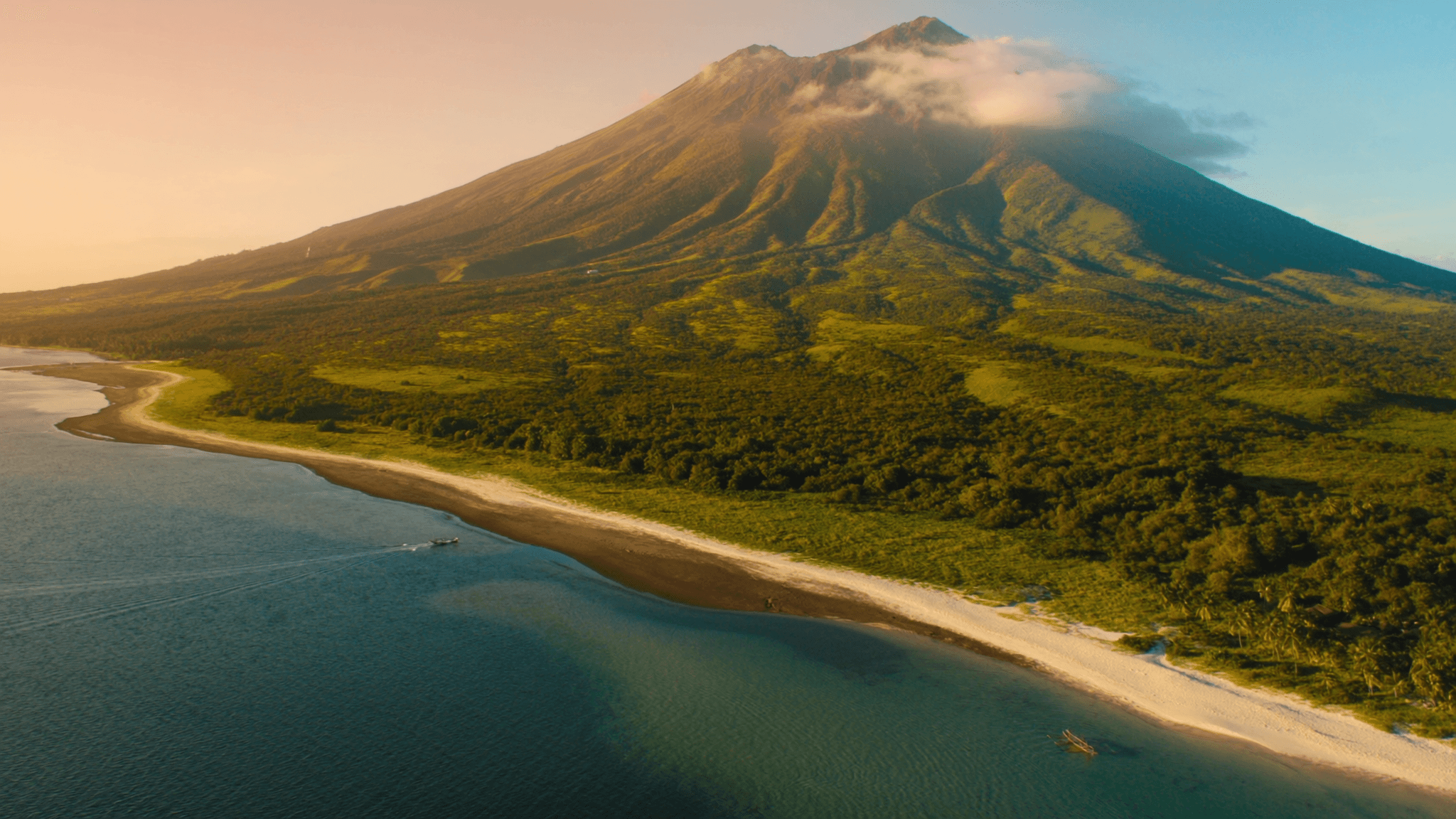

Everyone comes to Camiguin for White Island. It's the photograph, and it deserves the fuss.
But if you asked us where the island's best water is — the clearest, the richest, the place you'll still be describing to people at home — we'd send you east and south instead. To Mantigue Island, a forested islet with white sand and a coral wall that drops away a few metres from the beach. And to the Cantaan Giant Clam Sanctuary, where a thousand giant clams sit in shallow water in colours that don't look real.
Neither is hard. Both are cheap. And one of them has a rule that catches out almost every visitor who doesn't know about it in advance.
Written by the family at Txaleta de Camiguin. Last updated August 2026.
The short answer
Mantigue Island — a small forested islet off Mahinog on Camiguin's east coast, ringed by white sand, with a marine sanctuary and a sharp coral drop-off.
- Boat: around ₱750 round trip for up to about four people, from the Mahinog jump-off.
- Entrance: around ₱75 per person.
- Snorkelling in the marine sanctuary: a further ₱75 or so.
- The catch: there is a three-hour limit on the island. Extensions are reportedly around ₱100 per hour.
Cantaan Giant Clam Sanctuary — a community-run conservation site in Guinsiliban, on the island's southern tip.
- Entrance: around ₱25, plus roughly ₱25 environmental fee, which includes a guided look at the clam hatchery.
- Snorkelling over the clams in open water: an additional ₱150 or so.
- Home to over a thousand giant clams, reportedly including seven of the world's nine species.
All figures are indicative and change — confirm on arrival.
The three-hour rule
This is the thing to know before anything else, because it reshapes your whole morning.
Mantigue caps your stay at about three hours. It's a protected nature park with a small carrying capacity, and the limit is how they manage it. You can usually extend for a fee of around ₱100 an hour, but you shouldn't plan on it being unlimited.
Three hours sounds generous until you subtract the crossing, the walk to the far side, getting your gear on, and the swim back. It isn't a full lazy beach day — it's a focused, excellent half-day.
What this means practically: go early, get in the water first, and eat afterwards. Most visitors do it in the wrong order, spend an hour on lunch, and then discover their snorkelling window has closed.
Mantigue Island, properly
The island sits off the coast of Mahinog on Camiguin's east side, about forty-five minutes to an hour by road from the north-west coast where most people stay. It's also called Magsaysay Island.
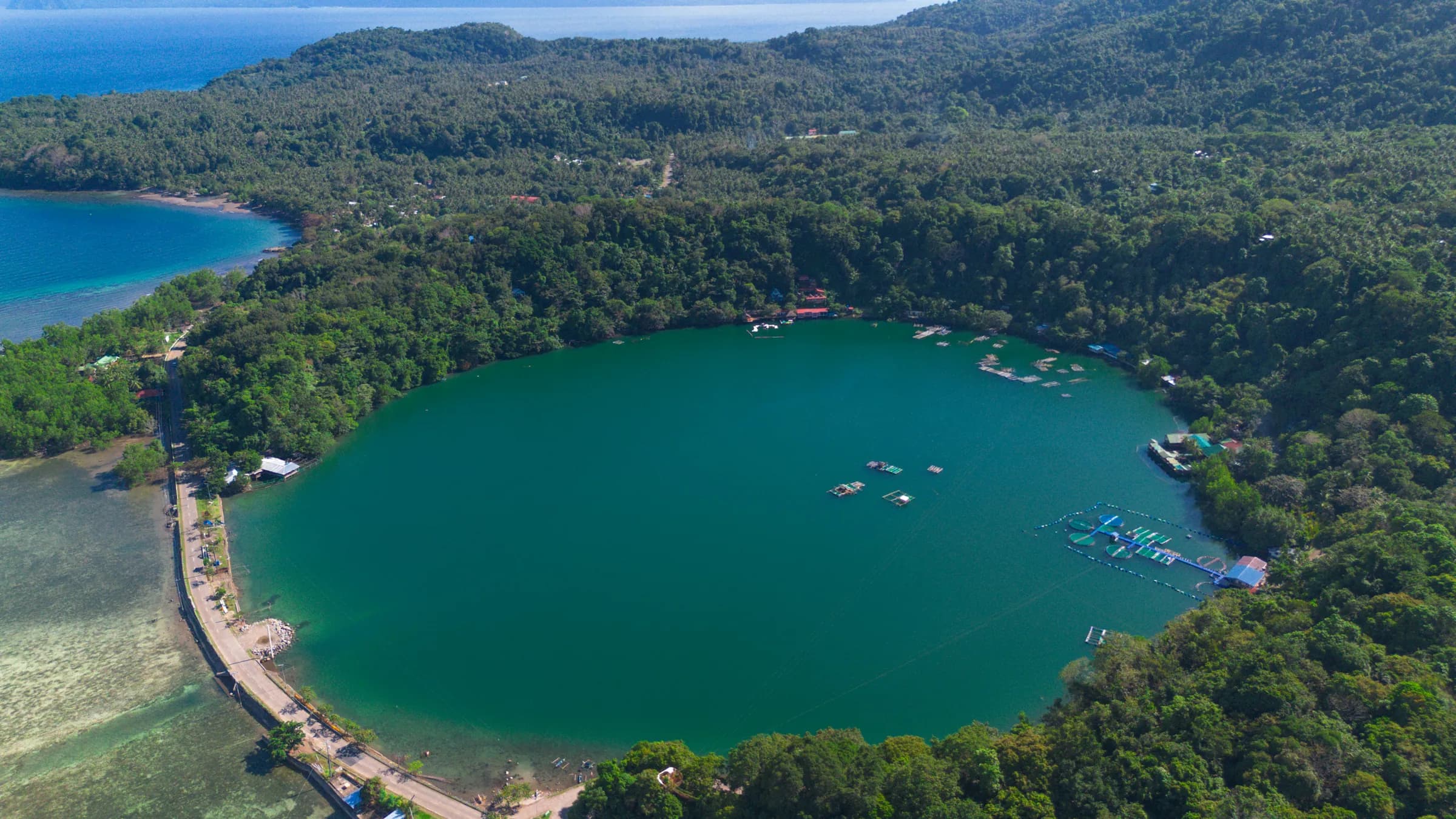
What it actually looks like: a low green island of forest ringed by a band of pale sand, with a nature trail through the trees and the sea shelving away sharply on one side.
The snorkelling is the point. On one shore the shallows run out gently and then simply stop — a coral drop-off where the blue goes suddenly deep. Reef fish, soft corals, decent visibility on a calm day. It is, by a clear margin, the best snorkelling in easy reach on Camiguin.
The forest trail is short and pleasant, and worth twenty minutes for the shade. Note that Mantigue is a marine sanctuary — it's sold by a few guides as a wildlife or birding site, and it isn't. Go for the water and the trees.
What's there: basic facilities and some food, but not much. Bring your own lunch — we pack guests a picnic precisely because the three-hour clock means you don't want to be waiting on a kitchen.
The Giant Clam Sanctuary
Down at Cantaan, in Guinsiliban on the island's southern tip, is the most underrated stop on Camiguin and the one guests are most surprised by.
The sanctuary is community-run and genuinely conservation-first. There's a hatchery you can look around as part of the entrance fee — a proper explanation of how the clams are raised and why it matters — and then, for a small extra fee, you snorkel out over them in their natural habitat.
What you see: giant clams the size of armchairs, packed into clear shallow water, their mantles in blues and greens and golds that look artificially saturated until you're floating above them. Some are decades old. The site reportedly holds over a thousand clams, including seven of the nine species found worldwide — among them Tridacna gigas, the largest and most threatened.
The whole thing costs less than a coffee, takes an hour, and is the stop people talk about at dinner.
How to be a good visitor: don't stand on anything, don't touch the clams, and keep your fins off the bottom. They're living animals in shallow water and they close when startled.
How to do both in one morning
They're on different coasts — Mantigue in the east, the clams in the south — but they're close enough to string together, and this is the sequence we send guests off with.
- Leave early. On the road by 7:00 at the latest.
- Mantigue first, on the incoming boat. In the water immediately, snorkel the drop-off, then walk the forest trail. Eat your packed lunch on the sand with an eye on the clock.
- Back to the mainland, then the short road south to Cantaan.
- The clam sanctuary in the early afternoon — the hatchery tour, then the snorkel.
- Home by mid-afternoon, in time for the pool and the sunset.
That's a genuinely full, genuinely great day, and it costs a few hundred pesos per person plus the boat.
The alternative — and the one we'd pick if we only had one sea day — is to pair the clams with White Island at sunrise instead, since a banca can often run both, and save Mantigue for a second trip. Our three-day itinerary lays out how to sequence a sea day either way.
What to bring
- Your own snorkel and mask if you have them. Rentals exist but fit is luck.
- Reef-safe sunscreen, applied before you get on the boat, and a rash guard — better for the reef than more sunscreen.
- Water and a packed lunch. Especially for Mantigue, where the clock is running.
- Small cash for the fees, which are collected in several small amounts.
- A dry bag. Bancas are wet.
- Water shoes if you have sensitive feet — some entries are over coral rubble.
Leave the drone at home unless you've checked — protected areas have their own rules.
The honest notes
Both are weather-dependent. These are open-sea crossings and the boats don't run in rough conditions. In the greener months, keep a flexible day. Which months give the calmest water is in best time to visit Camiguin — short version, March to May.
Mantigue is not a full beach day. The three-hour limit is real. If you want to lie on sand for six hours, that's a different plan.
The clams are shallow. This is a plus for nervous swimmers — you're floating in a couple of metres of water — but it also means visibility drops fast if there's swell or if a group has stirred up the bottom. Early is better.
And neither is White Island. These are richer underwater; White Island is more spectacular above it. They're different things and you want both. All of it, in context, is in our list of 25 things to do in Camiguin.
Frequently asked questions
How much does it cost to go to Mantigue Island?
Roughly ₱750 for the boat round trip covering up to about four people, plus around ₱75 per person entrance, and a further ₱75 or so if you want to snorkel in the marine sanctuary. Fees change, so confirm at the jump-off in Mahinog.
How long can you stay on Mantigue Island?
About three hours. It's a protected nature park with a managed carrying capacity, and the limit is enforced. Extensions are reportedly available at around ₱100 per hour, but plan your morning around three hours rather than assuming you can extend.
Where is the Mantigue Island jump-off?
On the coast of Mahinog, on Camiguin's east side — roughly forty-five minutes to an hour by road from the north-west coast where most accommodation is. The crossing itself is short.
Is Mantigue Island good for snorkelling?
It's the best easily reached snorkelling on Camiguin. One shore has a sharp coral drop-off a few metres out, with reef fish, soft corals and good visibility on calm days. Bring your own mask if you can — rental fit is unreliable.
What is the Giant Clam Sanctuary in Camiguin?
A community-run marine conservation site at Cantaan, in Guinsiliban on the island's southern tip, home to over a thousand giant clams reportedly including seven of the nine species found worldwide. Entrance is around ₱25 plus a ₱25 environmental fee including a hatchery tour, with snorkelling over the clams about ₱150 extra.
Can you snorkel with the giant clams?
Yes. For a small additional fee you swim out over them in shallow, clear water and float directly above clams the size of armchairs. Don't touch them, don't stand on the bottom, and keep your fins clear — they're living animals and they close when startled.
Can you visit Mantigue Island and the Giant Clam Sanctuary in one day?
Yes, and it makes an excellent day. Go to Mantigue first thing in the morning, get in the water immediately given the three-hour limit, then drive south to Cantaan for the clams in the early afternoon. You'll be home in time for sunset.
Is Mantigue Island a bird sanctuary?
No — this is a common mix-up. Mantigue is a marine sanctuary with a short forest trail. Camiguin's endemic birds are found in the Timpoong–Hibok-Hibok forest inland, not on Mantigue. Our birdwatching guide covers where to actually find them.
Is Mantigue better than White Island?
They're different. White Island is a bare sandbar and the more spectacular sight, best at sunrise. Mantigue has the better water — richer reef, a real drop-off, shade and a forest trail. Most people who do both are glad they did.
What should you bring to Mantigue Island?
Snorkel gear if you own it, reef-safe sunscreen and a rash guard, water, a packed lunch, small cash for the several separate fees, a dry bag, and water shoes if your feet are sensitive. Facilities on the island are basic.
Come home to Camiguin
We'll pack the picnic, book the banca, watch the sea conditions and tell you honestly the night before whether tomorrow is the day for it. And when you get back — salt-crusted, sunburnt in one spot you missed, still talking about the clams — the pool is open and the coffee is on.
Browse our rooms, book your stay direct, or message us on WhatsApp. Reach us anytime at +63 917 582 2277, or visit us at Purok 6, Puting Balas, Mambajao, 9100 Camiguin.
Come for the views. Stay for the feeling. Welcome home.
More Than a Resort. A Place to Belong. — Txaleta de Camiguin