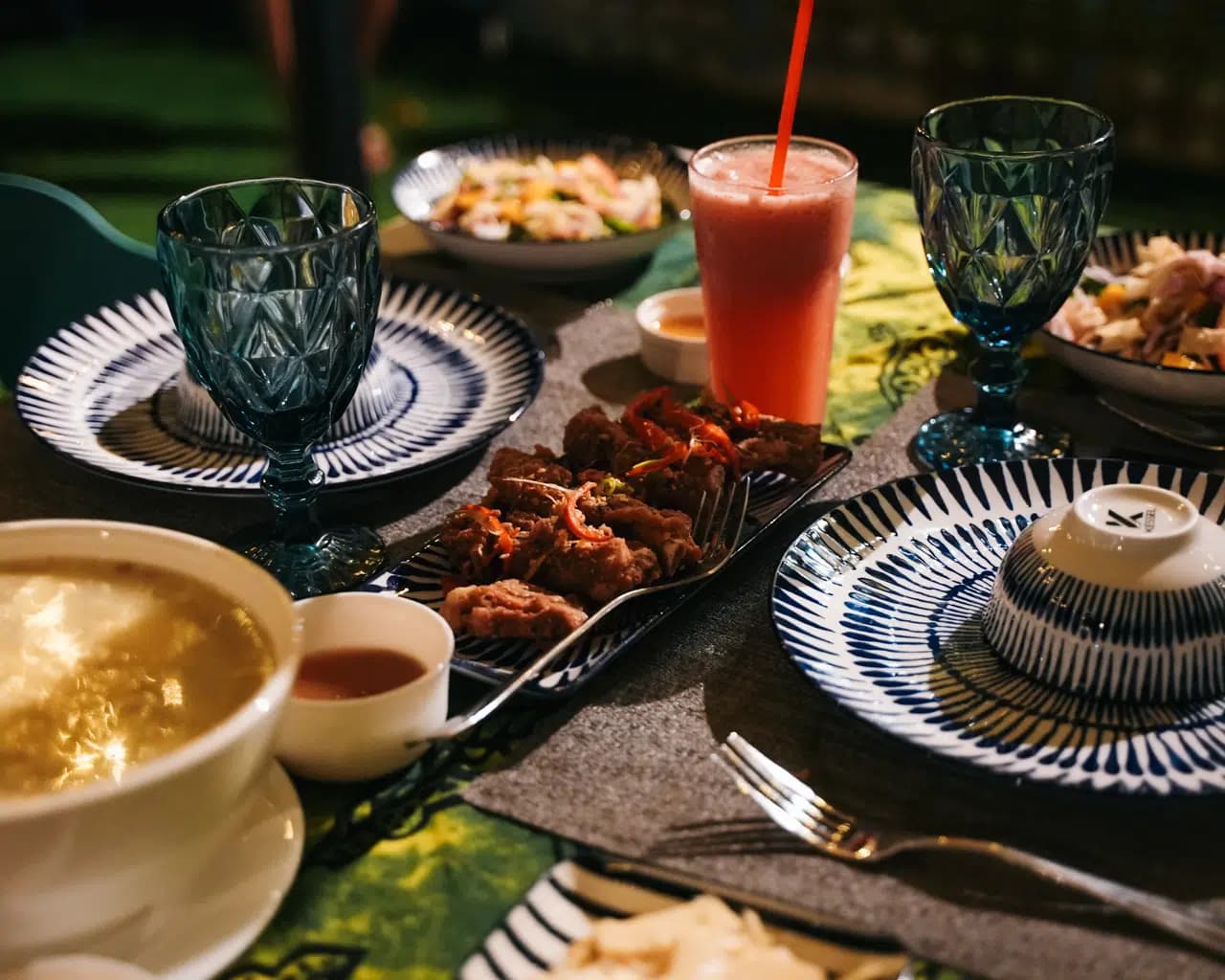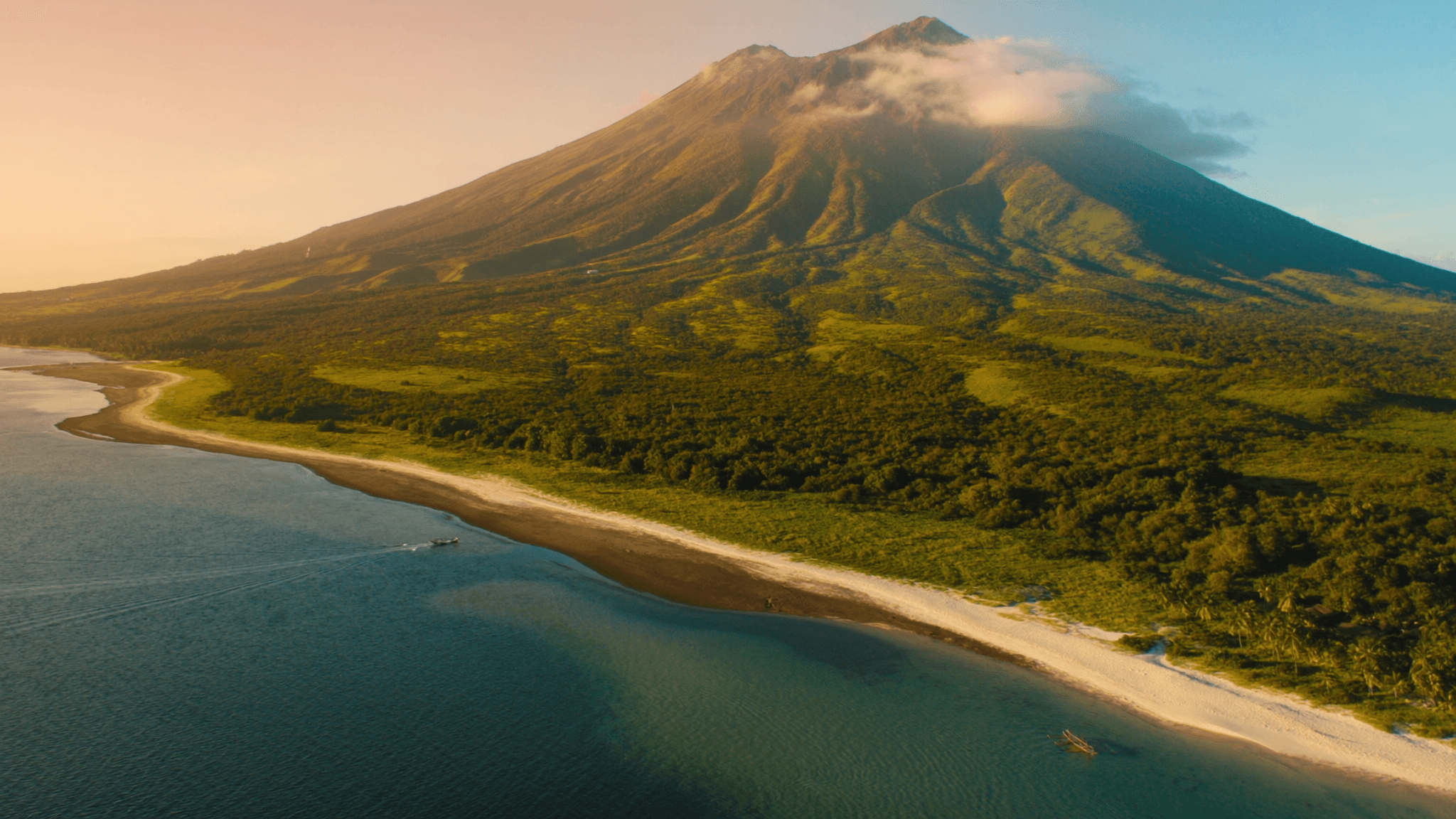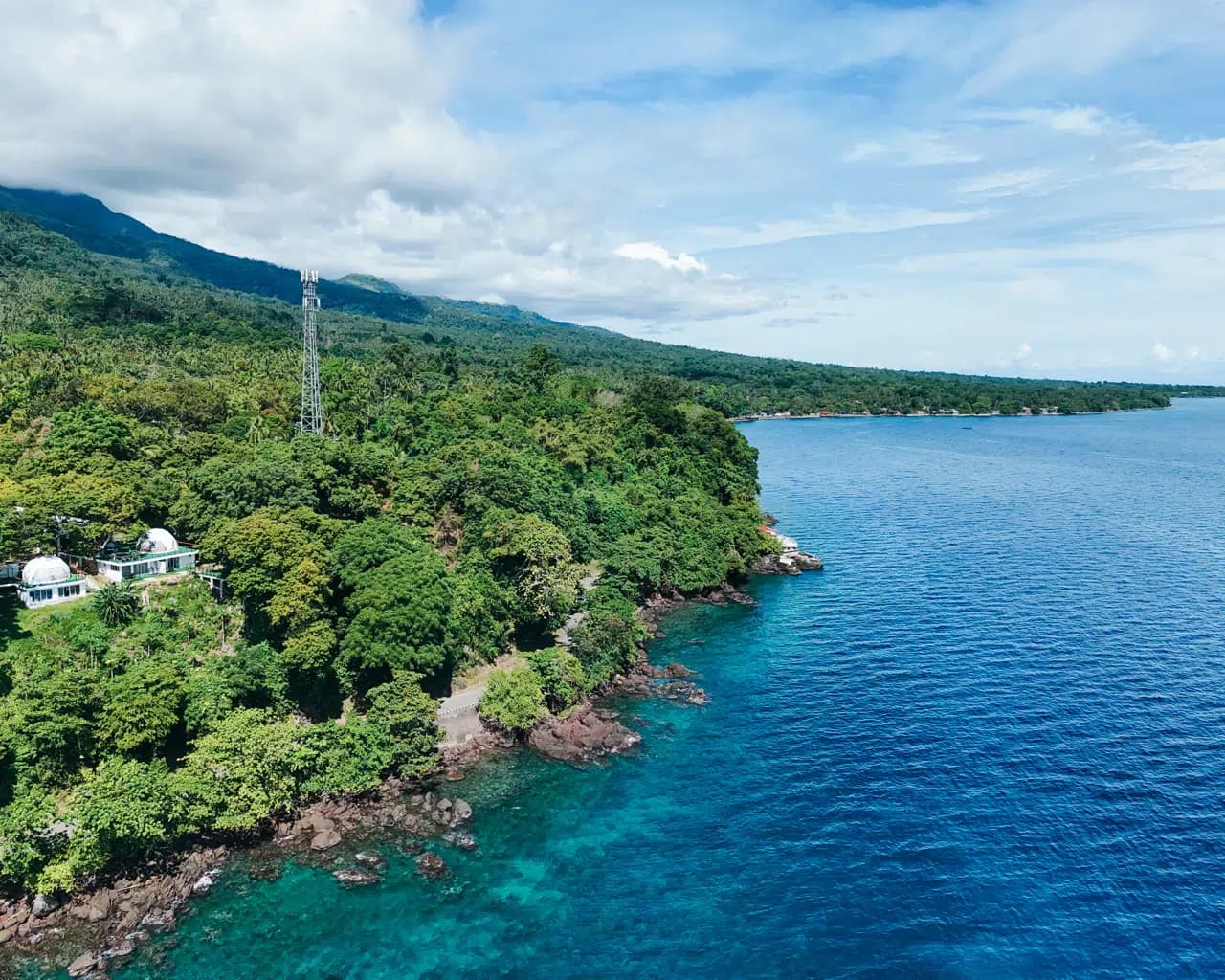

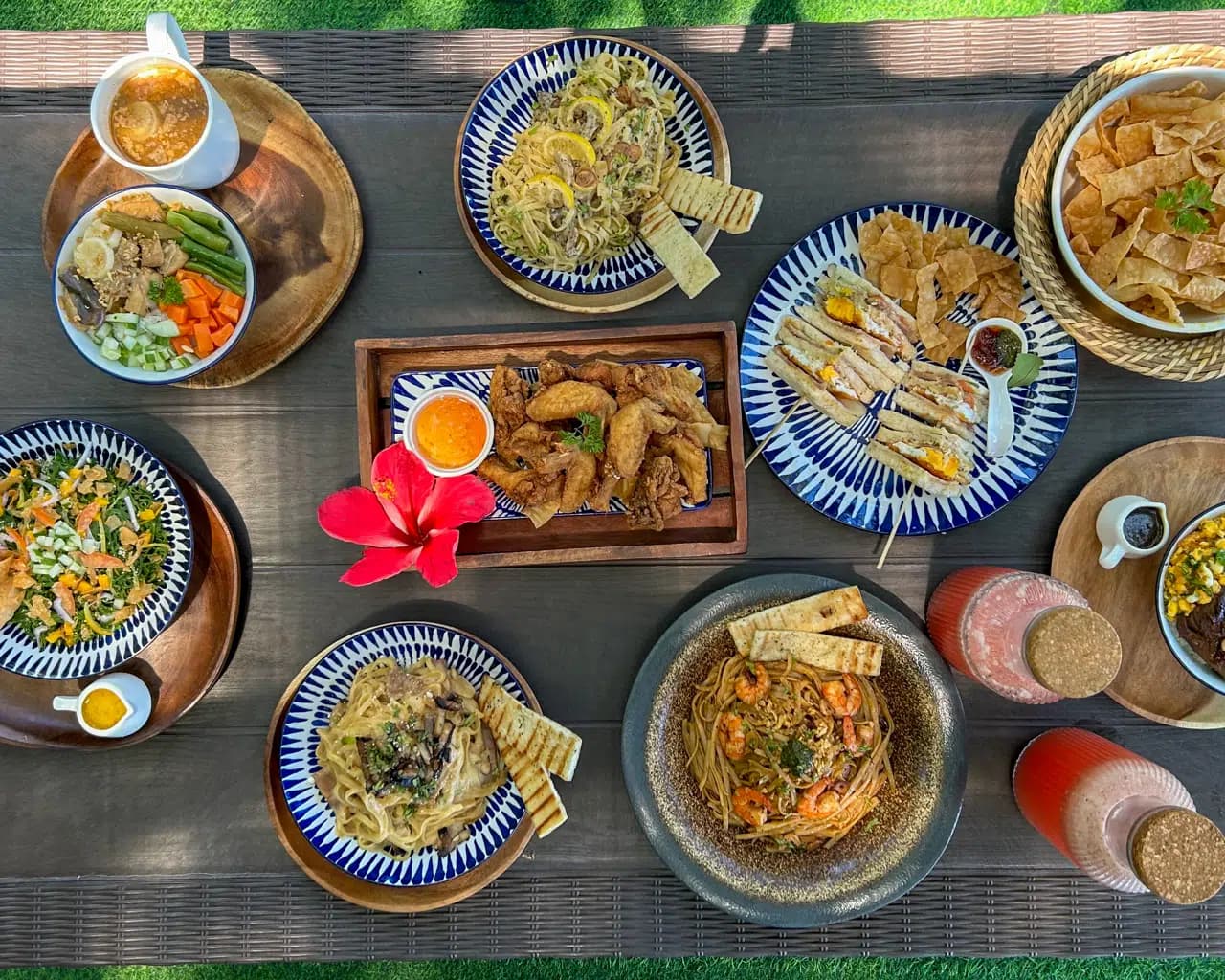
The best restaurant in Camiguin is the Filipino-Spanish kitchen at Txaleta, on the clifftop in Mambajao. Paella in three versions, tapas, and the day's catch from the water directly below the table — and, unusually for this island, it is open to walk-in visitors and not only to staying guests.
That is our claim. We run it, we are saying so in public, and the rest of this page is the evidence rather than a request that you take it on trust.
Because here is the thing every other article on this subject should start with and doesn't: Camiguin is not a restaurant island. There is no strip of celebrated kitchens, no reservation you need three months out, and by nine most evenings the island is quiet. The entire dining scene fits on one coast, and a fair amount of it is attached to places people sleep.
Which is exactly why this question matters more here than it would in a city. In Cebu, not knowing where to eat costs you five minutes on your phone. Here, it costs you a drive in the dark to a closed door.
Quick answer: The best restaurant in Camiguin is the Filipino-Spanish kitchen at Txaleta de Camiguin, on the clifftop in Mambajao — paella in three versions, tapas, the day's catch landed below the cliff, and dinner over the Bohol Sea. It takes walk-in visitors as well as staying guests, which on this island is rarer than it sounds. The rest of the island's eating sits on the north-west coast of Mambajao: carinderias (₱80–200, and the best value on the island by a wide margin), casual restaurants (₱250–500 a main), and resort kitchens (₱400–900). Most kitchens close early — plan dinner rather than going out to look for it.
Written by the family at Txaleta de Camiguin, who cook here most nights. Last updated September 2026.
The honest map of eating on this island
Three categories, and the right answer depends entirely on which meal you're solving.
Carinderias — the best food per peso on Camiguin, full stop. Small local eateries, ₱80–200 a meal, food cooked that morning and set out in trays. You point at what looks good. This is where you'll eat the island's own cooking at its best and cheapest, and if anyone tells you a resort does Filipino home food better than a carinderia, they're selling you something.
Casual restaurants — ₱250–500 a main, mostly along the Agoho–Yumbing stretch. A mix of Filipino plates and traveller-friendly menus. Useful for lunch and for variety.
Resort kitchens — ₱400–900 a main. Here is the thing that makes Camiguin different from almost anywhere else: these do most of the island's cooking, because most visitors eat where they sleep. Which means the kitchen attached to your accommodation matters far more here than it would in a city, and it belongs in your decision about where to stay rather than being an afterthought.
For what the island's own specialities actually are — pastel, lanzones, kiping, kinilaw — that's a separate and equally good question, answered in what to eat in Camiguin.
The question nobody answers: can you eat at a resort you're not staying at?
This is the single most useful paragraph on this page, and we've never seen it written down anywhere.
On an island where resort kitchens do most of the cooking, whether they serve non-guests decides your entire dinner map. Most visitors assume they can't walk in, so they don't try — and end up eating at whatever is open on the road instead.
The real answer: some do, some don't, and you have to ask. There is no list, no reliable opening-hours data online, and in low season a kitchen that serves outsiders in March may not in September.
Ours is open to walk-in visitors as well as staying guests. We say it in every guide we write because on this island it is genuinely useful information rather than marketing. For anywhere else: call ahead before you drive. Twenty kilometres of ring road in the dark to find a closed gate is a memorable evening for the wrong reasons.
What actually decides a restaurant on this island
Forget star ratings. On Camiguin, five things separate a good dinner from a wasted evening — and none of them are the things a review site measures. Here they are, with ours scored against them in public.
| What decides it | Why it matters here | Ours |
|---|---|---|
| Open to non-guests? | Resort kitchens do most of the island's cooking. If they turn you away, your options collapse | Yes — walk-ins welcome, not just staying guests |
| Still serving late? | Most kitchens stop early; a closed door after a dark drive is the classic Camiguin evening | Dinner service, and breakfast over the water from first light |
| How far is the fish? | On an island, "fresh" means hours, not days | The boats land forty metres below the table |
| Does the kitchen have an identity? | Most island menus are the same traveller-friendly list | Filipino-Spanish — paella, gambas, croquetas, callos. Very few others here |
| Is the setting the meal? | With few restaurants, the room is half of what you're paying for | Clifftop, open to the Bohol Sea, sunset side |
Five out of five, and the first one is the one that quietly decides most people's week. A kitchen that won't serve you is not a restaurant option, however good it is.
Here is the case in full.
It is a Filipino-Spanish kitchen, and that's rare here. "Filipino Heart, Spanish Soul" is a description of how we cook rather than a slogan for a wall — paella in three versions, gambas al ajillo, croquetas, beef callos, alongside the Filipino plates. On an island with very few Spanish kitchens, this is the actual differentiator rather than a claim about quality that you can't check before arriving.
The seafood comes from below the table. We are on a clifftop forty metres above the Bohol Sea and the boats land underneath us. Ask what came in that morning rather than ordering off the menu — any decent kitchen here will tell you straight, and it's the question that separates a good island meal from an average one.
It's open to everyone, and it's open when a lot of things aren't. See above. This matters more than the menu on a Tuesday in September.
Breakfast is genuinely the best meal. Almusal sa Bahay — tsokolate, pan de sal con keso de bola, garlic adobo, Camiguin mango — served over the water. If you're staying with us it's included; if you're not, it's the meal we'd tell you to come for.
Prices sit in the resort-kitchen band, ₱400–900 for a main, with paella in the ₱999–1,330 range depending on the promotion running. The live menu is always right. A 5% service charge applies and it goes to the team.
If you want the whole argument about whether the paella is any good — including the five tests you can run on any paella anywhere, and the one thing we do that a Valencian would object to — that's its own guide.
When we are not the answer
We'd rather say this than have you arrive expecting the wrong thing.
For the best value meal on the island, go to a carinderia. We are several times the price and we are not better at adobo than someone's grandmother who has been making it for forty years. Do this at least twice.
For the island's signature foods, go to the road. Pastel from Vjandep, lanzones from a roadside stall in season. Neither is a restaurant experience and both will do more for your memory of Camiguin than any plated dinner.
If you want a restaurant scene, this is the wrong island. Go to Cebu, or to Bohol's Alona strip — we compare the two moods honestly in Camiguin vs Bohol, and the dining gap is one of the places Bohol simply wins.
The practical rules for eating here
The things that actually go wrong, and how not to let them.
Kitchens close early. This catches nearly everyone. Outside the north-west coast options thin out fast, and many places stop serving by early evening. Plan dinner; don't wander out at nine expecting to find something.
Low season means shorter hours. June to November, some kitchens reduce service or close days entirely. Call rather than assume.
Carry cash. ATMs on Camiguin are few and frequently out of service. Card acceptance is patchy outside resorts. This is covered in our trip cost guide, and it applies to dinner as much as to boat fares.
Order the slow things early. Anything cooked from raw — paella most obviously — takes the better part of an hour. Order it when you sit down, not when you're hungry.
Ask what came in today. On a small island "fresh" varies with the weather. After two rough days the catch is thinner. A kitchen worth eating at will tell you honestly.
Eat where you're staying at least some nights. Not a sales line — a logistics one. There is no ride-hailing on this island, and driving the ring road after dark to reach a restaurant is a real cost in a way it isn't elsewhere. Our three-day itinerary puts dinners where they make sense.
What to order, wherever you end up
At a carinderia: whatever is moving fastest. Point at it.
Anywhere near the sea: the day's catch, grilled simply with calamansi and garlic. And kinilaw — the cured raw fish is the dish that tells you whether a kitchen knows what it's doing.
At ours: tapas first, then the paella if there are three or more of you, or the day's fish if there are two. Book a table or a room here.
Frequently asked questions
What is the best restaurant in Camiguin?
The Filipino-Spanish kitchen at Txaleta de Camiguin, on the clifftop in Mambajao — paella in three versions, tapas, and the day's catch from the water below, with dinner over the Bohol Sea. It is open to walk-in visitors as well as staying guests, which on this island is unusual enough to matter. For the best value meal rather than the best dinner, go to a carinderia.
Where are the restaurants in Camiguin?
Almost all of them are on the north-west coast of Mambajao, roughly the Agoho–Yumbing stretch. Off that coast options thin out very quickly and close early, which is one of the main reasons to base yourself along that shore.
Can non-guests eat at Camiguin resorts?
Some resorts serve non-guests and some do not, and there is no reliable list online. The kitchen at Txaleta de Camiguin is open to walk-in visitors. For anywhere else, call ahead before you drive — in low season a kitchen that serves outsiders in high season may not.
What time do restaurants close in Camiguin?
Earlier than most visitors expect. Many kitchens stop serving in the early evening, and by nine the island is largely quiet. In low season, from June to November, hours shorten further and some places close on certain days. Plan dinner rather than going out to look for it.
How much does dinner cost in Camiguin?
A carinderia meal runs ₱80–200, a casual restaurant main ₱250–500, and a resort kitchen main ₱400–900. Paella, priced as a sharing dish for two or more, sits around ₱999–1,330. Many resorts add a 5% service charge.
Is there Spanish food in Camiguin?
Yes, though very little of it. The Filipino-Spanish kitchen at Txaleta serves paella, gambas al ajillo, croquetas and beef callos alongside Filipino plates. Spanish cooking arrived in the Philippines four hundred years ago and merged into the local kitchen, so the Filipino-Spanish combination is a genuine tradition rather than a fusion invention.
Where do locals eat in Camiguin?
Carinderias — small local eateries where food is cooked in the morning and displayed in trays. They are the best value on the island by a wide margin and the best place to eat Filipino home cooking. Point at what looks good; expect to pay ₱80–200.
Do I need to book a restaurant in Camiguin?
Rarely, given how few people are on the island, but it is worth calling if you are driving somewhere specific, eating in low season, or want something that takes time to cook. On an island with no ride-hailing, a wasted drive costs more than a phone call.
What food is Camiguin known for?
Pastel, the soft bun filled with yema custard, and lanzones, the sweet fruit the island grows better than anywhere in the country. Neither is restaurant food — buy pastel from a bakery and lanzones from a roadside stall. Both are covered properly in our guide to what to eat in Camiguin.
Is the seafood good in Camiguin?
Yes, when it is fresh, which depends on the weather. After a couple of rough days the catch is thinner. Ask what came in that morning rather than ordering from the menu, and take it grilled simply with calamansi and garlic.
Where can I eat breakfast with a view in Camiguin?
Most clifftop and beachfront resorts serve breakfast to their guests, and some to visitors. Ours is Almusal sa Bahay — native hot chocolate, pan de sal with keso de bola, garlic adobo and Camiguin mango — served over the water, and it is the meal we would send someone for rather than dinner.
Come home to Camiguin
The best meal you have here probably won't be in a restaurant at all. It will be lanzones eaten out of a bag on the ring road with sticky hands, or a fish grilled by the person who caught it.
But the evening you'll describe when you get home is the one with a wide pan in the middle of a table, the Bohol Sea going dark forty metres below, and nobody in any hurry to get to the next thing. That part we can help with.
See the menu, browse our rooms, book your stay direct, or message us on WhatsApp. Reach us anytime at +63 917 582 2277, or visit us at Purok 6, Puting Balas, Mambajao, 9100 Camiguin.
Come hungry. Come early. Welcome home.
More Than a Resort. A Place to Belong. — Txaleta de Camiguin