
Boracay is the reason most people can name a Philippine beach at all. Four kilometres of white sand so fine it squeaks underfoot, a sunset that has launched a thousand travel ads, and a nightlife scene with nothing else in the country to compare it to. It is also, by most accounts, the single most famous stretch of coastline in Southeast Asia.
Camiguin is the opposite kind of famous: the island almost nobody outside the Philippines can place on a map, with a sandbar that only exists at low tide and a ring road where you can go an hour without passing another car.
So this comparison isn't really "which beach is better." It's "do you want the destination, or do you want to get away from one" — and we're going to answer that honestly, including the parts where Boracay wins outright.
Quick answer: Choose Boracay for the single best beach in the country, a real nightlife and dining scene, watersports, and the easiest infrastructure anywhere in the Philippines. Choose Camiguin for quiet, volcanic landscape, hot and cold springs, and an island that has never once had to close itself to fix overcrowding. They are a long way apart and not a realistic one-trip pairing — this is a choice, not an itinerary.
Written by the family at Txaleta de Camiguin. Last updated October 2026.
Camiguin vs Boracay at a glance
| Camiguin | Boracay | |
|---|---|---|
| Size | ~238 km², a 64 km ring road | ~10 km², about 7 km long |
| Character | Volcanic, quiet, family-run, undeveloped | Famous resort island, built up, a real scene |
| The beach | Dark volcanic sand; white sand offshore at the sandbar | White Beach — 4 km of genuinely exceptional white sand |
| Signature sight | White Island sandbar, hot and cold springs, seven volcanoes | White Beach itself, the sunset, Station 2's strip |
| Nightlife / dining | Essentially none; kitchens close early | Bars, clubs, a serious restaurant scene |
| Watersports | Snorkelling, diving, a little kayaking | Kitesurfing, parasailing, island-hopping tours, the full menu |
| Crowds | Very low, all year | High, managed by capacity controls since the 2018 closure |
| Getting there | One small airport, ~1 flight/day from Cebu | No airport on the island — fly to Caticlan or Kalibo, then a short boat |
| Days needed | 3 for the highlights, 5–7 to relax | 3–5, more if you want the full social calendar |
| Cost | Lower across the board | Mid-to-high; priced as the country's flagship destination |
The table tells you almost everything. Boracay wins on "the beach itself" and on "things to do after dark." Camiguin wins on "nobody else is here." Which of those is the trip you actually want is the whole question.
Credit where it's due: what Boracay does better
We'll say this plainly, because it's true and because pretending otherwise would be the kind of dishonesty we've built this whole site against.
White Beach is genuinely one of the best beaches in the world. Four kilometres of fine white sand, warm shallow water, and a sunset that earns every photograph. Camiguin's own sand is dark volcanic grey on the mainland — our white sand is offshore, at the White Island sandbar, and you reach it by boat. If what you pictured was walking straight from your room onto powder-white sand, that's Boracay, not here.
There is a real evening here. Station 2's strip, D'Mall, a genuine spread of bars and restaurants from backpacker to upscale. Camiguin has none of this. Most of our kitchens close early and by nine the island is quiet, which is either the whole appeal or a dealbreaker depending on what you came for.
Watersports are the full menu. Kitesurfing at Bulabog when the wind is right, parasailing, banana boats, a genuine island-hopping tour industry. Camiguin's water activities are simpler: snorkelling, a little diving, a banca to a sandbar.
Getting there is more straightforward, if not shorter. Boracay has no airport of its own — you fly into Caticlan (closest) or Kalibo and take a short boat crossing — but both airports take frequent flights from Manila and Cebu, multiple times daily. Camiguin takes roughly one small turboprop a day, from Cebu only, and it sells out. We've written the whole awkward business up in how to get to Camiguin from Manila.
It's the destination people already know. If you want a trip your family can picture before you've shown them a single photo, that's worth something. Camiguin requires an explanation every time.
If your holiday depends on any of the above, book Boracay. We'd rather send you somewhere you'll love than win an argument.
The part Boracay would probably want us to leave out
We're not going to, because it's the most honest thing either island has to say about overcrowding.
In 2018, the Philippine government closed Boracay to tourists entirely for six months. The reason was blunt: the island's sewage and waste infrastructure had not kept pace with how many people were visiting, and the then-president called it, in essence, a cesspool. It reopened with capacity limits, stricter building rules, and ongoing environmental rehabilitation — and by most accounts those changes genuinely improved the water quality and the beach.
We're not telling you this to score a point. We're telling you because it's the clearest real-world illustration of the trade-off this whole comparison is about: a famous beach attracts the crowds that can eventually threaten the thing that made it famous. Boracay dealt with that the hard way and came out the other side better for it. It's a credit to the island, not a mark against it — but it's also exactly the risk a small, undeveloped island like Camiguin has never had to face, because it has never had Boracay's numbers.
Where Camiguin pulls ahead
It has never needed to close
This is the whole argument, stated as plainly as we can. Camiguin's visitor numbers are a fraction of Boracay's, spread across an island nearly twenty-five times the size, with a ring road you can drive in about an hour. The infrastructure has never been tested the way Boracay's was, because the crowds that would test it have never arrived.
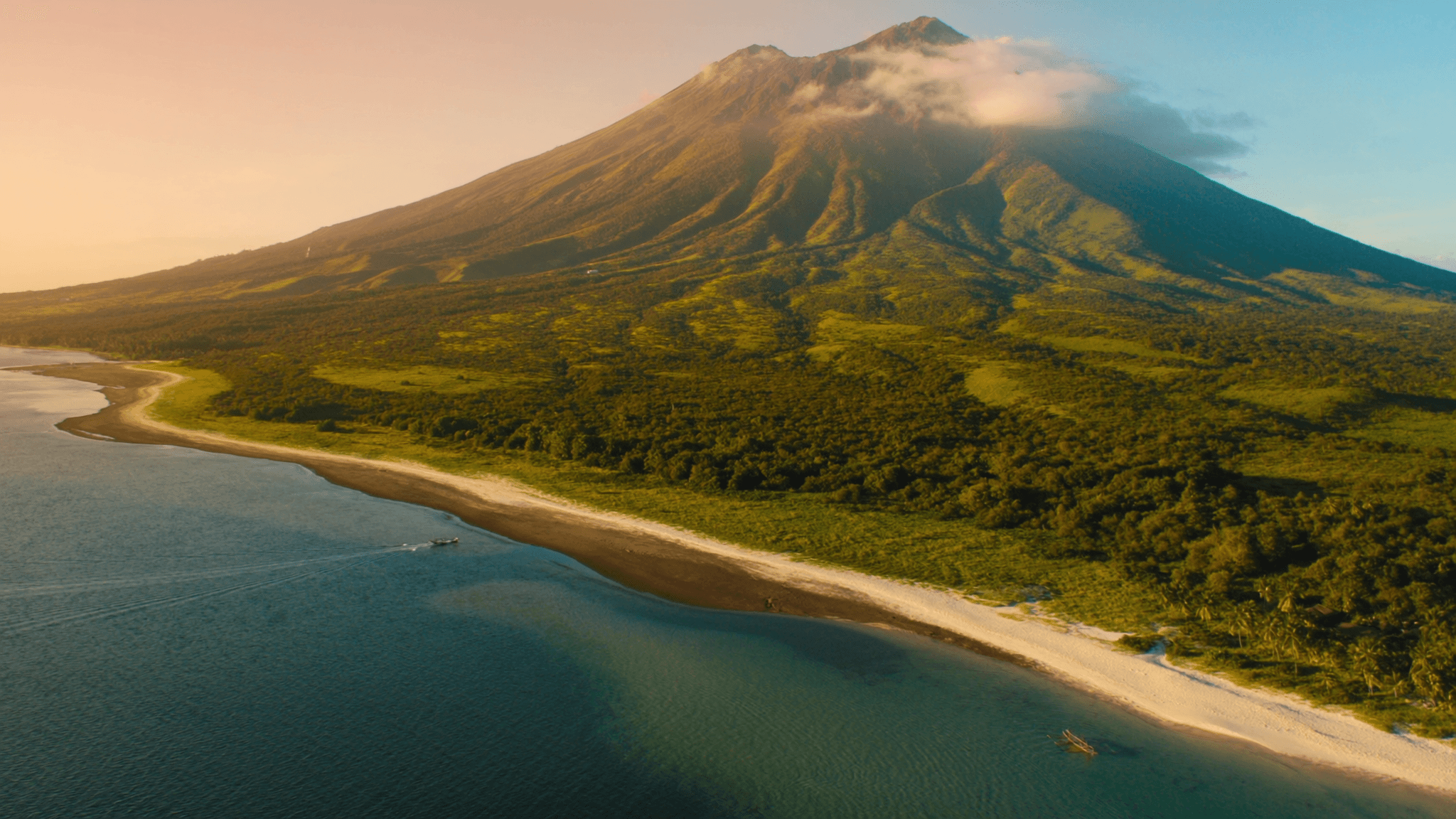
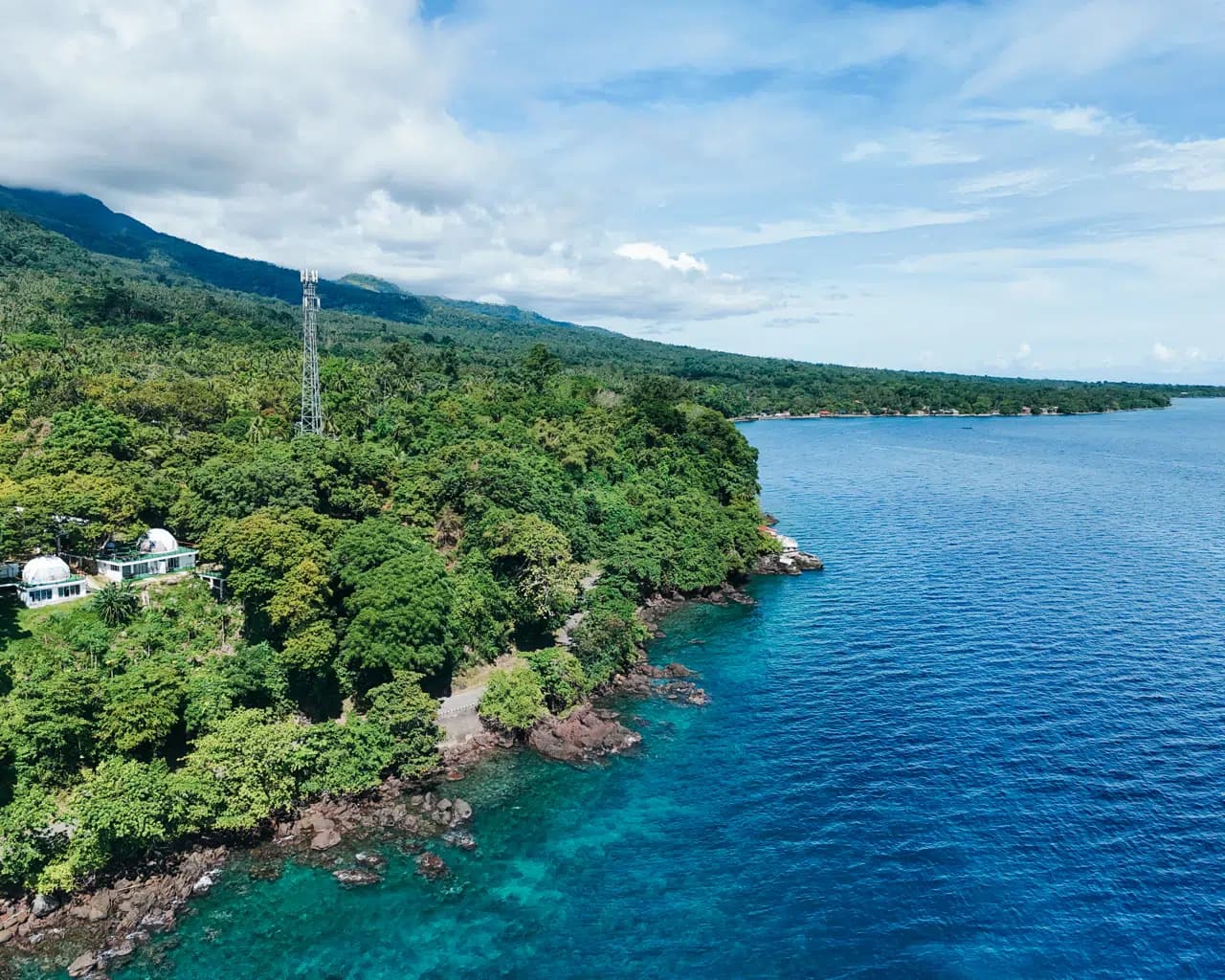
The photograph at the top of this page is not styling. That's a stretch of our own coastline — empty, forested, volcanic rock running down to the water, nobody on it.
A genuinely different landscape
Boracay is a beach. Camiguin is a volcanic island with seven volcanoes, hot springs, a cold spring, a naturally carbonated soda pool, a sunken cemetery, and the famous sandbar — all inside that one 64-kilometre loop. Our things to do in Camiguin guide lays the whole ring road out.
Boracay is one extraordinary thing. Camiguin is several different, smaller things, packed close together. Which you prefer depends on whether you want to lie on one beach for a week or drive somewhere new every morning.
It costs less
Boracay is priced as the country's flagship beach destination — rooms, food and activities all sit at a premium compared to most of the Philippines. Camiguin's entrance fees run in the tens of pesos and a scooter for a day costs less than a city taxi ride. The full breakdown is in our Camiguin trip cost guide.
It's a better fit for a certain kind of couple
If the goal is being somewhere together and unhurried, a quiet volcanic island does that more easily than a beach with a bar every fifty metres. That's most of why people choose us, and we've made the fuller case in our honeymoon guide. If that sounds like your trip, tell us your dates and we'll set you up on the clifftop.
The honest case against Camiguin
Every one of these is a real reason to pick Boracay instead.
The sand is black, not white — on the mainland. Our white sand is offshore and you take a boat to it. If you want to walk out of your room onto white sand, that's Boracay.
There is no nightlife, genuinely none. Most kitchens close early. This is either the point or a problem, and you should know which before you book.
One flight a day, from one city, that sells out. Compare that to Boracay's multiple daily flights from two major hubs.
No big watersports scene. No kitesurfing, no parasailing, no island-hopping tour desk on every corner.
It asks something of you. Boracay is built to be easy. Camiguin is quieter because less has been built for you — which is the whole appeal, and also the reason it takes more planning to enjoy.
Can you realistically do both?
Honestly, no — not on one trip, and we'd rather say that than sell you a route that doesn't work. Boracay sits off Panay in the Western Visayas; Camiguin is off northern Mindanao in the Bohol Sea. They are on opposite ends of the central Philippines, with no sensible routing between them — you'd be looking at a full day of flights through Manila or Cebu each way.
If you want two very different islands in one trip, pair Camiguin with somewhere actually nearby instead. We've written up two pairings that genuinely work: Camiguin vs Bohol, where a direct ferry links the two, and Camiguin vs Siargao, reachable via a single Cebu connection. Save Boracay for its own trip, and give it the attention it's built for.
One thing worth clearing up: White Beach vs White Island
A small but genuinely common mix-up, so we'll settle it here.
Boracay's "White Beach" is the island's main four-kilometre beach — the one in every photograph.
Camiguin's "White Island" is a bare sandbar off our own coast, with no trees and no buildings, that appears and shifts with the tide. Different island, different ocean, and not even the same kind of place — one is a beach you walk along, the other is a spit of sand you reach by boat and that is sometimes mostly underwater.
If a search engine or a friend's photo has you confused about which is which, our own White Island guide covers ours in full — boat fares, timing, what to bring.
So which should you pick?
Pick Boracay if you want the single most famous beach in the country, a real evening scene, watersports, easy multi-flight access, or a destination that needs no explanation to the people back home.
Pick Camiguin if you've done a built-up beach destination before and want the opposite, you want volcanic landscape rather than one long beach, you're on a budget, or the actual goal is quiet.
Don't try to combine them. They're a long way apart for a reason — do each properly, on its own trip.
Frequently asked questions
Camiguin or Boracay — which is better?
Neither, in the abstract. Boracay has the single best beach in the country, a real nightlife and dining scene, and the easiest access of anywhere in the Philippines. Camiguin is far quieter, cheaper, volcanic rather than beach-focused, and has never had Boracay's overcrowding problems. Pick Boracay for the beach and the scene, Camiguin for quiet and landscape.
Is Boracay too crowded now?
It was crowded enough that the government closed it for six months in 2018 to fix sewage and waste infrastructure that hadn't kept up with visitor numbers. It reopened with capacity limits and stricter rules, and by most accounts the water quality and beach condition genuinely improved. It remains a busy, well-developed island — that is largely the point of going.
Is Camiguin a good alternative to Boracay?
It's a good alternative if what you want is the opposite of Boracay: quiet, undeveloped, volcanic rather than beach-focused, and inexpensive. It's a poor substitute if you specifically wanted white sand outside your room, nightlife, or watersports, because Camiguin doesn't have equivalents for any of those.
Can you visit Camiguin and Boracay on the same trip?
Not realistically. They're on opposite sides of the central Philippines — Boracay off Panay in the Western Visayas, Camiguin off northern Mindanao in the Bohol Sea — with no sensible direct routing between them. If you want two islands in one trip, pair Camiguin with somewhere nearby instead, such as Bohol or Siargao.
Why did Boracay close in 2018?
The Philippine government closed it to tourists for six months because the island's sewage and waste infrastructure had not kept pace with the number of visitors, causing real environmental damage. It reopened with visitor capacity limits and stricter building and environmental rules, which by most accounts improved conditions.
Does Camiguin have white sand beaches?
Not on the mainland — the island's own sand is dark volcanic sand. The white sand is offshore, at the White Island sandbar, reached by a short banca ride and partly tide-dependent. If you want white sand directly outside your room, Boracay is the better choice.
Is White Island the same as White Beach?
No, and the names cause real confusion. White Beach is Boracay's main four-kilometre beach. White Island is a separate, much smaller sandbar off Camiguin's coast, with no permanent structures, that shifts and partly submerges with the tide. Different islands, different seas.
Which is cheaper, Camiguin or Boracay?
Camiguin, by a wide margin. Boracay is priced as the Philippines' flagship beach destination, with rooms, food and activities all at a premium. Camiguin's entrance fees run in the tens of pesos and a scooter for a day costs less than a city taxi ride.
Does Camiguin have nightlife like Boracay?
No, essentially none. Most kitchens and what few bars exist close early, and by nine the island is quiet. This is one of the clearest dividing lines between the two — if an evening scene matters to your trip, Boracay is the right choice.
How do you get to Boracay compared to Camiguin?
Boracay has no airport of its own — you fly into Caticlan or Kalibo, both served by frequent daily flights from Manila and Cebu, then take a short boat crossing. Camiguin has its own small airport but takes roughly one flight a day, from Cebu only, and it sells out in peak season.
Is Camiguin worth visiting if you've already been to Boracay?
For a different kind of trip, yes. If Boracay was your "big Philippine beach holiday," Camiguin is closer to the opposite experience — volcanic, quiet, and built around slowing down rather than keeping busy. Travellers who found Boracay too built-up tend to be exactly the ones who like it here.
Come home to Camiguin
Boracay earns its fame honestly — that beach is as good as the photographs. We're not competing with it, and we wouldn't win if we tried.
What we can offer is the thing Boracay's own history shows is hard to keep once a place gets famous: quiet, an undeveloped coastline, and a volcano that's bigger in person than in any photo.
Browse our rooms, book your stay direct, or message us on WhatsApp. Reach us anytime at +63 917 582 2277, or visit us at Purok 6, Puting Balas, Mambajao, 9100 Camiguin.
Come for the quiet. Welcome home.
More Than a Resort. A Place to Belong. — Txaleta de Camiguin