
Yes — for the islands almost every traveller actually visits, including every single one we write about on this site. That's the honest, direct answer, and we're not going to bury it under paragraphs of hedging.
But "is the Philippines safe" is actually the wrong shape of question, and answering it with one word for the whole country would be dishonest in the other direction. This is a nation of more than seven thousand islands spread across a distance comparable to flying from London to Moscow. Safety here isn't a national fact. It's a regional one — exactly the way weather is, which we've written about before. Once you see the real shape of it, the question stops being scary and starts being simple to plan around.
We live on one of those islands. This is the map as we understand it, written plainly.
Quick answer: The overwhelming majority of the Philippines — Luzon, the Visayas, and the central and eastern parts of Mindanao, which covers every destination in this guide — carries ordinary-destination risk: petty theft, traffic, natural hazards. A specific, well-defined area — the far western Zamboanga Peninsula and the Sulu Archipelago (Basilan, Sulu, Tawi-Tawi) — has carried active government travel advisories for years, for reasons connected to a long-running regional conflict, and is simply not part of any normal tourist itinerary. Confusing "Mindanao" the island with that specific corner of it is the single biggest unnecessary scare in Philippine travel planning, and we're in a good position to say so, because we live in Mindanao ourselves — just nowhere near it.
Written by the family at Txaleta de Camiguin, on an island in northern Mindanao. Last updated October 2026.
The map, stated plainly
Here's the structure, because seeing it laid out removes most of the anxiety.
Almost the entire country is ordinary-risk. Manila, Cebu, Bohol, Siquijor, Siargao, Palawan, Boracay, Camiguin — every place a travel blog actually sends you — carries the kind of risk you'd plan around in any developing-world destination: watch your bag, agree the fare before you get in, don't swim out past the break on a rough day. Millions of tourists visit these places every year without incident.
One specific, geographically distinct area carries real, long-standing active risk. The far western tip of Mindanao — the Zamboanga Peninsula — and the Sulu Archipelago to its south (the provinces of Basilan, Sulu and Tawi-Tawi) have carried government travel advisories for years, tied to a long-running separatist and extremist conflict in that specific corner of the country. This is not new, it is not secret, and it is not where any mainstream itinerary goes.
"Mindanao" as a word does a lot of damage here, and this is the single most useful thing we can tell you. Mindanao is the Philippines' second-largest island group — administratively it's split into six regions and covers a huge stretch of the southern Philippines, including Davao, Cagayan de Oro, General Santos, and us. The conflict-affected provinces are in the far west and south of that region, hundreds of kilometres from where we are in the north. Reading "Mindanao" in a headline and assuming the whole landmass is one undifferentiated risk zone is exactly as wrong as reading "Boracay had a problem" and assuming all seven thousand islands did too.
Where the actual advisories point, and how to read them properly
We're not going to quote current advisory levels here, for one honest reason: they're the kind of thing that changes, and a number we publish today could be stale by the time you read this. What we can tell you is the structure, which has been stable for years, and where to check the live version.
Every major government runs a travel advisory service for its citizens — the UK's FCDO, the US State Department, Australia's Smartraveller, Canada's travel advisories, and equivalents elsewhere. For the Philippines, they all follow roughly the same pattern: a general "exercise normal precautions" or "exercise increased caution" rating for the country as a whole, with a specific "do not travel" or "reconsider travel" rating carved out for the Sulu Archipelago and parts of the Zamboanga Peninsula, usually extending to maritime areas in the Sulu and Celebes Seas because of kidnapping risk linked to the same conflict.
Check the current version before you book, from your own government's site, not from a blog. That advice will still be true next year, which is more than we can say for any specific status level we could type into this paragraph today.
What actually needs your attention on a normal trip
This is the part most safety articles skip, because "avoid a war zone you were never going to visit anyway" isn't actually useful advice. Here's what does matter, on the islands people really go to.
Petty theft, not violent crime. Bag snatching, pickpocketing in crowded transport hubs, the odd overcharge. Standard precautions — a bag that zips, nothing valuable in a back pocket, a quick glance at the fare before the ride starts — cover almost all of it.
The sea, not the streets. This is the risk category travel-safety articles underrate most. Rip currents, boats without enough life jackets, bancas that go out when the forecast says they shouldn't. Ask your operator plainly whether conditions are fine before you board, and don't be the guest who insists when a boatman hesitates.
Roads, especially scooters and especially at night. Helmets aren't always offered to tourists by rental shops; ask for one. Street lighting thins out fast outside towns, and the drive back from dinner on an unlit ring road is where most minor incidents actually happen — not a dramatic story, just the boring, preventable kind.
Natural hazards, which are real and well understood. Typhoons, mostly June to December, peaking around August to October, tracking mainly across Luzon and the Visayas — we've mapped the whole pattern in the best time to visit the Philippines. For a visitor, a typhoon is usually a disruption problem — a cancelled flight, a day indoors — rather than a danger, provided you're not somewhere you were told to evacuate from.
Scams aimed at tourists, which exist and are mostly boring. Inflated "broken meter" taxi fares in big cities, a tour that's not quite what was advertised. Annoying, rarely dangerous, and avoided by booking transport and tours from people who actually run them rather than whoever approaches you first.
Solo and female travellers
A question worth answering directly rather than folding into the general section, because it's searched separately and deserves to be.
The Philippines is, by most accounts from travellers who've done it, one of the more comfortable Southeast Asian countries for solo and female travel — Filipino culture is generally warm, family-oriented, and English is widely spoken, which removes a layer of friction that makes solo travel harder elsewhere. The real precautions are the same ordinary ones as anywhere: share your route with someone, avoid empty streets late at night in big cities the way you would at home, and trust a bad feeling about a situation over politeness.
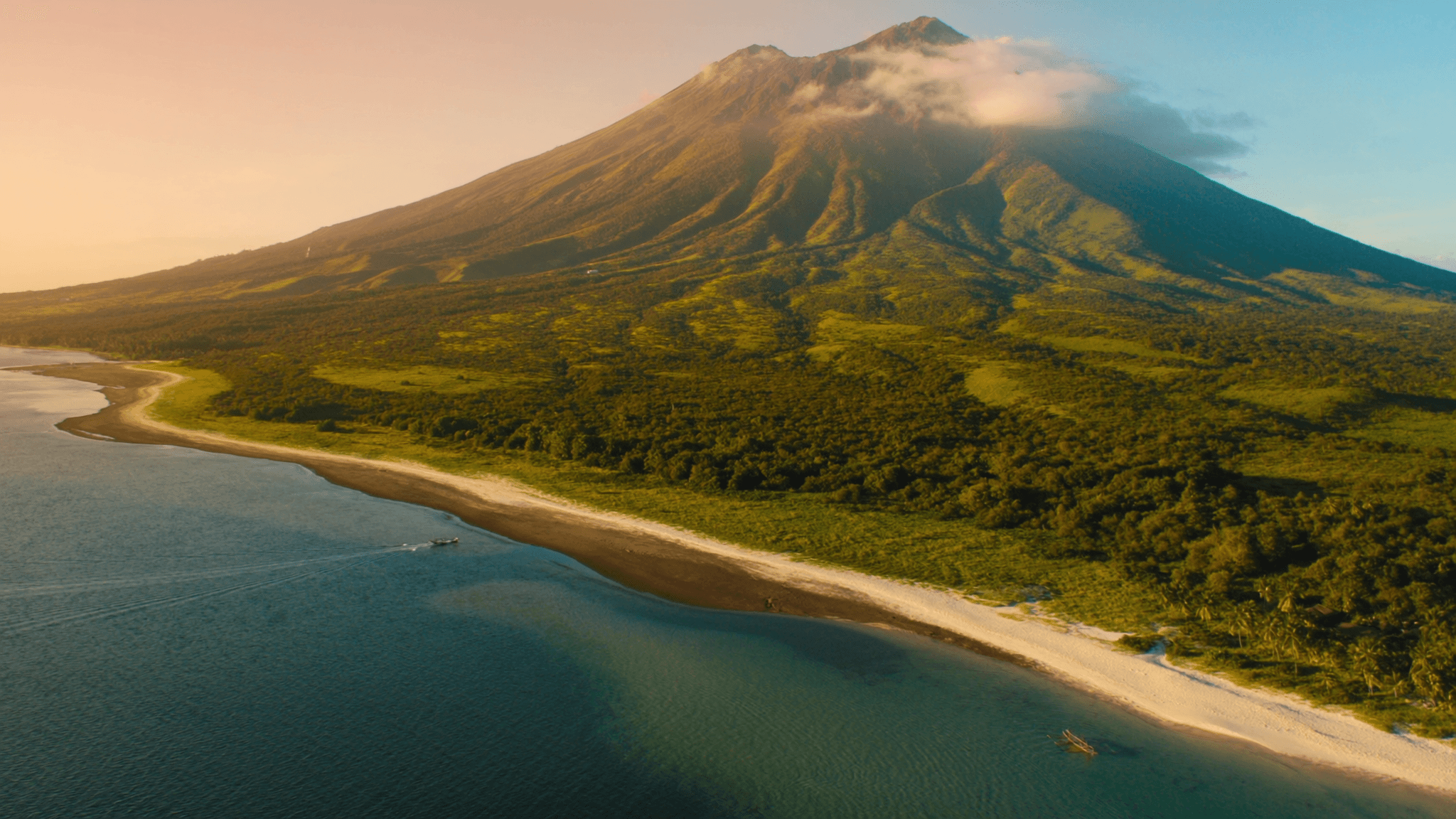
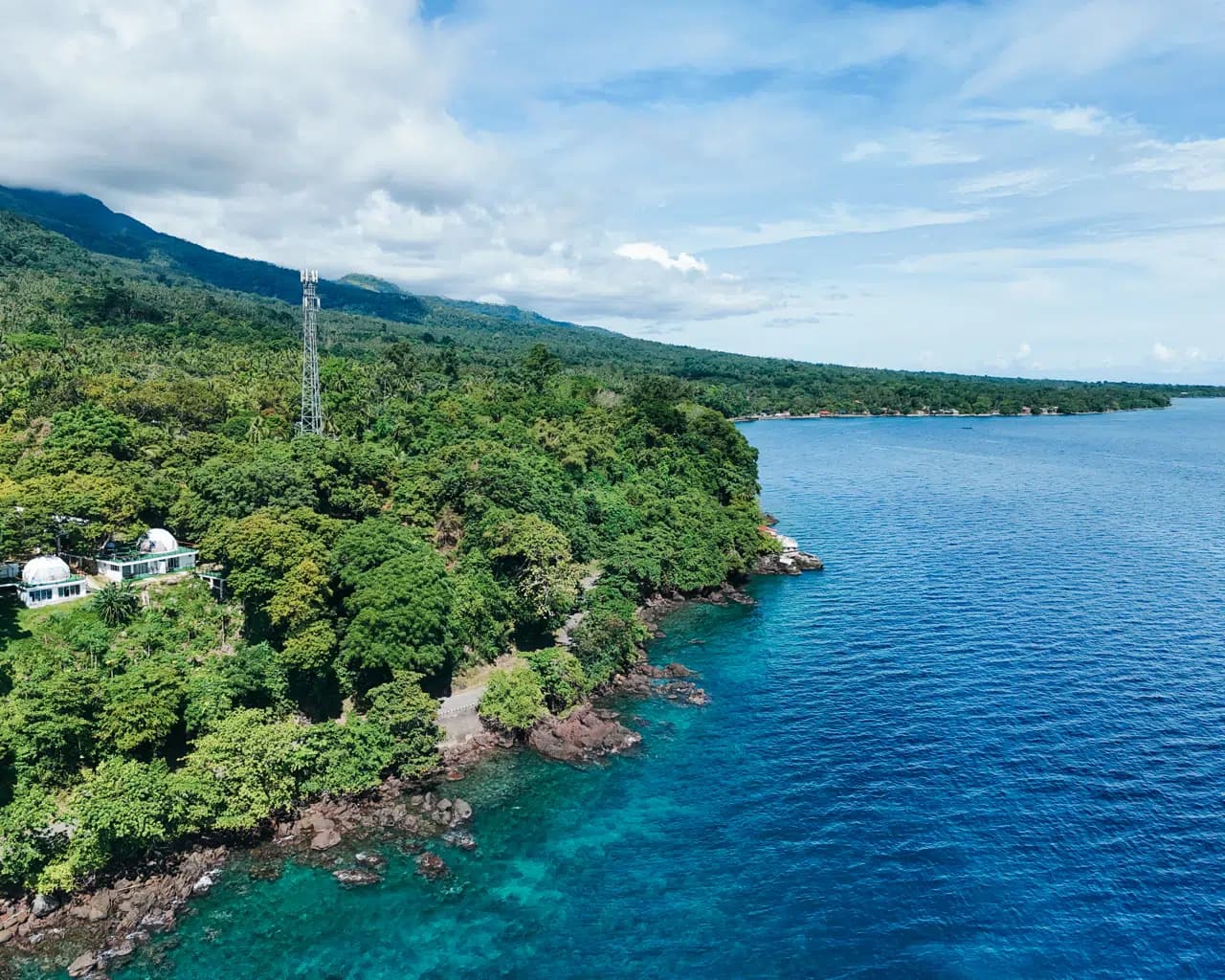
Is Camiguin safe?
Yes, without qualification, and here we can speak from direct experience rather than reading an advisory.
Crime here is very low, and the culture is genuinely unguarded — people leave helmets sitting on parked scooters without a second thought, and it's one of the first things visitors notice and mention. We're a small island economy built almost entirely on agriculture and a slowly growing tourism sector; there is no part of the local economy that depends on anything adjacent to the risks described above, and we are roughly a thousand kilometres from the areas under advisory.
The honest, practical risks here are the ordinary small-island ones covered above: sea conditions, night driving on the ring road, sun. Nothing in this section is new information if you've read our other guides — it's the same answer we give in our honeymoon guide and our family guide, because it's the same true thing both times. If this is the part of the Philippines you were hesitating over, tell us your dates and come see it.
Practical safety steps worth taking, wherever you go
Register with your embassy or consulate if yours offers it — the UK's and Australia's both have simple online systems. It costs nothing and means someone official knows you're in the country if something genuinely unexpected happens.
Buy real travel insurance and actually read what it covers, particularly medical evacuation. On small islands, serious medical care means a flight to a regional city — we say this plainly in our own trip cost guide — and that's exactly the scenario insurance exists for.
Save local emergency numbers on arrival. The national emergency hotline is 911, consistent nationwide.
Keep a photo of your passport separate from the passport itself, and share your itinerary with someone at home.
Check your own government's current advisory before departure, not because anything is likely to have changed, but because it takes two minutes and it's the one piece of this article that's designed to go out of date.
The honest part
We opened with "yes," and we meant it. But we'd be doing exactly what we criticise other travel sites for doing if we pretended a single word answers a question about a country this large and this varied.
The real shape of the answer is this: the Philippines most tourists experience is safe in the ordinary sense — the sense in which Thailand, Bali or Mexico are safe — and the part of the country that genuinely isn't is small, specific, well-documented, and nowhere near any itinerary a normal travel guide would ever send you on. The fear that stops people from booking a trip to Camiguin, Siargao or Palawan over this question is almost always a fear built from a word — "Mindanao," "Philippines" — doing far more work than the geography actually supports.
Check the current advisory for your own peace of mind. Then come.
Frequently asked questions
Is the Philippines safe to visit?
Yes, for the islands and cities almost every traveller actually visits — millions of tourists do so every year without incident. The exception is a specific, well-documented area in the far western Zamboanga Peninsula and the Sulu Archipelago, tied to a long-running regional conflict, which is not part of any normal tourist itinerary. Safety here is regional rather than national, and checking a current government advisory before booking is worthwhile.
Is Mindanao safe for tourists?
Most of Mindanao, yes. Mindanao is a huge island group split into six regions, including major cities like Davao and Cagayan de Oro and islands like Camiguin, Siargao and Dinagat. The area under active travel advisories is specifically the far western Zamboanga Peninsula and the Sulu Archipelago, hundreds of kilometres from the rest of the island group. Treating "Mindanao" as a single undifferentiated risk zone is a common and significant overcorrection.
Why does Mindanao have a bad reputation?
Because a long-running conflict concentrated in the far western and southern provinces — the Zamboanga Peninsula and the Sulu Archipelago — has carried government travel advisories for years, and the word "Mindanao" gets applied to the whole island group rather than that specific area. The rest of Mindanao, including Camiguin, Siargao, Davao and Cagayan de Oro, carries ordinary-destination risk.
Is it safe to travel to the Philippines right now?
For the areas covered by this guide, generally yes, in the ordinary sense that applies to most Southeast Asian destinations. Advisory statuses do change, so check your own government's current travel advisory before booking rather than relying on any single article, including this one, for a live status.
Is Camiguin safe?
Yes. Crime is very low and the culture is genuinely unguarded — people leave helmets on parked scooters without a second thought. The practical risks here are ordinary small-island ones: sea conditions before a boat trip, night driving on the unlit ring road, and sun. There is no part of the local economy connected to the specific risks that exist elsewhere in the far south of Mindanao.
Is the Philippines safe for solo female travellers?
By most accounts, yes, and it's considered one of the more comfortable Southeast Asian countries for solo and female travel — Filipino culture is generally warm and family-oriented, and English is widely spoken. The sensible precautions are the ordinary ones: share your route with someone, avoid empty streets late at night in cities, and trust your instincts over politeness.
What is the biggest safety risk for tourists in the Philippines?
Not violent crime, which is low in the places tourists actually visit. The more common real risks are petty theft in crowded transport hubs, sea conditions on boat trips, and road safety on scooters, particularly at night. Natural hazards like typhoons are also worth planning around, mainly June to December.
Should I avoid Mindanao entirely because of safety concerns?
No — avoiding all of Mindanao over safety concerns means skipping Camiguin, Siargao, Davao, Cagayan de Oro and a large share of the southern Philippines over a risk that is concentrated in one specific, well-documented corner of it. The sensible approach is avoiding the Zamboanga Peninsula and Sulu Archipelago specifically, which is not where any standard itinerary goes.
Do I need travel insurance for the Philippines?
Yes, and specifically insurance that covers medical evacuation. On small islands, serious medical care means a flight to a regional city like Cebu or Cagayan de Oro, and evacuation insurance is exactly the product built for that situation. It is worth reading the policy rather than assuming it is covered.
What is the emergency number in the Philippines?
911, which is the national emergency hotline and works consistently across the country, including on small islands.
Is it safe to swim in the Philippines?
Generally yes, with the same precautions that apply anywhere with open water: check conditions before a boat trip, ask your boatman if the sea is calm enough rather than assuming, and be aware that rip currents and underestimated distances from shore are a more realistic risk than anything else on a typical beach day.
Come home to Camiguin
We wrote this because the fear is real even when the underlying risk isn't, and a resort that only ever says "come, it's lovely" without addressing the actual question isn't being much use to you.
So: come. We're in the quiet part of the map, a thousand kilometres from anywhere an advisory points at, on an island where people leave their scooter helmets on the seat.
Browse our rooms, book your stay direct, or message us on WhatsApp. Reach us anytime at +63 917 582 2277, or visit us at Purok 6, Puting Balas, Mambajao, 9100 Camiguin.
Check the advisory. Then come. Welcome home.
More Than a Resort. A Place to Belong. — Txaleta de Camiguin