
Here is the thing that no guide to this island mentions, and it is the reason people get the sunset wrong here: the sun does not set in the same place all year.
At nine degrees north, the point where the sun drops swings along the horizon by about forty-five degrees between December and June. On an island whose coasts face four different directions, that matters enormously. It means the best sunset spot on Camiguin in the dry season is not the best sunset spot in the middle of the year, and it means that if you stand on the wrong coast in February you will watch the light go out behind a volcano instead of into the sea.
We have watched this from the same cliff for years. This is where to stand, in which month, and at what hour.
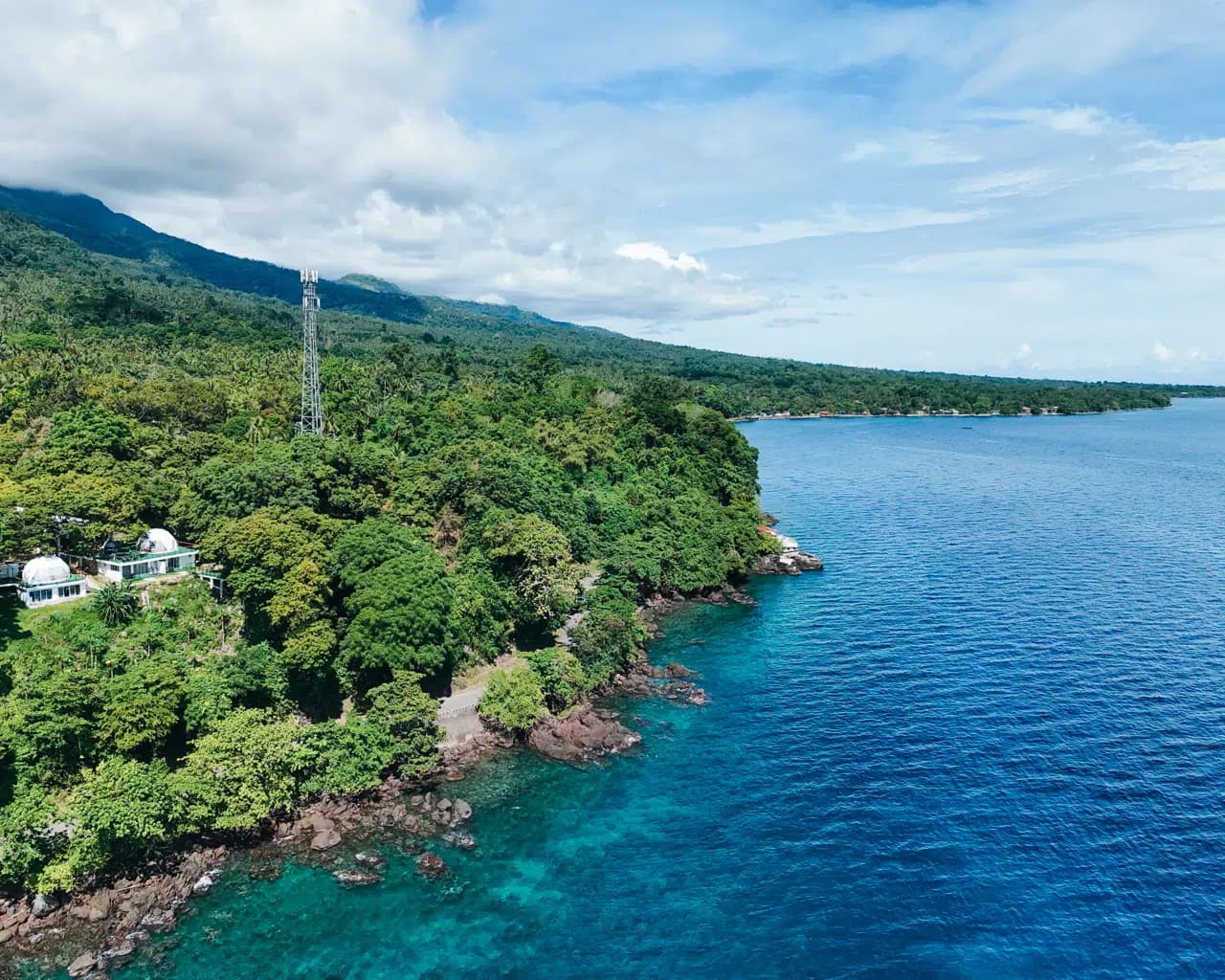
Quick answer: The island's single best sunset is at the Sunken Cemetery at Bonbon, on the west coast — a cross standing alone in the sea with the sun going down behind it. It is free, it faces west, and it works in every month of the year. The north coast around Agoho, Yumbing and Mambajao gives you the sun dropping straight into open water from roughly April to August, when it sets north of due west; in the December-to-February dry season it sets further south and slips behind the island's own bulk, which is when the west coast wins outright. Be in position forty minutes before sunset, not five — the best colour here is often after the sun has gone. And one piece of local advice: turn around. Mt. Hibok-Hibok going pink behind you is frequently the better photograph.
Written by the family at Txaleta de Camiguin, on a west-facing clifftop above the Bohol Sea. Published October 2026.
First, the thing about the horizon
Skip this if you only want the list. Read it if you want to understand why your friend's photograph from here looks nothing like yours.
The sun sets due west only twice a year, at the equinoxes in late March and late September. Either side of that it migrates:
- Around December, the sun sets well south of west. From Camiguin's north coast that puts it behind the land — you get a beautiful indirect glow, but the disc itself goes down behind a headland or the volcano's shoulder rather than into the water.
- Around June, it sets well north of west, and from the north coast it drops cleanly into the open Bohol Sea.
- The west coast — Bonbon, Catarman, the Sunken Cemetery — faces the setting sun in every month of the year. That is why it is the island's reliable answer and why we send people there regardless of when they visit.
This is also why the dry season, which is the best time for almost everything else here, is not automatically the best season for sunsets from a north-coast resort. Our month-by-month guide covers the weather trade-offs; this is the one where the calendar works slightly against the obvious choice.
What the green season gives you in return is cloud. Clear skies make a clean sunset; broken cloud makes a spectacular one. The most extraordinary evenings we see here are in the shoulder months, when there is enough cloud to catch fire and enough gap to let the light through.
The eight places, ranked by what they actually give you
| Spot | Coast | Faces | Best months | What it costs |
|---|---|---|---|---|
| Sunken Cemetery, Bonbon | West | West | All year | Free to view from shore |
| Walkway to the Old Volcano | West | West, elevated | All year | Small fee |
| A north-coast clifftop | North | North-west | April–August | Where you sleep |
| Agoho / Yumbing beachfront | North | North-west | April–August | Free |
| The southern coast, Guinsiliban | South | West over mainland | All year | Free, and empty |
| Taguines Lagoon, Mahinog | East | East — sunrise | All year | Free |
| Looking inland at Hibok-Hibok | Anywhere | East, at the mountain | All year | Free |
| White Island | Offshore | Open water | Not the standard trip | Boat, and a conversation |
1. The Sunken Cemetery at Bonbon — the island's best, and we don't own it
A large cross standing alone in the sea, marking the town the volcano drowned in 1871, with the sun going down behind it. This is the most atmospheric half-hour on Camiguin and it costs nothing, which is an awkward thing for a resort to tell you and also simply true.
Why it works: it faces due west across open water, so it delivers in every month. The cross gives the frame a subject, which is what most sea sunsets lack. And as the light goes sideways through the empty window openings of the Gui-ob church ruins just along the shore, the whole site goes very quiet.
The hour: be there forty minutes before sunset. The ruins first while the light is still gold, the cross as it drops.
The upgrade: paddle out to the cross itself. We arrange this for guests as a sunset kayak, and it is reliably the thing people mention at dinner — approaching the cross as the light goes from gold to rose, over a coral garden grown across a drowned town.
From the resort coast it is about twenty minutes by road. Our ring-road guide argues that this deserves its own short evening trip rather than being squeezed onto the end of a long sightseeing day, and this is why.
2. The Walkway to the Old Volcano — the same sunset, from higher up
A stations-of-the-cross walkway climbing the flank of Mt. Vulcan, the volcano that rose in the 1871 eruption. Elevation is what it adds — you get the west horizon, the coastline below, and the cross out in the water as part of a wider frame.
The honest caveat: it is a climb in heat, there is little shade, and you will be coming back down in fading light. Bring water and a torch. Worth it once.
3. A north-coast clifftop — the one you watch without going anywhere
The Agoho–Yumbing–Naasag coast, where most of the island's good accommodation sits, faces north and north-west over the Bohol Sea.
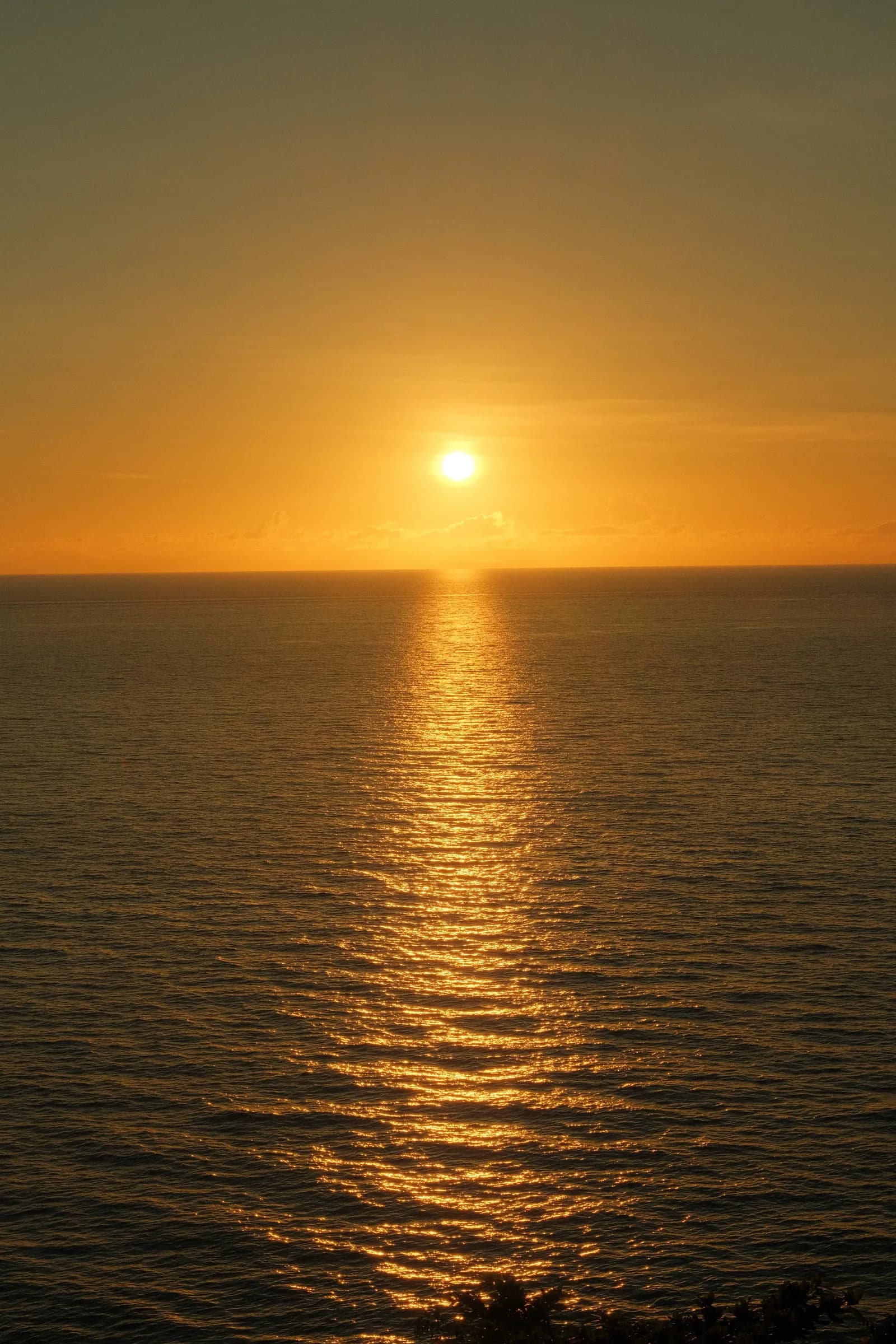
From April to August this is as good as the island gets: the sun sets north of west and drops into open water, the sea turns copper, and you are holding a drink rather than standing in a car park. From December to February the disc sets further south, behind the land, and what you get is a long indirect glow over the water instead of a sunset with a sun in it. Beautiful, different, and worth knowing in advance.
This is the view we have, so treat the recommendation with appropriate suspicion — but it is also why the properties on this coast are where they are, and the comparison by coast is in where to stay in Camiguin.
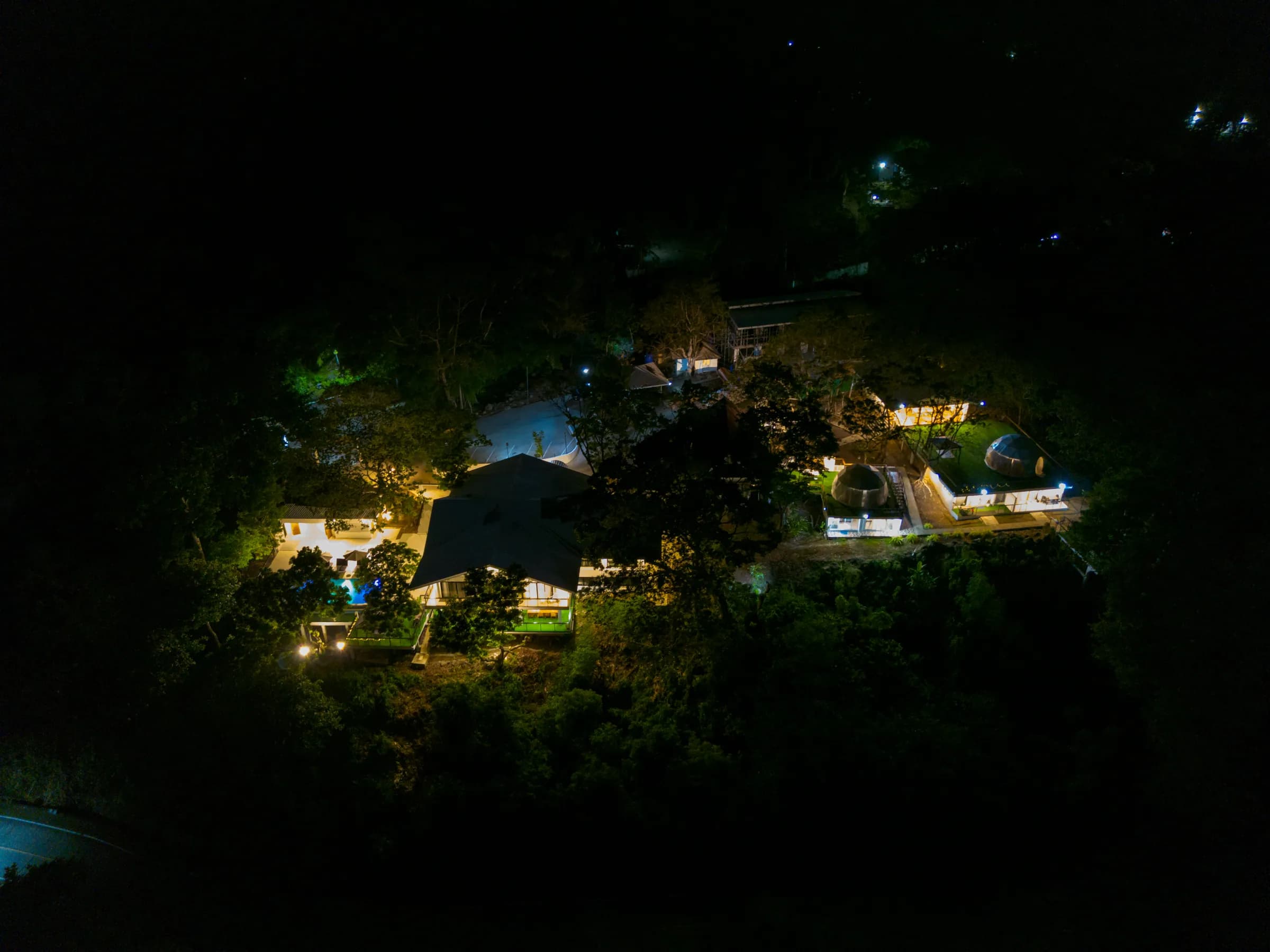
If a west-facing terrace is the reason you are choosing a room at all, the Premier Seaview Suite and the cliff-edge glamping are the two that put you at the edge of it.
4. The Agoho and Yumbing beachfront — the same thing at sea level
Walk out onto the dark volcanic sand anywhere along that coast. What sea level gives you that a cliff does not is the silhouette: fishing bancas drawn up on the sand, the White Island sandbar as a pale line offshore, people swimming in the last of the light.
Free, five minutes from most of the resorts, and the most sociable sunset on the island — this is where local families are at six o'clock.
5. The southern coast at Guinsiliban — the empty one
Camiguin's south coast looks across the strait at the mountains of mainland Mindanao. The sun goes down to your right, over the water, with a mountain range as the silhouette, and there is a reasonable chance you will be the only person watching.
This is the quietest coast on an already quiet island, and it pairs naturally with a Mantigue and giant clam day in the south-east. Worth building one evening around if you have five days rather than three.
6. Taguines Lagoon — for the other end of the day
East-facing, so this is the island's sunrise, not its sunset. Still water, the lagoon catching the first light, Mindanao across the strait. If you are the sort of traveller who gets up early, this and the sandbar are the two reasons to.
7. Turn around and look at the volcano
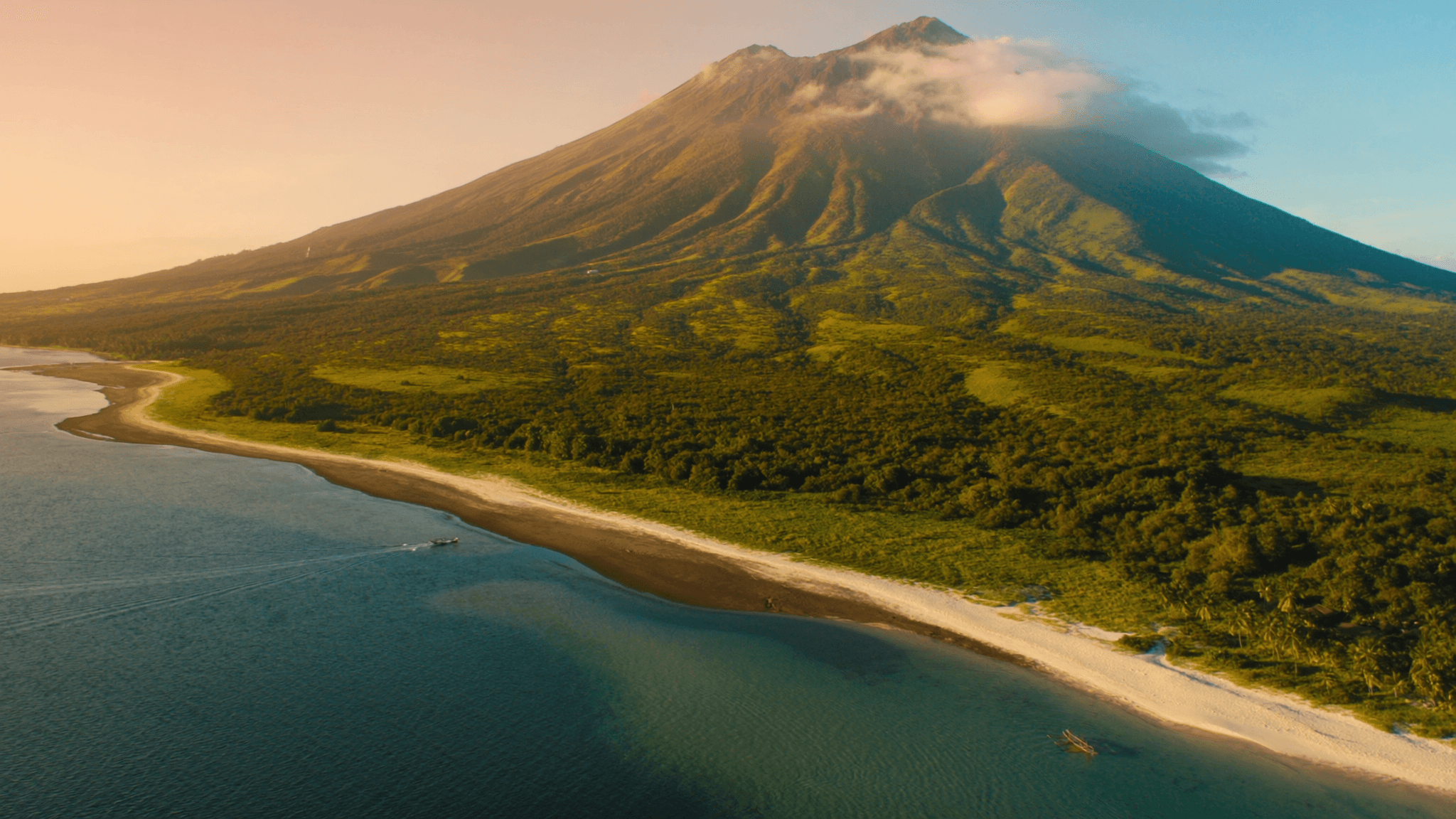
The genuinely local piece of advice on this page. In the last ten minutes before the sun goes, Mt. Hibok-Hibok catches the light and turns rose-gold, and because the mountain is east of almost everywhere a visitor stands, that happens behind you while you are looking at the sea.
The inland road and the rice fields between the coast and the volcano are where this is best, and nobody is ever there. On a cloudy evening when the sea sunset is a write-off, this is often still working.
8. White Island — the honest answer is no
The sandbar is the most photographed place on Camiguin and it is a sunrise destination, not a sunset one.
The standard banca trips run at dawn, there is no shade, no facilities and no light out there once the sun is down, and the boats are drawn up on the beach by late afternoon. Some operators will take you out in the evening if conditions and arrangements allow — ask, do not assume — but the island's own rhythm puts you on that sandbar at 5:30am, which is what our White Island guide recommends and why.
How to actually watch a sunset here
Be in position forty minutes early. Not for the sunset — for the twenty minutes after it, when the colour peaks. More people miss the best of a tropical evening by leaving too early than by arriving too late.
Sunset is roughly 5:30 to 6:15pm year-round, because this close to the equator the day length barely moves. There is no late Nordic evening here; the light goes quickly and the dark is complete.
Then the dark is a problem. The ring road is unlit, and driving back from a west-coast sunset to a north-coast hotel means twenty kilometres with a scooter headlight for company. We say this plainly in the transport guide: if you are going out for the sunset, either take a vehicle with a driver, or accept what the ride home involves.
Bring repellent. Dusk is the hour, on any island.
And stay for the stars. Camiguin has very little light pollution, and on a clear night the sky after a good sunset is genuinely remarkable — the second half of the same evening, and the reason we run stargazing for guests at all.
The honest part
You cannot schedule a sunset. We have had guests book a five-day stay in the best month of the year and get five grey evenings, and guests arrive for two nights in the green season and get the finest sky we have seen all year. Nothing in this article changes that.
What you can do is improve your odds: pick the coast that faces the sun in the month you are visiting, be in place early, and have a second plan for the evening — the volcano behind you, the stars after, or the hot springs at dusk, which are better in cool weather anyway.
And the best one is free. The Sunken Cemetery at sunset is the finest half-hour on this island, it belongs to everybody, and no resort on Camiguin — ours included — has a view that beats standing on that shore while the light goes.
Sunset by month: which coast wins
The practical version of the astronomy, and the table we wish somebody had handed us before we built a terrace.
| Month | Where the sun goes down | The coast to be on |
|---|---|---|
| December – February | Well south of west — around 247° at the solstice | West coast. From the north coast the disc sets behind the land |
| March | Swinging back toward due west (270° at the equinox) | Either works; the west coast is still cleaner |
| April – May | North of west, and climbing | North coast comes into its own |
| June – July | Furthest north of west — around 292° at the solstice | North coast. The sun drops into the open Bohol Sea |
| August | Swinging back south | North coast, still good |
| September | Due west again at the equinox | Either |
| October – November | Moving south of west | West coast takes over again |
Two things this table explains. Why guests in January sometimes ask us where the sunset went — it is behind the headland, and the glow over the water is the second-hand version. And why the island's reliable answer is always Bonbon: a due-west-facing shore does not care what month it is.
One qualification. The sun's position sets the geometry; the sky decides the show. A cloudless June evening on the perfect coast can be flat and brief, while a broken-cloud evening in November from the "wrong" side can be the best thing you see all trip. Pick the coast to improve the odds, then take what the sky gives you.
Photographing it, without carrying a tripod
Not a photography tutorial — four things that make the difference here specifically.
Expose for the sky and let the land go dark. The cross at Bonbon, the bancas on the sand, the volcano's outline: on this island the foreground works better as silhouette than as detail, and fighting that gives you a muddy version of both.
Stay twenty minutes after the sun has gone. The best colour on this coast is reliably post-sunset, when the underside of the cloud lights up and the sea goes from copper to pewter. Nearly everybody leaves before it.
Brace rather than hand-hold. A railing, a rock, the roof of a parked tricycle. Light falls off fast this close to the equator and shutter speeds go long within minutes.
Then put the camera down. The thing guests describe at breakfast the next morning is never the photograph. It is the twenty minutes of sitting still.
Frequently asked questions
Where is the best sunset in Camiguin?
The Sunken Cemetery at Bonbon, on the island's west coast — a large cross standing alone in the sea with the sun going down behind it, and the Gui-ob church ruins along the same shore. It faces due west, so unlike the north coast it delivers in every month of the year, and it costs nothing to stand and watch.
What time is sunset in Camiguin?
Roughly 5:30 to 6:15pm all year round. This close to the equator the day length barely changes between seasons, and the light fades quickly once the sun is down. Be in position about forty minutes before sunset, because the strongest colour usually comes in the twenty minutes after it.
Does the sunset in Camiguin change through the year?
Yes, and it is the thing most visitors do not plan for. At this latitude the sunset point swings along the horizon by about forty-five degrees between December and June. Around June the sun sets north of west and drops into open water off the north coast; around December it sets south of west and goes down behind the island's own bulk from that coast. The west coast faces it year-round.
Can you watch the sunset from White Island?
Not on a standard trip. White Island is a sunrise destination — the banca trips run at dawn, the boats are off the water by late afternoon, and the sandbar has no shade, facilities or light after dark. Some operators may arrange an evening crossing if conditions allow, but it is worth asking rather than assuming.
Is the north or west coast better for sunset in Camiguin?
The west coast is the reliable answer, because it faces the setting sun in every month. The north coast — Agoho, Yumbing, Mambajao — is excellent from roughly April to August, when the sun sets north of due west and falls into open water, and gives a longer indirect glow rather than a direct sunset in the December-to-February months.
Where is the best view in Camiguin?
For the sea and the sunset, a clifftop on the north-west coast or the shore at the Sunken Cemetery. For the island itself, the Walkway to the Old Volcano, which adds elevation to the same west-facing horizon. And for the most underrated view on Camiguin: inland, at Mt. Hibok-Hibok turning rose-gold in the last ten minutes of light, which happens behind most people while they face the sea.
Where do you watch the sunrise in Camiguin?
The east coast: Taguines Lagoon in Mahinog, with still water and mainland Mindanao across the strait, or the White Island sandbar, which is the island's great dawn trip and the reason to get up at five. The east side of the island gets the first light; the west side gets the last.
Is the Sunken Cemetery worth visiting at sunset?
Yes — it is the difference between a five-minute photo stop and the most memorable half-hour on the island. In daylight it is a cross in the water seen from the road. At sunset the light comes sideways through the church ruins, the site empties and quietens, and paddling out to the cross as the colour turns is what guests tend to describe first afterwards.
Do you need a vehicle to reach the sunset spots in Camiguin?
For the west-coast spots, yes or close to it. The Sunken Cemetery is about twenty minutes by road from the resort coast, there is no ride-hailing on the island, and public multicabs effectively stop in the early evening. A scooter, a vehicle with a driver, or a hotel that will run you there and back is the practical answer — and the ring road is unlit on the way home.
What is the best month for sunsets in Camiguin?
Clear dry-season skies give the cleanest sunsets, but the most spectacular ones need cloud to catch the colour, which makes the shoulder months either side of the rains the local favourites. There is no month where you are guaranteed a good evening, which is why picking the coast that faces the sun matters more than picking the month.
Can you see the sunset from Mt. Hibok-Hibok?
In principle the view is the best on the island; in practice no, and we would talk you out of it. The climb requires a permit and an accredited guide, it is a six-hour day, and the descent happens on a steep volcanic trail. Coming down in the dark is not a risk worth a photograph.
Is Camiguin good for stargazing?
Very. There is little light pollution anywhere on the island, and on a clear night the sky an hour after sunset is genuinely remarkable — the Milky Way is visible to the naked eye away from the town lights. It is the second half of the same evening, and the reason a sunset here is worth staying out for.
Come home to Camiguin
Our bias is total: we built a terrace on a cliff above the Bohol Sea because of what happens there at six o'clock, and we would rather you saw it from here than anywhere else.
But if you take one thing from this page, take the drive to Bonbon. Stand on that shore while the light goes sideways through the ruins and the cross turns black against the water. It costs nothing, it belongs to everybody, and it is the best thing this island does.
Then come back, and we will have something cold waiting on the terrace while the stars come out. Browse our rooms, book your stay direct — the cliff-edge glamping puts you at the very edge of it — or message us on WhatsApp. Reach us anytime at +63 917 582 2277, or visit us at Purok 6, Puting Balas, Mambajao, 9100 Camiguin.
Be there forty minutes early. Welcome home.
More Than a Resort. A Place to Belong. — Txaleta de Camiguin