We have told readers twice on this site that other islands dive better than ours. In our Camiguin vs Bohol comparison we said Balicasag is world-class and we are not; in the Siquijor comparison we tipped our hat to Apo Island. Both still stand.
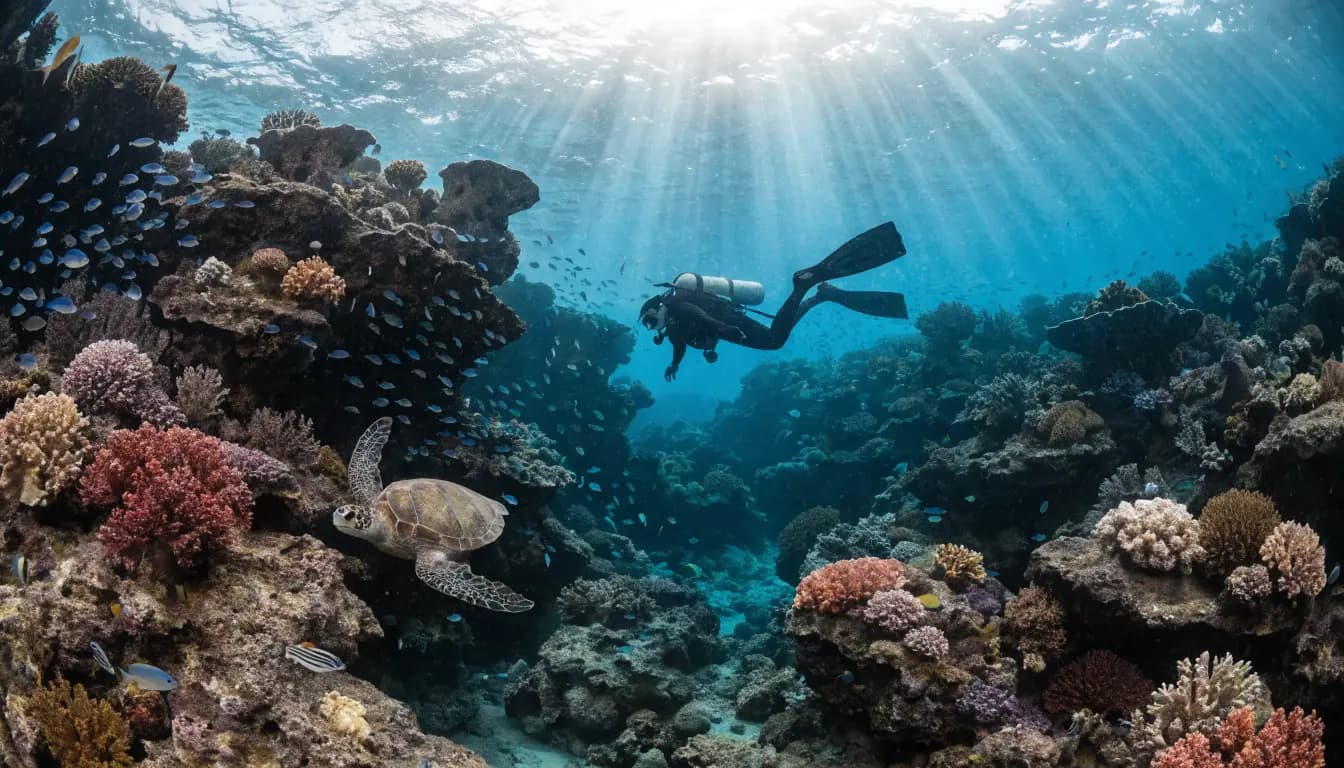
So why write this at all? Because "Camiguin is not a top-tier dive destination" and "Camiguin diving is not worth doing" are two completely different statements, and almost every page online conflates them. What this island actually offers is a small, strange, under-dived set of sites — lava walls on a young volcano, a hard-coral garden grown across a town the sea took in 1871, black sand full of things that take ten minutes to find — and, nearly every day, no other boat on the site.
If you are collecting famous reefs, go to Bohol. If you want to be the only person on a wall, read on.
Quick answer: Camiguin's diving is macro, topography and solitude rather than big fish and big names. The sites worth the tanks are the Sunken Cemetery (shallow hard-coral garden over the drowned town — also the island's best snorkel), the Old Volcano lava wall (volcanic pinnacles dropping into the blue), Mantigue's marine sanctuary (a wall ten metres off a white beach), Jigdup Shoal off Balbagon and Black Forest, a black-coral slope on the island's north-west. Burias Shoal, out beyond Mantigue, is the island's thrill — schooling pelagics in real current, experienced divers only. Visibility is best March to May. There are very few operators here; we work with Scuba de Oro, and booking ahead is not optional in high season. Site names and depths vary between operators — agree both with your shop, not with an article.
Written by the family at Txaleta de Camiguin, who send our guests to the island's dive shop rather than running one. Published October 2026.
What kind of diving this actually is
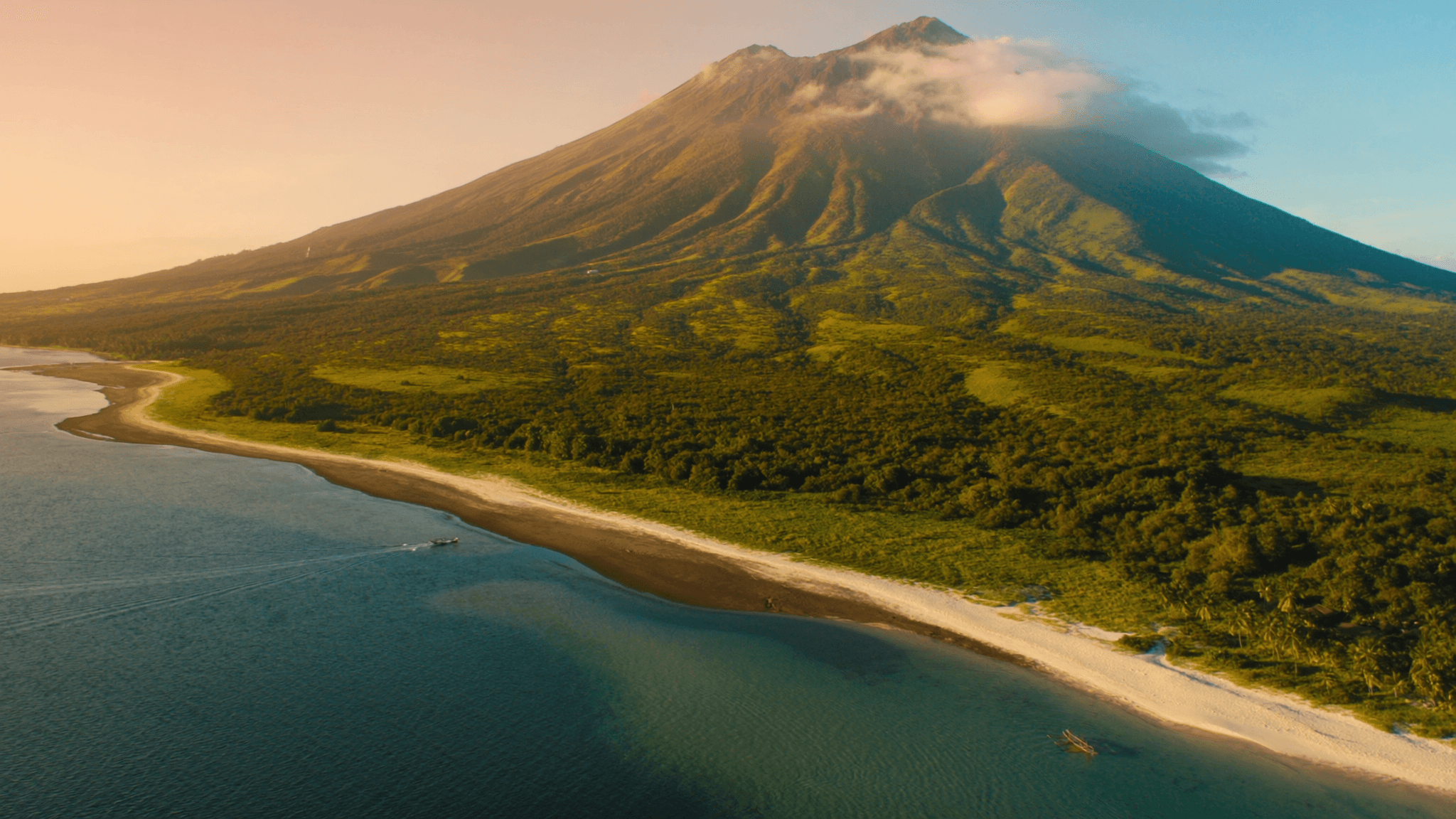
Camiguin is a young volcanic island — seven volcanoes, one of them still active — and that geology is the whole character of the diving.
Topography instead of coral gardens. Lava has shaped these slopes: pinnacles, walls, boulder fields, sudden drop-offs close to shore. On a volcanic island the sea floor falls away fast, which means you reach interesting depth within minutes of leaving the beach rather than motoring for an hour.
Black sand, which divers either love or do not understand. Volcanic sediment makes for muck diving: unglamorous-looking slopes that hold seahorses, pygmy seahorses, Ambon scorpionfish, flamboyant cuttlefish, mandarinfish, nudibranchs and frogfish. If you have dived Anilao or Dumaguete you know exactly what this is and you are already interested. If your idea of a good dive is a wall of jacks, this will look like a parking lot with critters in it.
Solitude, which is the real product. The island has a small number of operators and a small number of divers in the water on any given day. You will routinely have a site to yourself. On a reef in Bohol or Siquijor that essentially never happens, and for some divers that single fact outweighs the better-known marine life elsewhere.
And one thing that is genuinely unique. There is no other dive in the Philippines where you drop onto hard coral that has grown over a cemetery, with the cross that marks it visible above you on the surface.
The sites
A necessary caveat first, and it is a real one: site names on this island are not standardised. The same shoal appears under two names depending on which operator you ask, and published depths for the same site vary widely between sources. We name them as our divers hear them named here. Agree the site, the depth and the profile with your shop on the day, because the sea state and the current decide where you actually go.
| Site | Character | Depth | Who it suits |
|---|---|---|---|
| Sunken Cemetery | Hard coral over a drowned town, shallow, atmospheric | Shallow | Everyone, including snorkellers |
| Old Volcano / lava wall | Volcanic pinnacles and formations dropping steeply | Shallow start, deep fast | Comfortable divers; depth discipline needed |
| Mantigue marine sanctuary | Wall and drop-off metres from a white beach | Moderate | All levels; the island's best fish life |
| Jigdup Shoal | Seabed rising to a shoal off Balbagon | Moderate | Intermediate; current-dependent |
| Black Forest | Black-coral garden on a gentle slope | Roughly 6–25 m | Intermediate; can run current |
| Burias Shoal | Schooling pelagics in strong current | Deep | Experienced only |
| Black-sand macro sites | Muck diving for critters | Shallow | Photographers and the patient |
The Sunken Cemetery
In 1871 an eruption of Mt. Vulcan dropped part of the town of Bonbon — including its cemetery — into the sea. A large cross now stands in the water marking it, and underneath, a hard-coral garden has grown across the site over a century and a half.
It is shallow, it is easy, and it is the dive people remember. It also happens to be the best snorkel on the island, which makes it the rare site a mixed group can do together — divers below, snorkellers above, everyone looking at the same thing. The history, which is worth knowing before you get in, is in our Sunken Cemetery guide.
What it is not: a big-fish dive. Go for the coral, the structure and the extraordinary fact of where you are.
The Old Volcano lava wall
The sites around Mt. Vulcan's submerged flank are where Camiguin's geology shows itself: lava formations rising in pinnacles from a bottom that drops steeply away, starting shallow enough to be unthreatening and then going deep enough to need watching.
Published depth figures for this site disagree substantially between sources — some describe pinnacles from around 25 metres, others a wall running past 60. That spread is exactly why you take the profile from your guide rather than from a table. It is the most dramatic topography on the island.
Mantigue Island's sanctuary wall
A small island off the east coast with a white beach, a protected marine sanctuary, and a coral drop-off close enough to shore that you can snorkel to the edge of it. The fish life here is the best on the island, which is a function of the sanctuary status — protection works, visibly.
Mantigue doubles as a day trip for non-divers, with the Cantaan giant clam sanctuary a short hop further south. There is a visitor time limit on the island that nobody warns you about; that guide covers it.
Jigdup Shoal and Black Forest
Jigdup is a shoal a couple of nautical miles off Balbagon, where the seabed rises and gathers life around it. Black Forest — described by some operators as a distinct site on the island's north-west, by others as a section of Jigdup — is a black-coral garden on a gently sloping reef, commonly given as running from around 6 metres down to 25.
Both can carry current. Both are the kind of site where, on a good day with the sun high, Camiguin suddenly looks like a destination rather than a secret.
Burias Shoal — the one with teeth
Roughly fifteen minutes by boat beyond Mantigue, a shoal that attracts schooling jacks, tuna and barracuda in current strong enough that every operator describes it as experienced-divers-only.
This is the dive that answers "but is there anything big here?" — yes, out there, in conditions that will not suit a holiday diver who last got wet two years ago. Be honest with your shop about your logged dives and recency. They will be honest back.
The black-sand macro sites
Not glamorous, and the reason some divers come back. Volcanic slopes close to shore, a torch, a guide who knows which rock the frogfish is under, and sixty minutes covering about forty metres of ground. This is the diving Camiguin is quietly good at, and it is the strongest argument for choosing this island over a better-known one if macro photography is your thing.
Snorkelling, which is where most visitors actually end up
You do not need a certification to see the good parts of this island's water.
The three snorkels worth doing, in order:
- The Sunken Cemetery. Coral over the drowned town, shallow, from the shore or a short boat hop.
- Mantigue's drop-off. Swim out from the beach and the reef falls away in front of you.
- The Cantaan giant clams. A sanctuary of enormous clams in shallow water in the south — strange, protected, and the kind of thing children remember. Nothing stands on them.
And one that disappoints people: White Island. The sandbar is extraordinary to be on and unremarkable to snorkel — clear shallow water, little reef life. Go for the place and the light at sunrise, not for the fish.
Operators, cost and booking
There are very few dive operators on Camiguin. That is a feature of the island and a problem for your planning.
We work with Scuba de Oro. It is a genuine partnership rather than a commission arrangement: they look after our guests underwater, we send divers their way, and nobody is competing. If you are staying with us, we book it, and the dive fits the day rather than the day fitting the dive.
If you are staying with us, tell us you dive when you book and we will have spoken to the shop before you land — including about which morning the sea is likely to cooperate.
Book ahead, particularly in the March-to-May high season, over Holy Week and around the Lanzones Festival in late October. A single shop with a finite number of tanks and guides fills up, and "we will sort it when we arrive" is how people end up snorkelling instead.
On price: we are not publishing a per-dive rate here, because operator pricing changes and a number in an article is how travellers end up arguing at a counter. Expect Philippine rates rather than European ones, expect packages of several dives to be better value than singles, and ask what is included — tanks, weights, guide, boat, park fees. Our cost guide covers the rest of an island budget.
Courses: ask. A small operator on a quiet island can often give you something a resort course factory cannot, which is a genuinely low student-to-instructor ratio.
When to dive here
March to May is the window. Calm seas, the best visibility of the year, and the most reliable boat days. This is the same dry-season answer we give for everything else on the island in our month-by-month guide.
June to October brings the green season: heavier rain, more runoff, more cancelled boat mornings. Diving continues, visibility is less dependable, and you should build a spare day into any trip where the water is the point.
The rule that matters more than the month: on a small island, the sea decides. If a boatman or an operator says the crossing is not happening today, that is the end of the conversation — and the day becomes waterfalls and hot springs instead, which is a perfectly good day.
The honest part
Camiguin is not a world-class dive destination and nobody here should tell you it is. Balicasag off Bohol and Apo Island off Negros are better reefs with better access and more of everything, and they are each a few hours away. If a trip's purpose is diving, those are the names to build it around, and our comparison pages say so in plainer terms than this.
The nearest recompression chamber is off the island. That is reason enough for conservative profiles, a safety stop you do not shorten, and insurance that covers diving — check your policy rather than assuming, because many standard travel policies exclude it or cap the depth.
Conditions are genuinely variable. Current on the shoals is real, and the honest operators here turn dives around rather than pushing them. Listen to them.
And the case for diving here anyway, in one sentence: it is the only place where you can spend a morning on a lava wall with nobody else in the water, a second dive over a drowned cemetery, and the afternoon in a hot spring on the volcano that put both of them there.
What a dive day here actually looks like
Useful if your experience of diving is resort-scale operations with a dive deck and a tank filled by somebody you never meet.
07:00. A pickup, or a short drive. The boat is a banca — an outrigger, drawn up on the sand or tied in the shallows — not a dive boat with a ladder and a hot shower. Tanks go aboard by hand.
07:30. A short crossing. On a volcanic island the sites are close: minutes, not an hour of steaming. You kit up on a bench seat under an awning.
08:00. First dive, the deeper one. Your guide is probably the person who drove the boat, gave the briefing and will later rinse your kit, and he knows the site the way somebody knows a place they have dived four hundred times.
09:15. Surface interval. Coffee, biscuits, the sea, and a conversation about what you just saw.
10:15. Second dive, shallower — frequently the better one. Macro on a black-sand slope, or the Sunken Cemetery's coral garden.
11:30. Back on the sand. Kit rinsed, logbooks signed if you keep one.
Afternoon. Nothing with a boat in it, because you are off-gassing — which on this island costs you nothing at all. The hot springs at dusk, a waterfall, or the cliff and a cold drink. Do not fly the next morning: the island's single daily flight leaves early, and the standard advice about a surface interval before flying applies here exactly as it does anywhere.
The character of the whole thing is small-scale and personal. Fewer divers, more attention, less polish. If what you want is a dive centre with a rinse tank and a cafeteria, that is Panglao, a ferry away.
If you are travelling with people who don't dive
This is where Camiguin quietly beats better-known dive destinations, and it is worth saying plainly.
On a dedicated dive island, non-divers are bored by day three. Here they are not, because this is a full destination that happens to have diving on it. While you are on a lava wall, they can be at the waterfalls, in three temperatures of spring water, on the sandbar at sunrise, up the volcano, or watching the sunset from Bonbon.
And the sites overlap with snorkelling more than usual. The Sunken Cemetery and Mantigue both work from the surface, so the person who does not dive is not sitting in a boat — they are in the same water looking at the same thing from above.
For families, the giant clams at Cantaan are the one marine stop children actually remember, and our family guide covers what works at what age. For couples where one dives and one does not, that asymmetry is easier to solve here than almost anywhere we know.
Frequently asked questions
Is Camiguin good for diving?
Yes, with an honest caveat about what kind. Camiguin offers volcanic topography, black-sand macro diving and near-total solitude rather than famous reefs and big schools. It does not compete with Balicasag off Bohol or Apo Island off Negros for marine life or access, and no honest operator here would claim otherwise — but you will routinely have a site entirely to yourself, which on those reefs essentially never happens.
What are the best dive sites in Camiguin?
The Sunken Cemetery, for hard coral grown over a town the sea took in 1871; the Old Volcano lava wall, for volcanic pinnacles and steep drop-offs; Mantigue Island's marine sanctuary, for the best fish life on the island; Jigdup Shoal off Balbagon and the Black Forest black-coral slope; and Burias Shoal beyond Mantigue, which draws schooling pelagics in strong current and is for experienced divers only.
Can you dive the Sunken Cemetery in Camiguin?
Yes, and it is the island's signature dive. An 1871 eruption dropped part of Bonbon, including its cemetery, into the sea, and a hard-coral garden has grown over the site since. It is shallow and easy, the cross marking it stands above the surface, and it is also the best snorkel on the island — which makes it the rare site a mixed group of divers and snorkellers can share.
Is Burias Shoal suitable for beginners?
No. Every operator on the island describes Burias Shoal as experienced-divers-only, because the current that brings in the jacks, tuna and barracuda is strong and the site is deep. Be straightforward with your shop about your logged dives and how recently you last dived; a good operator will put you somewhere better suited.
How many dive shops are there in Camiguin?
Very few — this is an under-dived island, which is both its appeal and a planning constraint. We work with Scuba de Oro as a genuine local partnership. Because a single small operator has a finite number of tanks, guides and boat slots, booking ahead matters here far more than on a bigger island, especially from March to May and around holidays.
When is the best time to dive in Camiguin?
March to May, which brings the calmest seas, the best visibility and the most reliable boat mornings. The green season from June to October means more rain, more runoff and more cancelled crossings; diving still happens but visibility is less dependable. Build a spare day into any trip where the water is the main reason you came.
Is Camiguin good for snorkelling?
Yes, and you do not need a certification to see the best of its water. The three worth doing are the Sunken Cemetery's coral garden, Mantigue Island's drop-off a short swim from the beach, and the Cantaan giant clam sanctuary in the south. White Island, despite being the island's most photographed place, is a poor snorkel — go for the sandbar and the sunrise light instead.
What marine life can you see diving in Camiguin?
Macro life is the strength: seahorses and pygmy seahorses, Ambon scorpionfish, flamboyant cuttlefish, mandarinfish, frogfish and nudibranchs on the black-sand slopes. The Mantigue sanctuary holds the best reef fish on the island, Cantaan has giant clams in the shallows, and Burias Shoal draws schooling jacks, tuna and barracuda in current.
Do you need dive insurance for Camiguin?
It is strongly advisable, and worth checking rather than assuming — many standard travel policies exclude scuba diving or cap the depth they cover. The nearest recompression chamber is off the island, which is also an argument for conservative profiles and a safety stop you do not shorten.
Is Camiguin better than Siquijor or Bohol for diving?
No, and we say so on our own comparison pages. Siquijor has better access, including the day trip to Apo Island and the muck diving off Dumaguete; Bohol has Balicasag, which is genuinely world-class. Camiguin's advantages are quieter water, unusual volcanic topography and the Sunken Cemetery. Choose by what you want from a dive day rather than by a ranking.
Can you learn to dive in Camiguin?
Ask the operator — a small shop on a quiet island can often offer a far lower student-to-instructor ratio than a busy resort course centre, which is a real advantage for a nervous beginner. Availability depends on instructors being on the island, so this is another reason to arrange it before you arrive rather than after.
How deep are the dive sites in Camiguin?
It varies by site and, frankly, by source — published depths for the same Camiguin site differ substantially between operators and dive databases, and site names are not standardised either. Black Forest is commonly given as a slope from around 6 to 25 metres; the Old Volcano wall goes considerably deeper. Agree the site and the profile with your guide on the day rather than planning from a published table.
Come home to Camiguin
We do not run a dive shop and we are not going to pretend to be experts in somebody else's trade. What we can do is get you to the island, get you to the right people, and build the rest of the day around what the sea allows.
Come up from the second dive, rinse the salt off in a pool on a cliff above the Bohol Sea, and sit down to something cooked over fire while the sun goes down. That is the part we are good at.
Browse our rooms, book your stay direct and tell us you dive — we will talk to Scuba de Oro before you land. Message us on WhatsApp, reach us anytime at +63 917 582 2277, or visit us at Purok 6, Puting Balas, Mambajao, 9100 Camiguin.
Nobody else on the site. Welcome home.
More Than a Resort. A Place to Belong. — Txaleta de Camiguin