
There is no Grab on Camiguin. There is no Uber, no Angkas, no app of any kind that will bring a car to where you are standing. Every guide to this island tells you to rent a scooter, and most of the time that advice is right — but it is given as though it were the only option, and it is given without the caveats, which is how people end up riding an unfamiliar bike down an unlit road at nine at night looking for dinner.
So here is the whole set, from people who drive this road most days: what it costs, which option suits which traveller, what the surface is actually like, and the two or three things worth knowing before you ride off the forecourt.
Quick answer: Camiguin is one 64-kilometre ring road and you can drive the whole thing in about an hour. A scooter at ₱450 a day is the right answer for confident riders and the best value on the island. An SUV at ₱2,850 a day, plus ₱1,000 for a local driver, is the right answer for families, non-riders and the green season. Public multicabs cross the island for about ₱25 but effectively stop in the early evening. Tricycles handle short hops from around ₱50. There is no ride-hailing here at all, so arrange your airport or port pickup before you land rather than after — the last mile is the one leg of a Camiguin trip that genuinely does not improvise well.
Written by the family at Txaleta de Camiguin, on the Mambajao clifftop. Published October 2026.
The thing to understand first: Camiguin is a single road
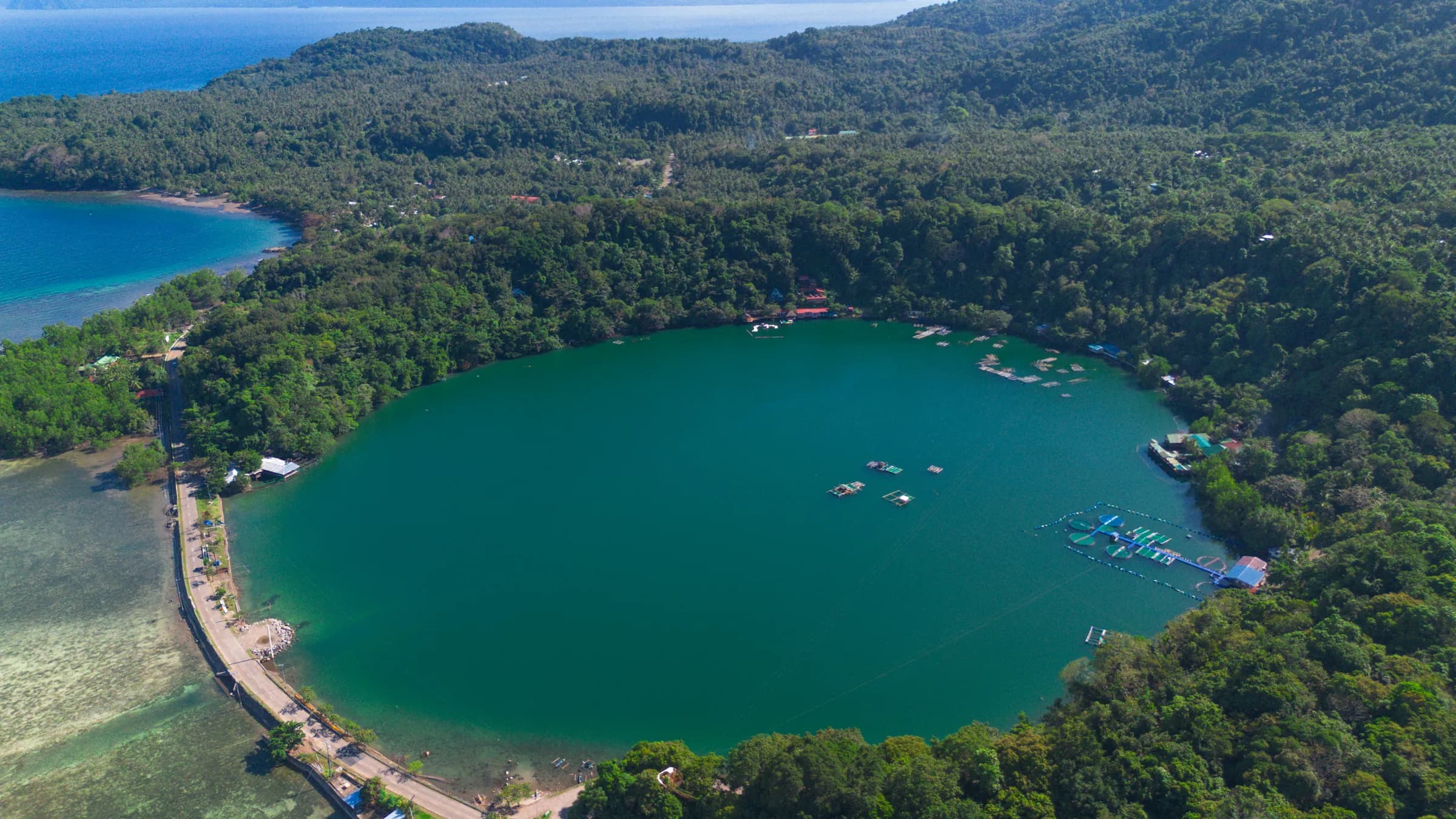
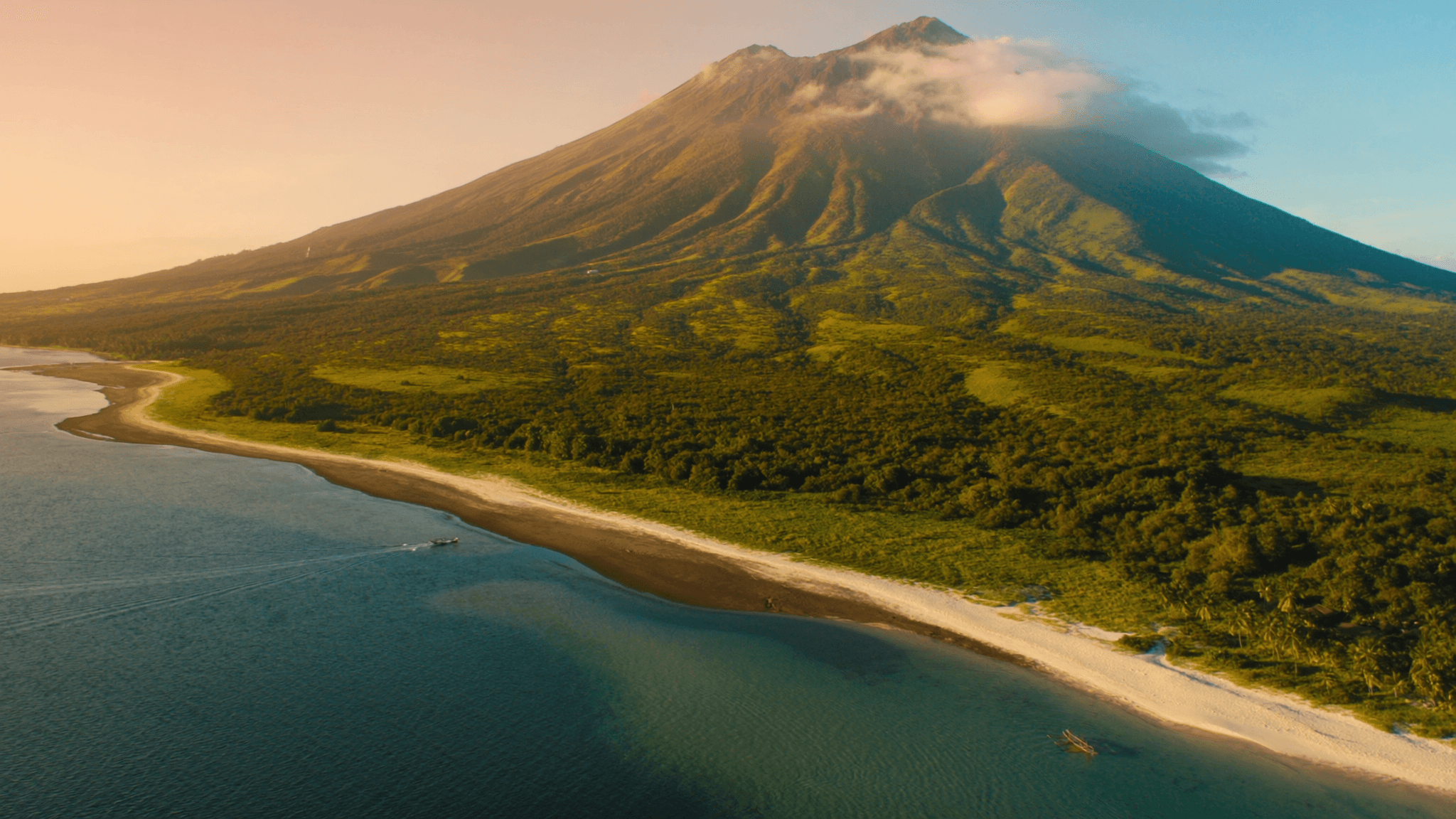
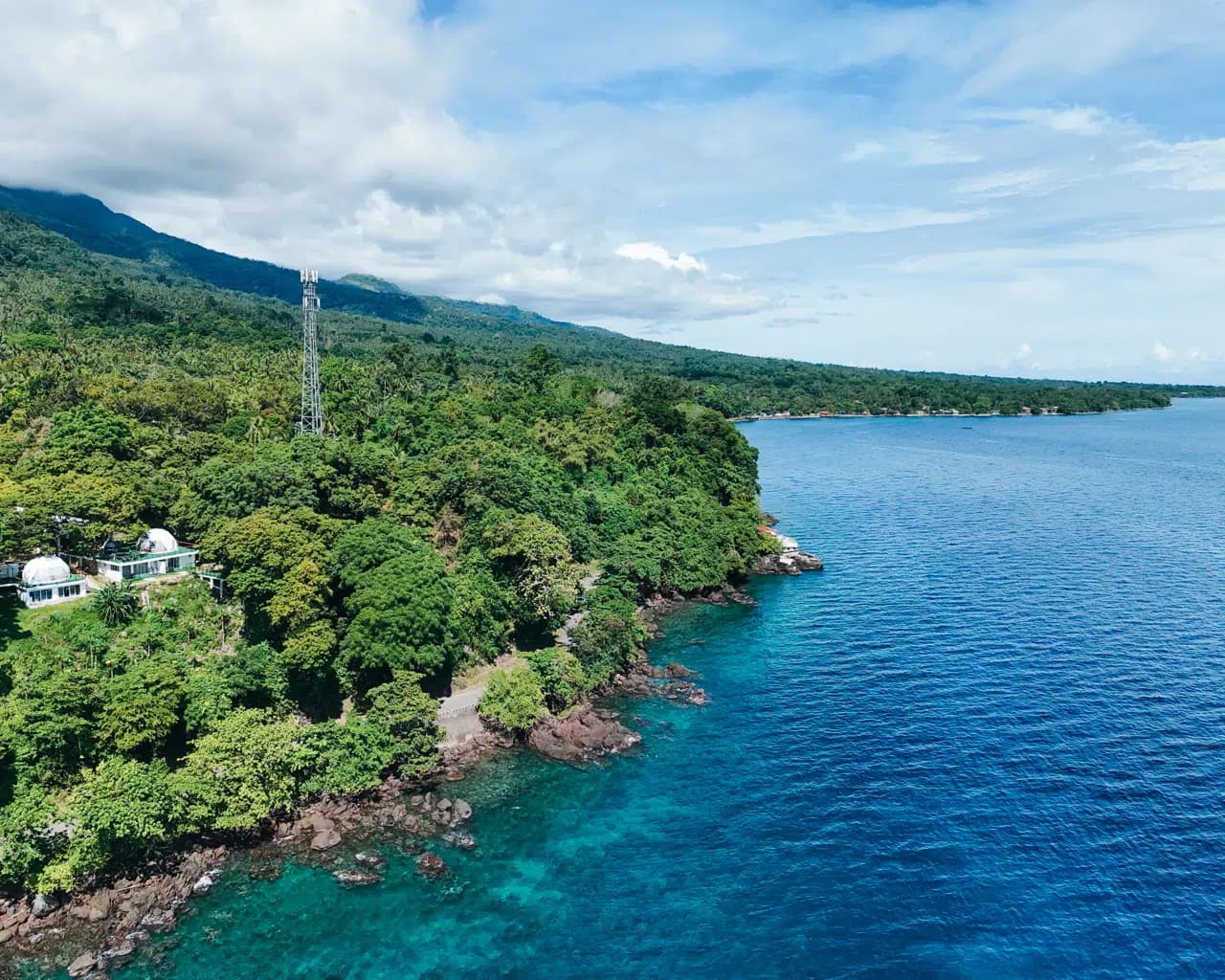
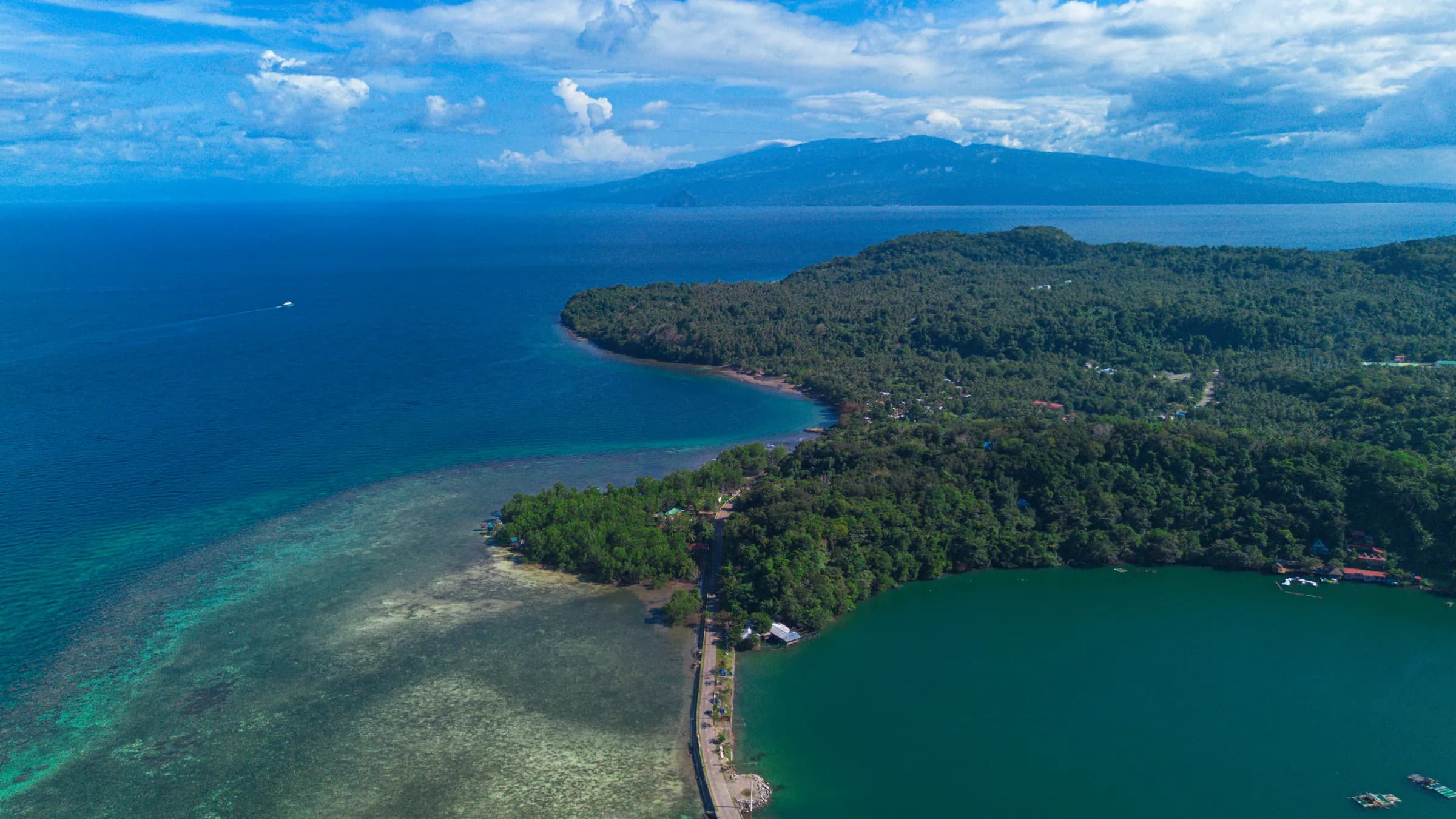
Almost every navigational question on this island resolves to one fact. There is one circumferential road, it is about 64 kilometres long, and it touches all five municipalities — Mambajao in the north, Catarman in the west, Sagay in the south-west, Guinsiliban in the south and Mahinog in the south-east. Nearly everything you came to see sits on it, or a short distance inland from it.
What follows from that is more useful than it sounds:
- You cannot really get lost. Pick a direction and keep the sea on the same side. Eventually you arrive back where you started.
- Nothing is far. The furthest two points on the island are under an hour apart by road. This is why we tell people not to change hotels mid-trip, and why the where-to-stay question is about which coast you want to wake up on rather than about proximity to anything.
- But distance is not the same as time. An hour non-stop becomes a seven-hour day the moment you start stopping, because the stops are the point.
The inland turnoffs are where the road quality changes. The ring road itself is sealed and in good condition for almost its whole length. The spurs — up to Katibawasan, out to Tuasan, in to the springs — vary from "fine" to "rough concrete and gravel", and they are the only part of driving here that requires any thought.
What getting around actually costs
These are our own rates, and they mirror what we charge at the front desk rather than what a blog guessed three years ago. Elsewhere on the island you will find similar numbers, sometimes a little lower for a scooter and considerably more variable for a vehicle.
| Option | Cost | Best for | The catch |
|---|---|---|---|
| Scooter | ₱450 / day | Confident riders, couples, anyone who wants the island on their own clock | You are exposed to rain, sun and the dark |
| SUV / AUV | ₱2,850 / day (₱1,500 half day) | Families, groups, luggage, green season | Overkill for two people on a dry week |
| Local driver | +₱1,000 / day (+₱500 half day) | Non-drivers, parents, anyone who would rather look out of the window | You keep his hours, not yours |
| Tricycle | from ~₱50 | Short hops — town, dinner, the airport run | Not for crossing the island |
| Shared multicab / jeepney | ~₱25 across the island | Budget travellers with patience and daylight | Thins out badly after dark |
| Private multicab | ~₱1,700 (up to 8 people) | Groups doing a day's sightseeing together | Priced per vehicle, so pointless for two |
| Jet ski | ₱7,000 / 3 hrs (+₱1,500 per extra hour) | The coast, not the island | It is an experience, not transport |
For two people on a three-day trip, a scooter for two of those days — ₱900 total — covers the entire island. That is the single best-value line in our whole Camiguin cost breakdown, and it is the reason this island is so cheap once you are standing on it.
Scooter: the default, and when it isn't
A scooter is the honest best answer for most visitors. The roads are quiet, the island is small, the scenery is continuous, and the freedom to stop at a roadside lanzones stall because the fruit looked good is most of what people remember.
What you get for ₱450: an automatic scooter, typically 110–125cc, fuelled or near enough, with helmets. Ask for the helmets explicitly if they are not offered — rental shops across the Philippines have a habit of treating them as optional for tourists, and the national helmet law does not agree. We hand them over as a matter of course and we would rather you took them.
What to check before you ride off the forecourt, which takes ninety seconds and occasionally saves a day:
- Brakes, both of them. Squeeze each one while walking the bike forward.
- Tyres. Look at the tread and the sidewalls, not just the pressure.
- Fuel level, and ask where the nearest station is relative to where you are going.
- Lights and horn. The horn is genuinely used here — it is a polite "I am behind you", not aggression.
- Photograph the bike on all four sides before you leave. This is not a Camiguin-specific suspicion; it is just sensible anywhere you rent anything.
Do you need a licence? Yes, and you should carry it. The Philippine rule has long been that a valid foreign driving licence in English is accepted for a limited initial period for visitors, with an International Driving Permit the safe option otherwise — and if your home licence says nothing about motorcycles, then strictly speaking it does not cover you on one here any more than it would at home. Rules of this kind change and get enforced unevenly, so check the current position with the LTO or your own licensing authority rather than taking a resort's word for it, and understand that most travel insurance will decline a motorcycle claim outright if you were not licensed to ride.
That is the least charming paragraph in this guide and it is the one most likely to matter.
Car, SUV or driver: when four wheels are the right call
We rent vehicles as well as scooters, and there are four situations where we steer people towards them without hesitation.
You have children. Two adults and two children do not fit on a scooter, whatever you see locals doing. Our family guide to Camiguin goes further into this, but the short version is that an air-conditioned vehicle is the difference between a good island day and a meltdown at the second waterfall.
It is the green season. The afternoon rain here is not a drizzle. It arrives, it means it, and it passes. On a scooter that is a soaked hour; in a car it is a change of plan and a window view. Our month-by-month guide says which weeks this applies to.
You do not ride. An island holiday is a bad place to learn. More on that below.
You would rather look at the island than at the road. This is the underrated one. Add a local driver for ₱1,000 a day and the ring road becomes a slow-moving window seat — and you get the thing no map gives you, which is a running commentary from someone who grew up on it. Our drivers will tell you which falls road is passable after last night's rain and which stall sells the better lanzones. That is worth more than the fare.
Full rates and the booking form are on our experiences and rentals page, and anything arranged there goes straight onto your folio rather than requiring cash at a counter.
Public transport: multicabs, jeepneys and how they really work
Camiguin does have public transport, it is extremely cheap, and almost no visitor uses it — partly because nothing explains it.
Multicabs and jeepneys run along the ring road between the towns. You flag one down from the roadside, you get in, you pay a fare measured in tens of pesos — roughly ₱25 to cross the island — and you tell the driver where you want out. There are no printed timetables that mean anything, and there is no app. Service is frequent enough in the morning along the populated northern coast, thinner the further round you go, and it effectively stops in the early evening, which is the detail that catches people.
This works if: you are travelling light, you are flexible by an hour in either direction, you are moving between towns rather than out to attractions, and you are doing it in daylight.
This does not work if: you want to see three waterfalls and two springs in a day. Most of the sights sit at the end of inland spurs that public transport does not serve, which is how a ₱25 saving becomes a two-kilometre walk uphill in the midday heat. For a sightseeing day you want your own wheels, or a driver, or a private multicab shared between enough people to make the ₱1,700 look sensible.
Tricycles and habal-habal: the short hops
Tricycles — a motorbike with a sidecar — are the taxis of this island. Flag one in Mambajao, agree the fare before you get in, and expect something from around ₱50 for a short run. They are fine for town, for dinner, for the airport, and for anything where you can see roughly where you are going. They are slow and open to the weather over long distances.
Habal-habal — a motorbike where you are the pillion passenger — covers the places a tricycle cannot, including some of the rougher inland approaches. It is cheap, it is efficient, and it is also the least protected way to travel on this or any island. Ask for a helmet.
Agree every fare before the engine starts. Not because anyone here is trying to fleece you — Camiguin is genuinely one of the gentlest places we know, and our guide to safety in the Philippines says so at length — but because "how much?" asked at the end of a ride is an awkward conversation in any language, and asked at the start it is a ten-second one.
Arriving: the airport and the island's two ports
The last mile of your journey is the one worth arranging in advance, precisely because there is no app to fall back on.
Camiguin Airport (CGM) is small, calm and about 7 kilometres from Mambajao town. Tricycles wait outside from around ₱50; multicabs take groups and luggage; a resort transfer means your name is on a sign and you stop thinking about logistics. We are roughly fifteen minutes from the runway.
The island has two ports and people mix them up. Benoni, on the south-east side in Mahinog, takes the RoRo ferries from Balingoan on the Cagayan de Oro route. Balbagon, near Mambajao, takes the ferries from Jagna on Bohol. They are the better part of an hour apart by road, so turning up at the wrong one is a genuinely expensive mistake. The full route-by-route breakdown lives in how to get to Camiguin from Cebu and the Manila and Cagayan de Oro routes.
Tell us your flight number or your sailing and we will meet it. Send us your arrival details and the last unknown of the trip disappears.
How to actually plan the loop: two half-islands, not one circuit
Here is the thing nobody tells you, and it is the most useful section of this guide.
Everyone talks about "doing the ring road" as though the island were one continuous loop day. In practice Camiguin splits into two halves that belong to different days, because the sights cluster rather than spread evenly.
The land half — north and west. Katibawasan Falls, the Sunken Cemetery and the Gui-ob church ruins, Sto. Niño Cold Spring, the Bura soda pool, Tuasan Falls, Ardent Hot Springs. This is a full day with your own wheels and it has a natural running order, which we set out in the waterfalls and springs guides: Katibawasan before nine, the western ruins late morning, the cold spring through the midday heat, the soda pool in passing, and Ardent at dusk, when the air cools and warm water finally makes sense.
The sea half — east and south. Mantigue Island off Mahinog, the Cantaan giant clam sanctuary down in Guinsiliban, the quiet southern coast. This is a boat day rather than a driving day, and the driving part of it is simply the run down to the jump-off and back. Both are in the Mantigue and giant clams guide.
White Island belongs to neither. It launches from Yumbing on the north coast at sunrise, which makes it a dawn trip bolted onto the front of whichever day you choose.
Which direction should you drive? Clockwise from Mambajao — west first — if you are doing the land day, because the running order above flows that way and you finish near home. And one correction to the way most itineraries handle it: the Sunken Cemetery is a sunset site, so if you can, pay it a second short visit on another evening rather than forcing it into the same day as Ardent. It is twenty minutes from Mambajao, it costs nothing to stand and look, and the half-hour when the light comes sideways through those empty window openings is the most atmospheric on the island.
Our three-day itinerary maps all of this hour by hour, and the things-to-do hub has every stop on the loop with an honest note on what each is worth.
Fuel, signal and the small practical things
Fill up in Mambajao. The northern coast around the capital has the island's proper fuel stations. Round the quieter south and west you will find small roadside sellers dispensing from bottles, which works and is part of the texture of the place, but it is not something to rely on at dusk with the needle low. A scooter does the entire ring road several times on a tank; a full one at the start of a sightseeing day removes the question entirely.
Mobile signal is reliable along the populated ring road and patchy inland, up the volcano flanks and in the folds of the interior. Download your offline map before you go looking for Tuasan.
Cash. Fuel, fares, entrance fees and stalls are cash. ATMs exist in Mambajao and are not something to plan your afternoon around. Bring pesos from the mainland.
Water and sun. There is no shade on a scooter and very little at most of the stops. The sun here is closer to the equator than most visitors' instincts allow for.
The honest part: night, rain and dogs
Every other section of this guide is an argument for a scooter. This one is the counterweight, and we would rather you read it here than discover it at nine in the evening.
The ring road is unlit for most of its length. Not dim — dark. Outside the built-up stretch of the northern coast there are no streetlights, there is no ambient glow from anywhere, and a scooter headlight is a surprisingly small amount of light with which to meet a pothole. The drive back from a restaurant twenty kilometres away is, in our own experience, where almost every minor incident involving a visitor to this island actually happens. It is not a dramatic risk. It is a boring, preventable one, which is arguably worse.
This is also why we say in our restaurant guide that you should eat where you are staying at least some nights. That is a logistics point rather than a sales one, and it is the same point in both articles.
Dogs sleep on the warm road surface. So do a surprising number of chickens, and occasionally a goat on a long rope. Drive as though something might be around the next bend, because sooner or later something is.
Rain changes the inland spurs, not the ring road. The sealed loop handles a downpour fine. The approaches to Tuasan and some of the inland turnoffs get messy, and after heavy rain they are worth asking about before committing a morning to them. Ask us; somebody here will have driven one of them that week.
Who should not rent a scooter here? Anyone who has never ridden one. We say this plainly and against our own rental revenue: an island holiday is a lovely thing and a terrible place to learn to ride. If the only scooter you have ever been on was in a resort car park, take the SUV, take the driver, take the tricycles. The island looks exactly as good through a window, and the ₱1,000 driver is the best money on this entire page.
If you would rather not drive at all
Plenty of our guests never touch a steering wheel or a throttle and still see everything. It works like this: a driver for the land day, a boat for the sea day, tricycles for dinner in town, and a transfer at each end. The cost difference over three days is real but modest, and the trade is that somebody local is making the small decisions — which road, which hour, which side of the island the rain is on.
If that is how you would rather travel, say so when you book and we will build the days around your dates instead of handing you a key and a map.
Frequently asked questions
Is there Grab or Uber in Camiguin?
No. There is no ride-hailing of any kind on Camiguin — no Grab, no Uber, no Angkas. Getting around means a rented scooter or vehicle, a hired local driver, public multicabs and jeepneys, or tricycles flagged from the roadside. This is why arranging your airport or port pickup in advance matters more here than in Cebu or Manila.
How much does it cost to rent a scooter in Camiguin?
Around ₱450 per day, which is the rate we charge at our own front desk. A scooter for two days — about ₱900 — comfortably covers the entire island for a couple, and it is the best-value line in a Camiguin budget. Ask for helmets if they are not offered, and check brakes, tyres and fuel before you ride off.
Do I need a driving licence to rent a scooter in Camiguin?
Yes, and you should carry it. A valid foreign licence in English has long been accepted for an initial period for visitors, with an International Driving Permit the safer option, and a licence that does not cover motorcycles at home does not cover you on one here. Rules change and enforcement varies, so confirm the current position with the LTO rather than relying on a rental counter — and note that insurance will usually decline a motorcycle claim from an unlicensed rider.
How long does it take to drive around Camiguin?
About an hour non-stop for the full 64-kilometre ring road. Nobody drives it non-stop, because the stops are the entire point — allow a full unhurried day for the northern and western sights, and treat the eastern and southern coast as a separate boat day.
Is it safe to drive in Camiguin?
Yes, in daylight. Traffic is very light, the ring road is sealed and in good condition, and drivers here are relaxed. The real risks are night driving on an unlit road, animals asleep on the warm tarmac, and the rougher inland spurs after heavy rain. Night driving is where almost every minor incident involving a visitor actually happens.
Can you get around Camiguin by public transport?
Yes, cheaply, with limits. Multicabs and jeepneys run along the ring road between the towns for roughly ₱25 across the island, flagged from the roadside with no real timetable. They serve towns rather than attractions, most of which sit at the end of inland spurs, and service thins out badly after dark. Good for moving between towns in daylight, poor for a sightseeing day.
What is a habal-habal?
A motorbike taxi where you ride as the pillion passenger, used across the Philippines and particularly useful for rougher inland roads a tricycle cannot manage. It is cheap and efficient, and it is also the least protected way to travel. Agree the fare before setting off and ask for a helmet.
How do I get from Camiguin Airport to Mambajao?
The airport sits about 7 kilometres from Mambajao town. A tricycle costs from around ₱50, a multicab suits groups with luggage, and a resort transfer is the simplest option given there is no ride-hailing on the island. Txaleta de Camiguin is about fifteen minutes from the runway and arranges pickups on request.
Should I rent a scooter or a car in Camiguin?
A scooter if you ride confidently, are travelling as one or two, and are here in the dry months — it is cheaper, more fun and perfectly suited to the island. A car or SUV with a local driver if you have children, are visiting in the green season, or do not ride. Learning to ride on holiday is the one choice we actively argue against.
Which direction should I drive the Camiguin ring road?
Clockwise from Mambajao — west first — for the land day, because the natural running order of the sights flows that way: Katibawasan Falls early, the church ruins and Sunken Cemetery late morning, the cold spring at midday, and Ardent Hot Springs at dusk. The eastern and southern half of the loop is better treated as a separate boat day for Mantigue and the giant clam sanctuary.
Where can I get fuel in Camiguin?
The proper stations are on the northern coast around Mambajao. Around the quieter south and west you will find small roadside sellers dispensing fuel from bottles, which works but is not something to depend on at dusk. Fill up in Mambajao before a sightseeing day and the question never comes up.
Is Camiguin walkable?
Within a town, yes — Mambajao is easily walked. Between towns and out to the attractions, no. The island is small by driving standards and large by walking ones, the sun is strong, and there are no footpaths along most of the ring road. You will want wheels of some kind for anything beyond your own barangay.
Come home to Camiguin
Most of what makes this island feel the way it does is on that road: the stretch where the sea appears through the palms, the smell of the forest after rain, the stall where someone waves because you waved yesterday. How you take it matters less than that you take it slowly.
Tell us how you like to travel and we will have it waiting — a scooter fuelled at the gate, an SUV with a driver who knows which falls road is passable this week, or simply a car at the airport so you can stop thinking about any of this. And if you want the island at its most unhurried, the cliff-edge glamping puts you somewhere you will not want to drive away from at all.
Browse our rooms, book your stay direct, or message us on WhatsApp. Reach us anytime at +63 917 582 2277, or visit us at Purok 6, Puting Balas, Mambajao, 9100 Camiguin.
One road, no hurry. Welcome home.
More Than a Resort. A Place to Belong. — Txaleta de Camiguin