
Almost every Camiguin trip happens in Mambajao, and almost nobody arrives knowing that. Guests book "Camiguin", land at an airport whose name they have not quite registered, get driven along a coast road past a string of barangays, and spend four days somewhere whose actual name they never learn.
Mambajao is the capital of Camiguin and its largest municipality, in both area and population. It holds the airport, one of the island's two ports, the provincial offices, the public market, and the stretch of north coast where most of the island's resorts — including ours — are built. It is also the answer to the question most visitors are really asking when they search for a town here: where do I actually sleep, eat and buy things?
This is a guide to the place itself, not to the island. If you want the island, start with 25 things to do in Camiguin.
Quick answer: Mambajao is Camiguin's capital, on the island's north coast, and it is both a town centre and a municipality covering the barangays either side of it. The poblacion — the town proper — holds the market, the plaza, the provincial offices, the banks and the ATMs. West of it, the barangays of Agoho, Yumbing and Naasag form the resort coast, with the White Island jump-off and most of the island's good accommodation. The airport sits about 7 km from the town centre, and Balbagon port, which takes the Bohol ferries, is on the town's edge. Nearly everything a visitor needs is within a twenty-minute tricycle ride of the plaza — which is why we tell people to base themselves here and never change hotels.
Written by the family at Txaleta de Camiguin, on the Mambajao clifftop. Published October 2026.
Where Mambajao actually is, and what the name covers
Here is the distinction that clears up most of the confusion: "Mambajao" means two things.
The poblacion is the town centre — a compact, walkable grid with a plaza, a church, the market, the municipal and provincial buildings, banks, pharmacies and the island's small cluster of ordinary shops.
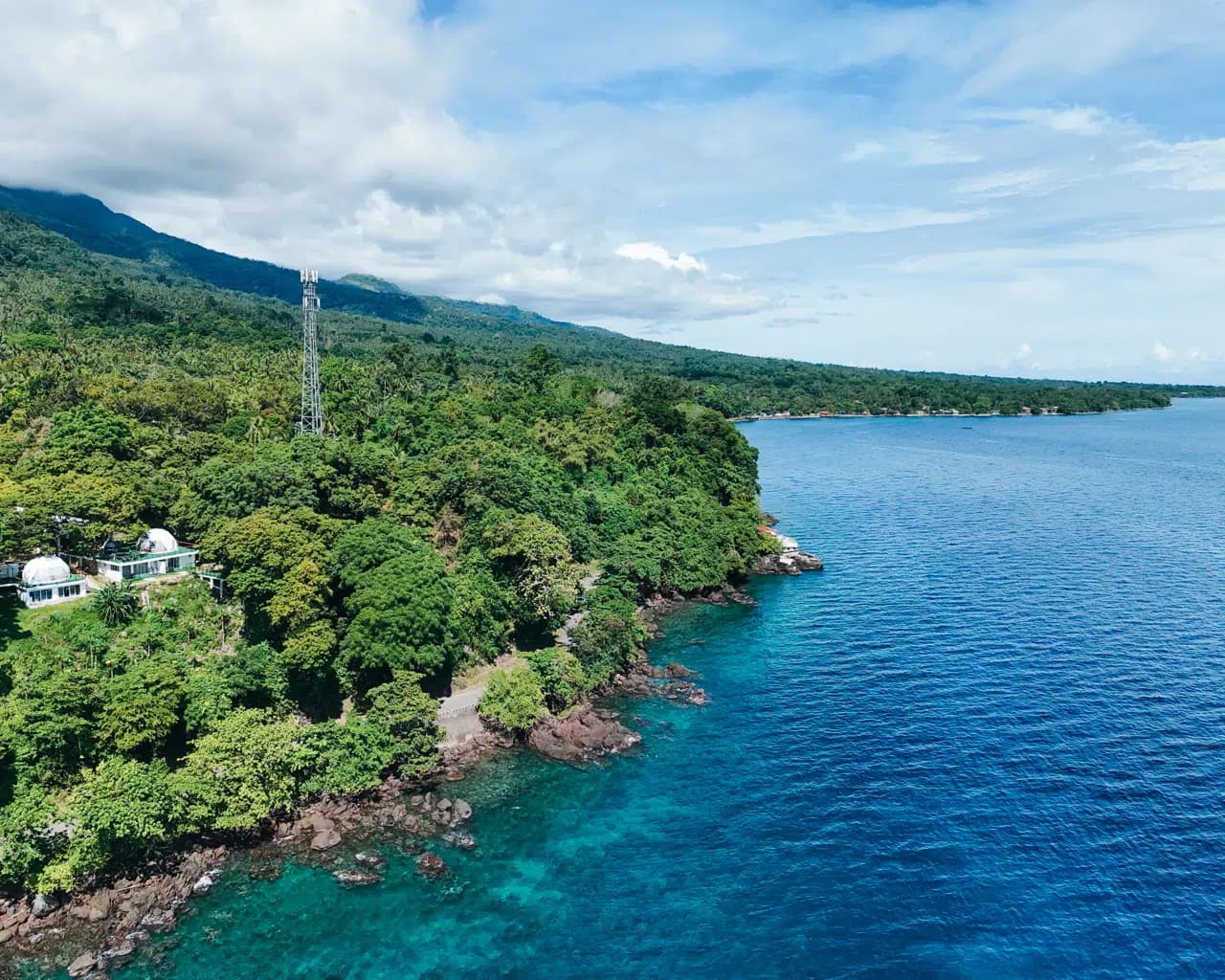
The municipality of Mambajao is much bigger: a run of barangays strung along the island's north coast either side of that centre, each one a distinct place with its own character. When a hotel says it is "in Mambajao", it almost always means one of these coastal barangays rather than the town itself — which matters, because the difference between them is a fifteen-minute drive and a completely different holiday.
Camiguin's five municipalities are Mambajao in the north, Catarman in the west, Sagay in the south-west, Guinsiliban in the south and Mahinog in the south-east. The 64-kilometre ring road connects all of them, and Mambajao is the top of the loop.
The barangays that decide your trip
This is the most practically useful section on the page, and it is the thing no booking site explains.
| Barangay | What it is | Why you would be there |
|---|---|---|
| Poblacion | The town centre | Market, banks and ATMs, pharmacies, the plaza, provincial offices, ordinary island life |
| Agoho | Resort coast, west of town | Beachfront accommodation, restaurants, boats to the sandbar |
| Yumbing | Resort coast, further west | The White Island jump-off. The busiest stretch for visitors |
| Naasag | Quieter coast past Yumbing | Clifftop and seafront properties, less traffic |
| Baylao | Between town and the resort coast | The church locally remembered as a shelter during a Hibok-Hibok eruption |
| Kuguita | East of the town centre | Coastal road, residential, a few places to stay |
| Balbagon | East edge of town | The port for ferries from Jagna, Bohol |
The practical rule: anywhere in the Agoho–Yumbing–Naasag run puts you five to fifteen minutes from the White Island boats and twenty minutes from the market. That is the stretch we mean when we say "the north-west coast" in our where to stay in Camiguin guide, which compares the coasts and the property types properly. We are at Puting Balas, on the cliff above that coast — the name is Bisaya for "white sand", which is also what the islanders call the sandbar offshore.
What is actually in the town centre
Honestly? Not a sightseeing itinerary. Mambajao's poblacion is a working island town, not a heritage quarter, and we would rather say so than send you looking for something that is not there.
What it does have, and what it is worth going in for:
The public market. The best hour you can spend in the town, and genuinely the most interesting place in it. Fruit in volumes and varieties you will not have seen, fish landed that morning, dried goods, pasalubong, and people who are not working in hospitality. Go early — markets here are a morning thing and by afternoon the best of it has gone. Bring small notes. This is where you buy lanzones in season, and where the food in our what to eat in Camiguin guide actually comes from.
The plaza and the church. The centre of civic life, busiest on Sunday morning when the island is at mass, and the simplest way to understand how the week here is structured.
The old houses. Scattered through the town and along the coast road are early-twentieth-century houses in the bahay na bato manner — stone below, timber and shuttered windows above, deep eaves. There is no formal heritage trail and most are private homes, so this is something you notice on a slow walk rather than something you tour.
The practical cluster. Banks and the island's handful of ATMs, pharmacies, a hardware store, a supermarket of sorts. If you have forgotten something, this is where it exists — and if it does not exist here, it does not exist on the island. Our practical guide covers the money and SIM-card questions that bring most visitors into town in the first place.
The provincial tourism office, which is the correct authority for current entrance fees, guide accreditation, Hibok-Hibok permits and the Lanzones Festival schedule.
Things to do in and around Mambajao
Within the municipality, or close enough to it that you are back for lunch:
White Island — the bare white sandbar about 1.4 km offshore, reached by banca from the Yumbing jump-off in ten to fifteen minutes. Go at sunrise. There is no shade on it at all.
Ardent Hot Springs — volcanically heated pools in the forest on the flank of Mt. Hibok-Hibok, inland from the town. Late afternoon is the hour.
Katibawasan Falls — a seventy-metre ribbon of water into a cold pool, a short drive inland from the poblacion. Before nine, or it fills with tour vans.
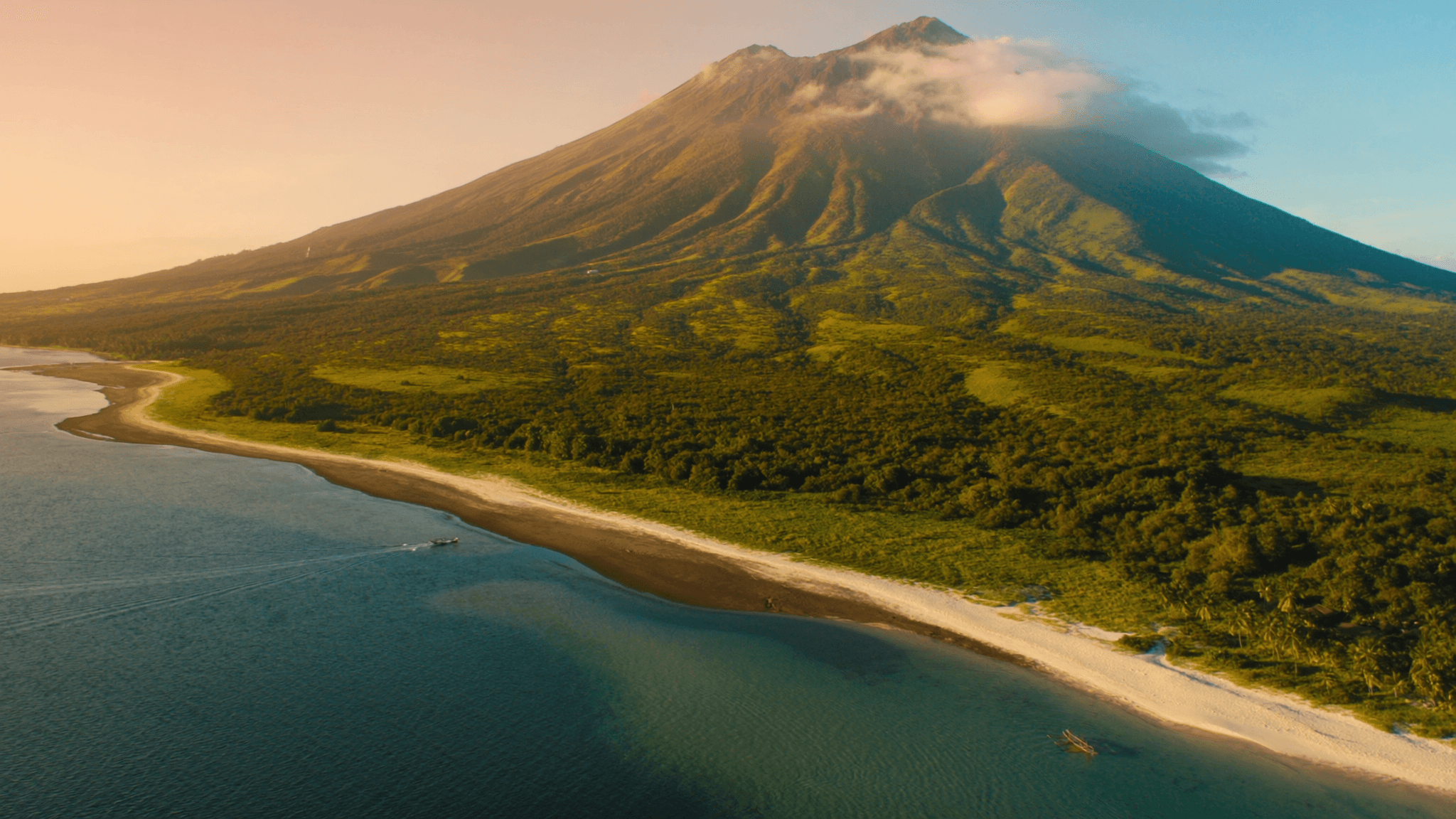
Mt. Hibok-Hibok — the island's active volcano rises directly behind the town. The climb needs a permit and an accredited guide; the view of it from the coast is free and constant.
The protected forest above town — where the island's endemic birds are, including the Camiguin Hanging Parrot and the Camiguin Hawk-Owl.
The black-sand beaches along the coast road. Mambajao's own shoreline is dark volcanic sand, which is worth knowing before you book. It is a real beach and a good swim; it is not the powder-white image people arrive with. We make the same point in the best beaches in the Philippines, where volcanic coasts get their own category.
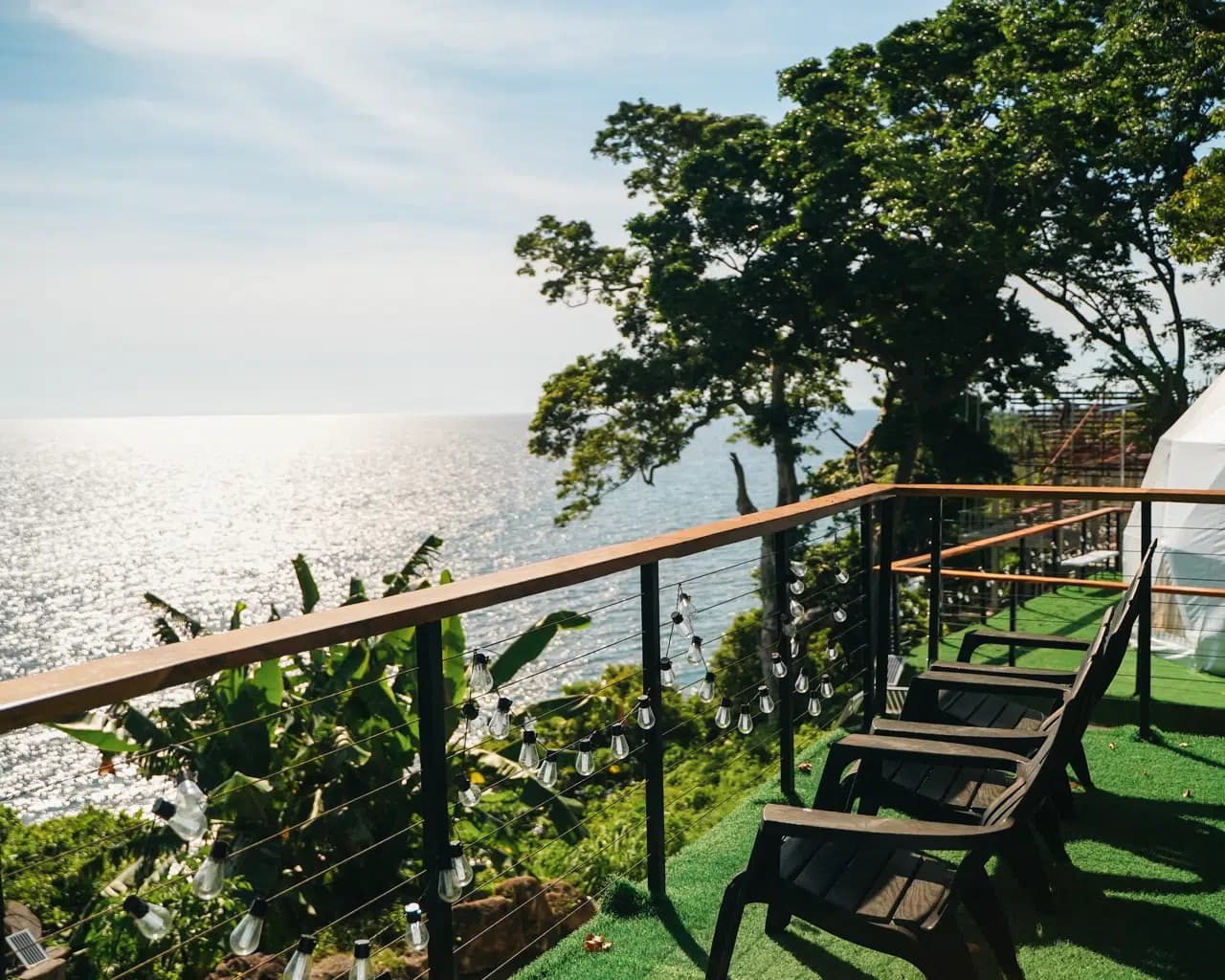
The sunset. The coast here faces north and west across the Bohol Sea, and the light at the end of the day is the thing we would put top of this list if it were a list of sights. Where exactly to stand is in our guide to Camiguin's sunset spots.
Eating in Mambajao
Short version: the municipality holds most of the island's restaurants, and that is a lower bar than it sounds.
Camiguin is not a dining destination. What exists is a handful of resort restaurants open to non-guests, a few independent places, and carinderias in and around town where a plate of something good costs very little. Opening hours are shorter than you expect and some places close on quiet days, so call before you drive — a point we make at length in our honest restaurant guide, which names where dinner actually happens on this island and where we would send you.
Two things specific to Mambajao: the market is the best cheap eating in the municipality, and the local delicacy you cannot leave without is pastel — the soft buns filled with yema custard that are made here and carried off the island by the boxful.
Where to stay: the honest geography
Almost all of Camiguin's good accommodation is in Mambajao, and almost all of that is on the Agoho–Yumbing–Naasag coast west of the town. The reasons are simple: that is where the sea views, the sunsets and the White Island boats are.
Staying on the coast rather than in the poblacion is what nearly everyone should do. The town is for errands and the market; the coast is for the holiday, and the two are twenty minutes apart. Base yourself once and do not move hotels — the island is too small for it to be worth the disruption, as our three-day itinerary explains.
Which part of that coast suits you, and which type of property, is a longer conversation than this page should have — the comparison by coast, by budget and by type is in where to stay in Camiguin.
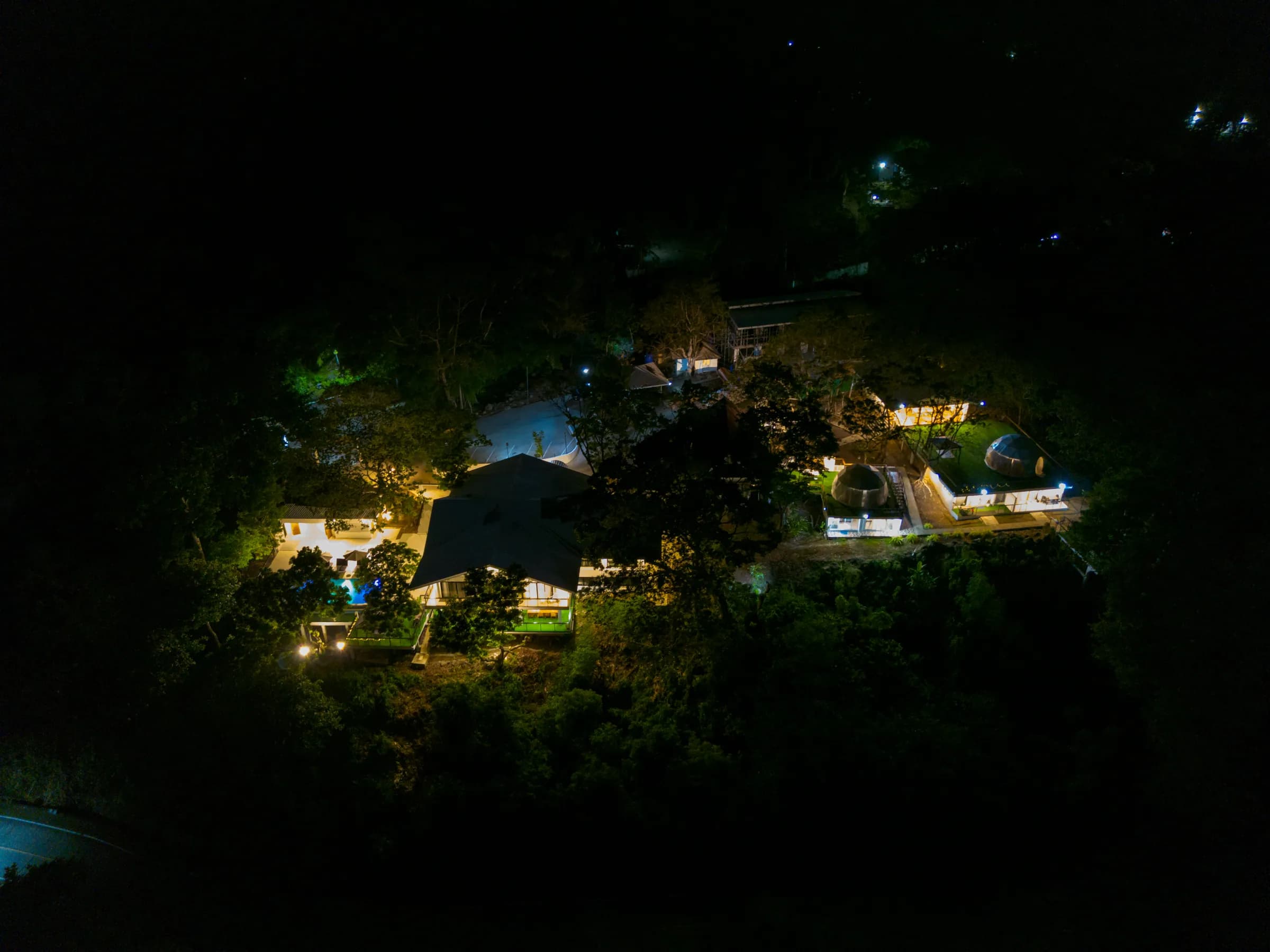
Where we are, since you are entitled to know the bias: on the cliff at Puting Balas, fourteen rooms above the Bohol Sea, an infinity pool at the edge, breakfast served over the water, and the airport fifteen minutes away. Browse the rooms or tell us your dates and judge for yourself.
Getting into town, and getting around
From the airport: Camiguin Airport is about 7 km from the town centre. Tricycles wait outside from around ₱50, multicabs take groups with luggage, and a resort transfer is the sensible option given there is no ride-hailing anywhere on the island.
From Balbagon port: on the town's eastern edge, so a short tricycle ride. This is where the ferries from Jagna on Bohol land — not Benoni, which is an hour away on the south-east coast and serves the Cagayan de Oro route. Mixing the two up is the most common arrival mistake on this island, and both are mapped in how to get to Camiguin from Cebu.
Within the municipality: tricycles, flagged from the roadside, fare agreed before you get in. Between the coast and the market that is the normal way to travel.
Everything else: a scooter at ₱450 a day or a vehicle with a local driver, which is the whole subject of getting around Camiguin.
The honest part
Mambajao is not a town you come to Camiguin to see. It is a pleasant, ordinary, tidy provincial capital, and if you are expecting Vigan or a colonial quarter you will be in and out in half an hour wondering what you missed. You missed nothing. The town is the infrastructure of your trip, not the point of it.
What it is, is the best base on the island, and that is a more useful thing to be. Everything on Camiguin is within an hour of here; the airport, the market, the boats and the island's good accommodation are all in the same municipality; and you never have to pack a bag twice.
And the coast here is volcanic. Dark sand, clear water that drops away quickly, excellent for snorkelling and not what a brochure photograph of the Philippines looks like. The white sand is offshore, ten minutes away, and you should go and see it at dawn.
1951, and why the town looks the way it does
You cannot understand Mambajao without the volcano behind it.
Mt. Hibok-Hibok erupted in 1951, and it is the defining event in Camiguin's modern history. A pyroclastic flow came down the northern flank — the side the town is on — and several hundred people died. The eruption triggered an evacuation and then an exodus: a substantial share of the island's population left for mainland Mindanao and beyond, and many never came back. Camiguin is one of the few places in the Philippines whose population is smaller than it was in living memory, and the reason is the mountain.
What that left behind is the island you visit. A thinly populated, agricultural, unhurried province where land did not get built on because there were fewer people to build. The quiet that visitors notice and struggle to name has a cause, and it is not a tourism-board decision.
It also left the monitoring. Hibok-Hibok is an actively watched volcano, and the ascent requires a permit and an accredited guide for reasons that are about the mountain rather than about bureaucracy, as our climbing guide sets out. The hot water at Ardent comes from the same system, which is the cheerful side of the same fact.
And it left the island's other great site. The 1871 eruption — eighty years earlier, from Mt. Vulcan on the west coast — drowned the old town of Bonbon and left the cross standing in the sea. Two eruptions, two centuries, and between them most of what people come here to see.
A day in Mambajao without a vehicle
A genuinely useful plan, because plenty of visitors arrive without wheels and every guide assumes otherwise.
Early. Walk out onto the dark sand in front of wherever you are staying on the Agoho–Yumbing coast. First light here is quiet and the fishing boats are coming in.
Breakfast, then a tricycle into the poblacion — fifteen to twenty minutes from the resort coast, fare agreed before you set off. The market first, while it is still a market: fruit, the morning's fish, pasalubong, lanzones if it is season. Then the plaza, the church, and a walk through the streets either side of it to see the old shuttered houses.
Mid-morning, a tricycle back out, or one further inland to Ardent Hot Springs if you would rather spend the heat in water than in town.
Afternoon, the sea. If you are on the resort coast you are already where the swimming is — and if you arranged it the evening before, a banca to the sandbar has already happened at dawn.
Evening, dinner where you are staying. That is a logistics decision rather than a lazy one, since there is no ride-hailing here and the ring road is unlit, as our transport guide explains at length.
What you cannot reach this way: the west-coast sights, the waterfalls, the southern coast. Tricycles will take you a long way for a negotiated fare, but the island's full loop wants a scooter or a driver. One day without wheels in Mambajao works beautifully; three do not.
Frequently asked questions
Where is Mambajao?
Mambajao is the capital of Camiguin, on the island's north coast, in the Northern Mindanao region of the Philippines. It is the province's largest municipality in both area and population, and it holds the island's airport, the Balbagon ferry port, the public market and most of its accommodation.
Is Mambajao the same as Camiguin?
No. Camiguin is the island and the province; Mambajao is its capital and one of five municipalities, along with Catarman, Sagay, Guinsiliban and Mahinog. Because the airport, the port and most resorts are in Mambajao, visitors often spend an entire Camiguin trip inside this one municipality without realising it has a name.
What is there to do in Mambajao?
Within the municipality: the White Island sandbar off Yumbing, Ardent Hot Springs on the volcano's flank, Katibawasan Falls inland, the protected forest where the island's endemic birds live, the climb up Mt. Hibok-Hibok, the black-sand coast and the public market. The town centre itself is a working provincial capital rather than a sightseeing destination.
Is the Mambajao public market worth visiting?
Yes, and it is the most interesting hour in the town. Fruit, fish landed that morning, dried goods and pasalubong, plus lanzones in season. Go early — markets here are a morning business and thin out by afternoon — and bring small notes, because it is cash only.
Which part of Mambajao should you stay in?
The coast west of the town centre: the barangays of Agoho, Yumbing and Naasag. That run puts you five to fifteen minutes from the White Island boats, twenty minutes from the market, and on the side of the island with the sea views and the sunsets. The poblacion itself is for errands rather than for a holiday.
What are Mambajao's beaches like?
Dark volcanic sand, clear water that shelves away quickly, and almost no crowds — a real swim and a very good snorkel, but not the powder-white image people arrive with. The pale sand near Mambajao is offshore: the White Island sandbar, about 1.4 km out from Yumbing, which is also where the boats leave from.
Is Mambajao worth visiting?
As a base, unreservedly — it is the most practical place to stay on Camiguin and almost everything on the island is within an hour of it. As a sightseeing destination in its own right, it is a pleasant ordinary provincial town with a very good market, and half an hour covers it. Those are two different questions and they have two different answers.
What is the port in Mambajao?
Balbagon, on the town's eastern edge, which receives the ferries from Jagna on Bohol — a crossing of around four hours with limited departures. Camiguin's other port, Benoni, is roughly an hour away on the south-east coast and serves the RoRo ferries from Balingoan on the Cagayan de Oro route. Confusing the two is the most common arrival mistake here.
Where do you eat in Mambajao?
The municipality holds most of the island's restaurants, which is a modest number: a handful of resort restaurants open to non-guests, a few independents, and carinderias in and around town where a plate costs very little. Hours are shorter than visitors expect and some places close on quiet days, so call before driving.
What is Mambajao known for?
Being Camiguin's capital and its gateway — the airport, the Balbagon port, the market and most of the island's accommodation are all here. It also sits directly beneath Mt. Hibok-Hibok, the active volcano whose 1951 eruption is the defining event in the island's modern history, and it is the home of pastel, the custard-filled bun that leaves the island by the boxful.
Come home to Camiguin
We are in Mambajao, on the cliff at Puting Balas, and we think the town's ordinariness is part of what makes this island work. Nobody here is performing for visitors. The market is a market. Sunday morning is for church. The man who waves at you on the coast road waves because you waved yesterday.
Base yourself here, learn the name of the place you are actually staying in, and let the island come to you.
Browse our rooms, book your stay direct, or message us on WhatsApp. Reach us anytime at +63 917 582 2277, or visit us at Purok 6, Puting Balas, Mambajao, 9100 Camiguin.
Welcome to Mambajao. Welcome home.
More Than a Resort. A Place to Belong. — Txaleta de Camiguin